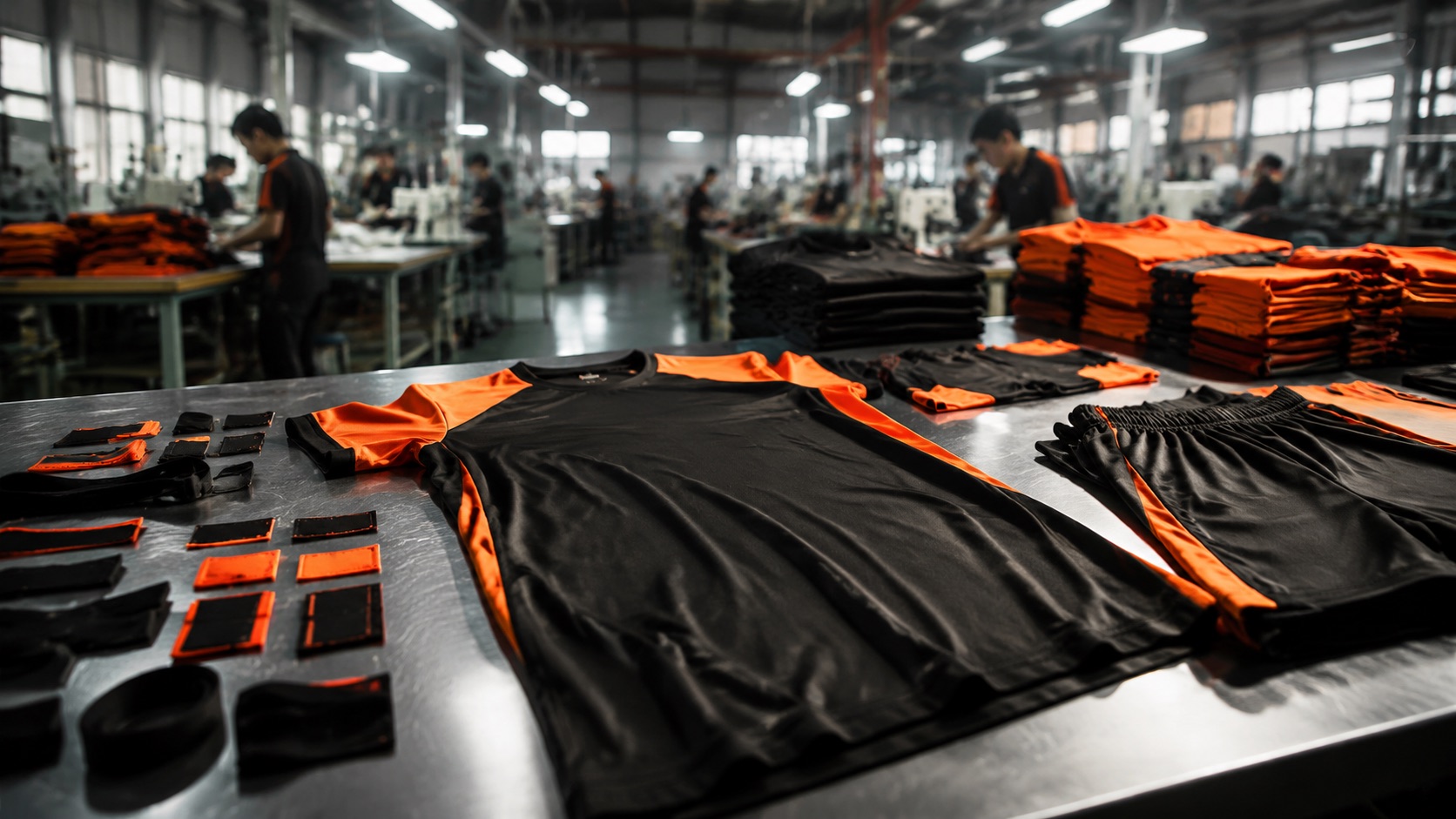
The Detail That Makes It Your Brand
A woven neck label is the difference between a decorated blank and a private-label garment. Damask, satin or taffeta, in your own artwork, applied during make-up rather than added afterwards.
- 20
- pieces per design
- Minimum order
- 15–20
- working days
- Bulk lead time
- 7–10
- working days
- Sampling
- 4
- export markets
- Shipping to
Weaving is the one part of this process we do not run ourselves. Labels and trims are produced by our long-standing trim partner to our specification, then applied here during make-up. We would rather tell you that than imply a loom we do not own.
What labels & trims actually is
Woven labels are made on a loom, with the design formed by the threads themselves rather than printed onto a blank tape. That is what gives them their durability and their feel — a printed label fades and cracks, a woven one outlives the garment.
For a private-label range they are not decoration, they are the thing that makes the garment yours. A buyer picking up a sample will look at the neck. A garment carrying your woven label, your size tab and your care label reads as your product; the same garment with a generic label reads as someone else’s blank with your logo on the front.
Because weaving needs loom setup, trims carry higher minimums than anything else we supply and a longer lead time. That is worth planning for: label quantities are usually ordered ahead of and across several garment orders rather than per production run.
How It Works
Every stage below happens under our own roof, which is what keeps a reorder matching the original.
 1
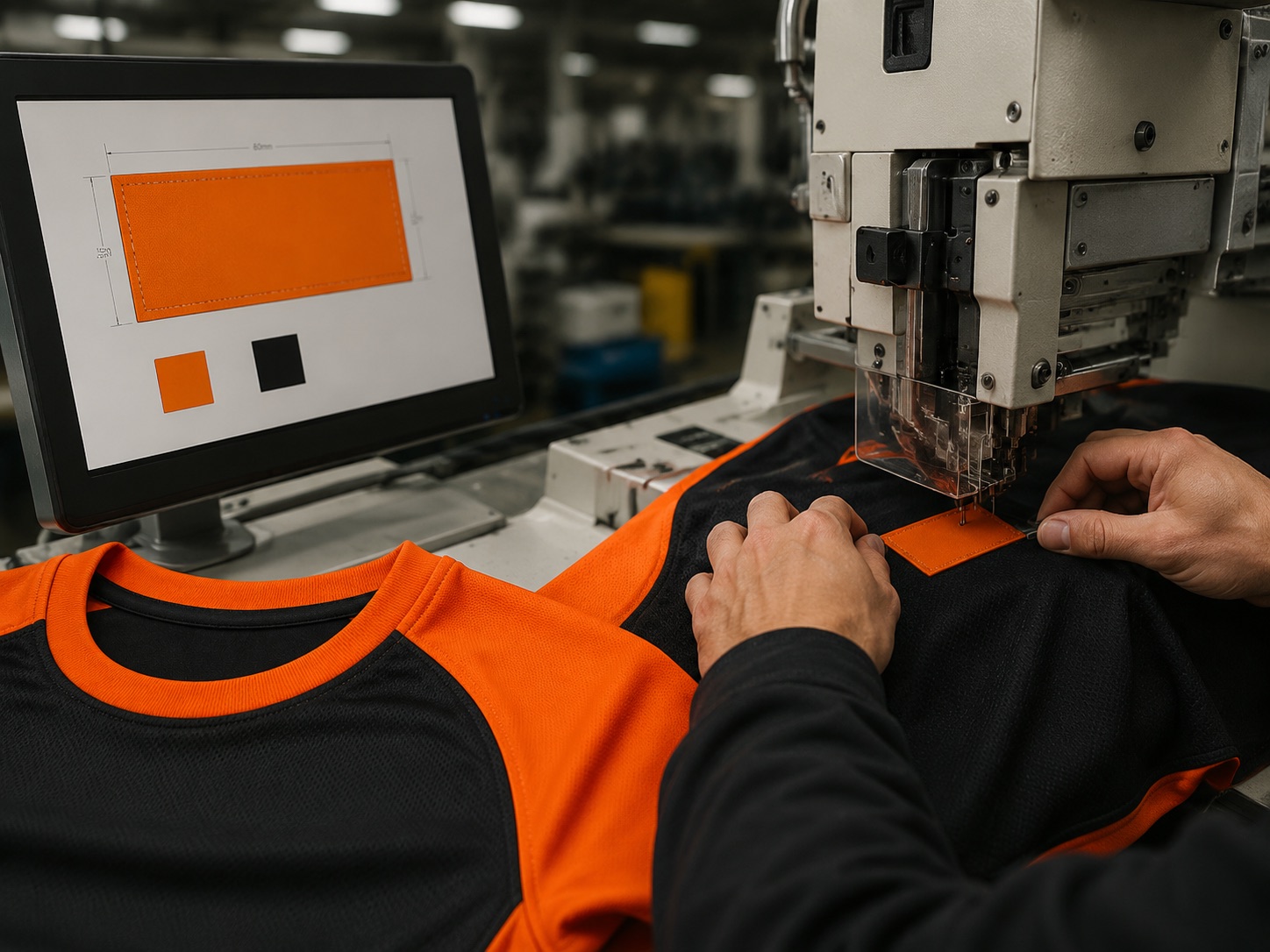
1Artwork & specification
Your label is drawn to size, with the weave type, fold, colours and finish specified. Small text is the usual constraint — thread resolution is coarser than print.
 2
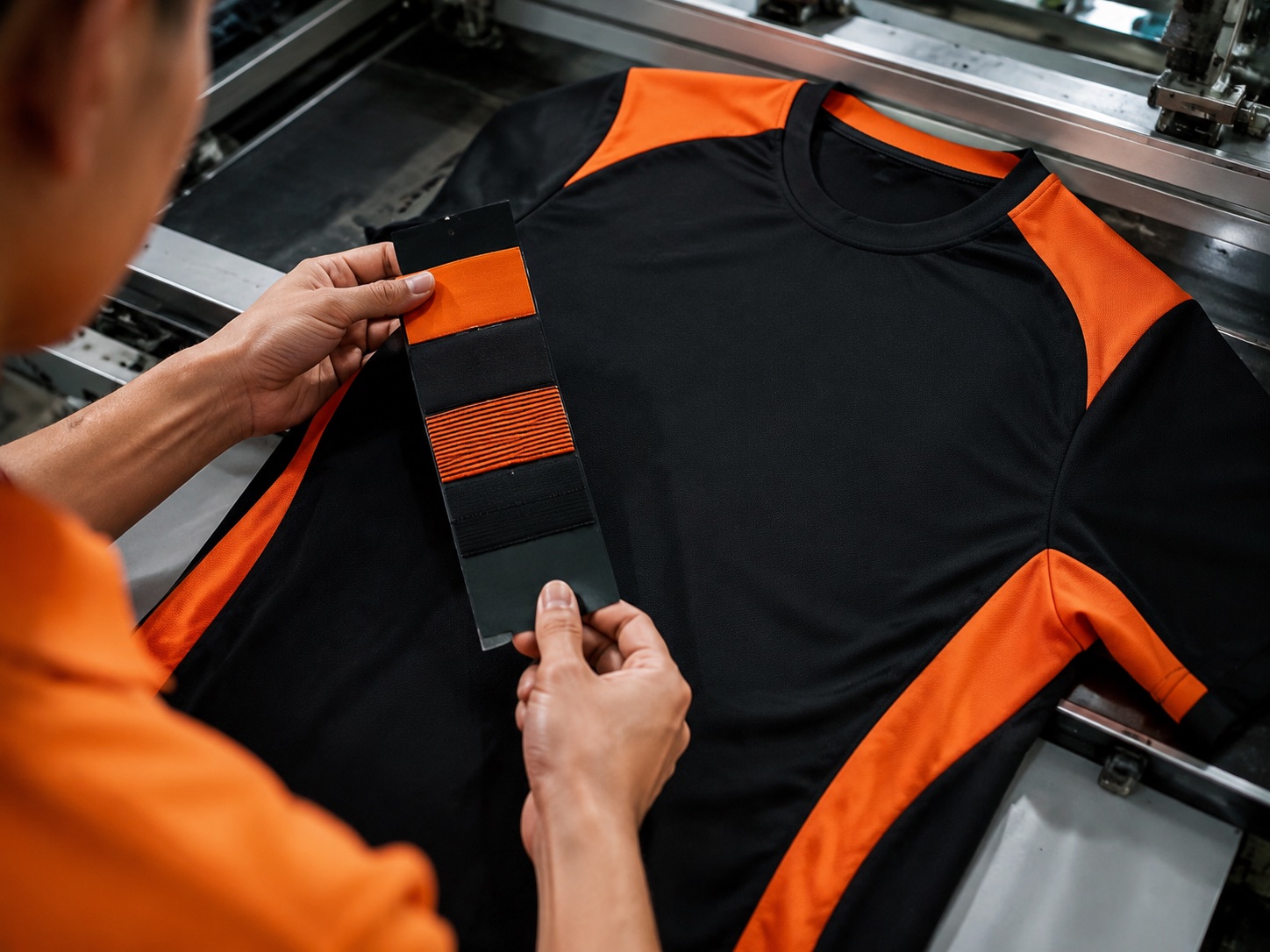
2Loom sample
A physical woven sample comes back from our trim partner for approval. Colours and legibility always read differently in thread than on screen.
 3
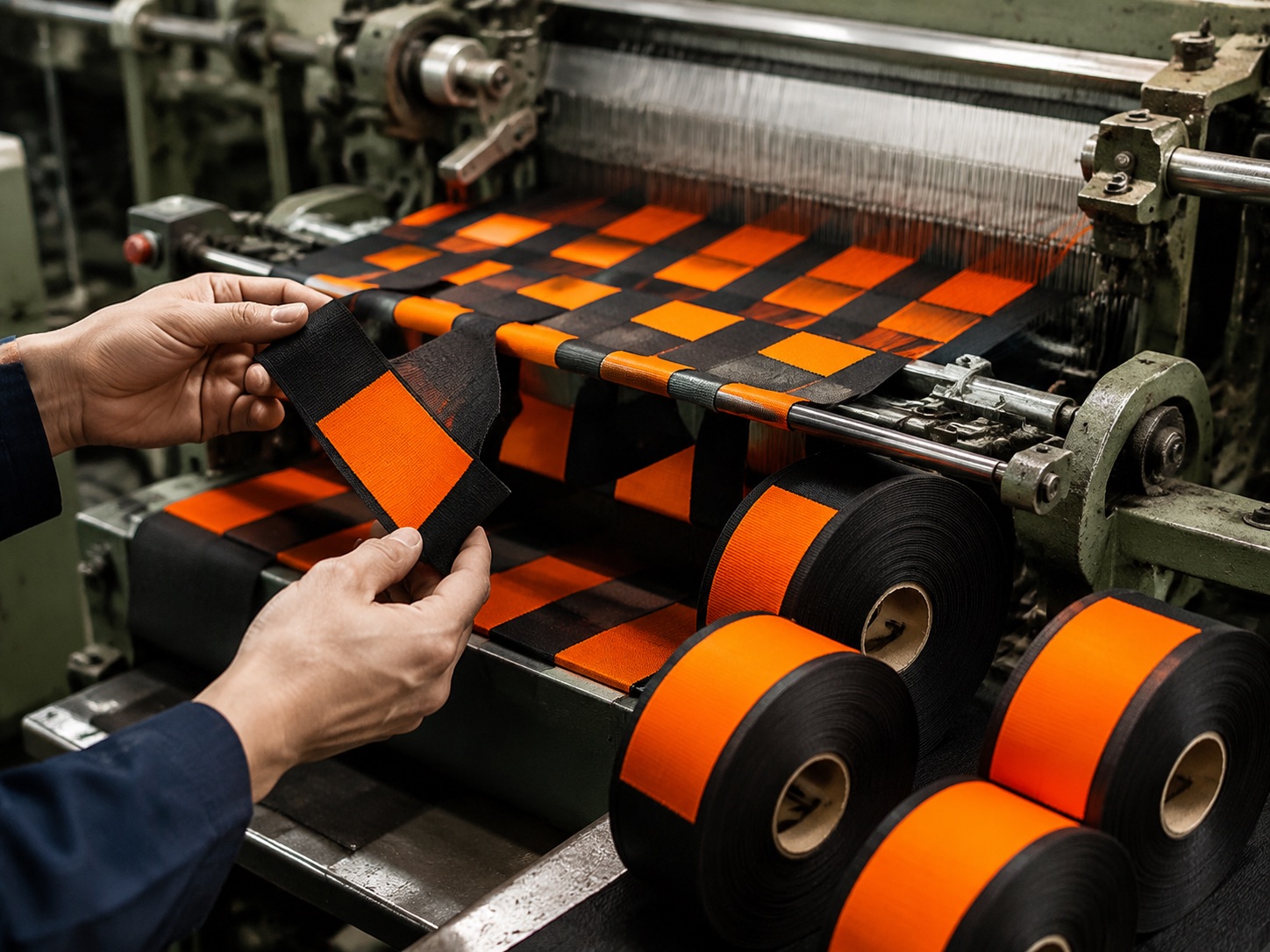
3Weaving
Approved labels are woven in bulk, cut and folded to the specified format.
 4
4Applied in make-up
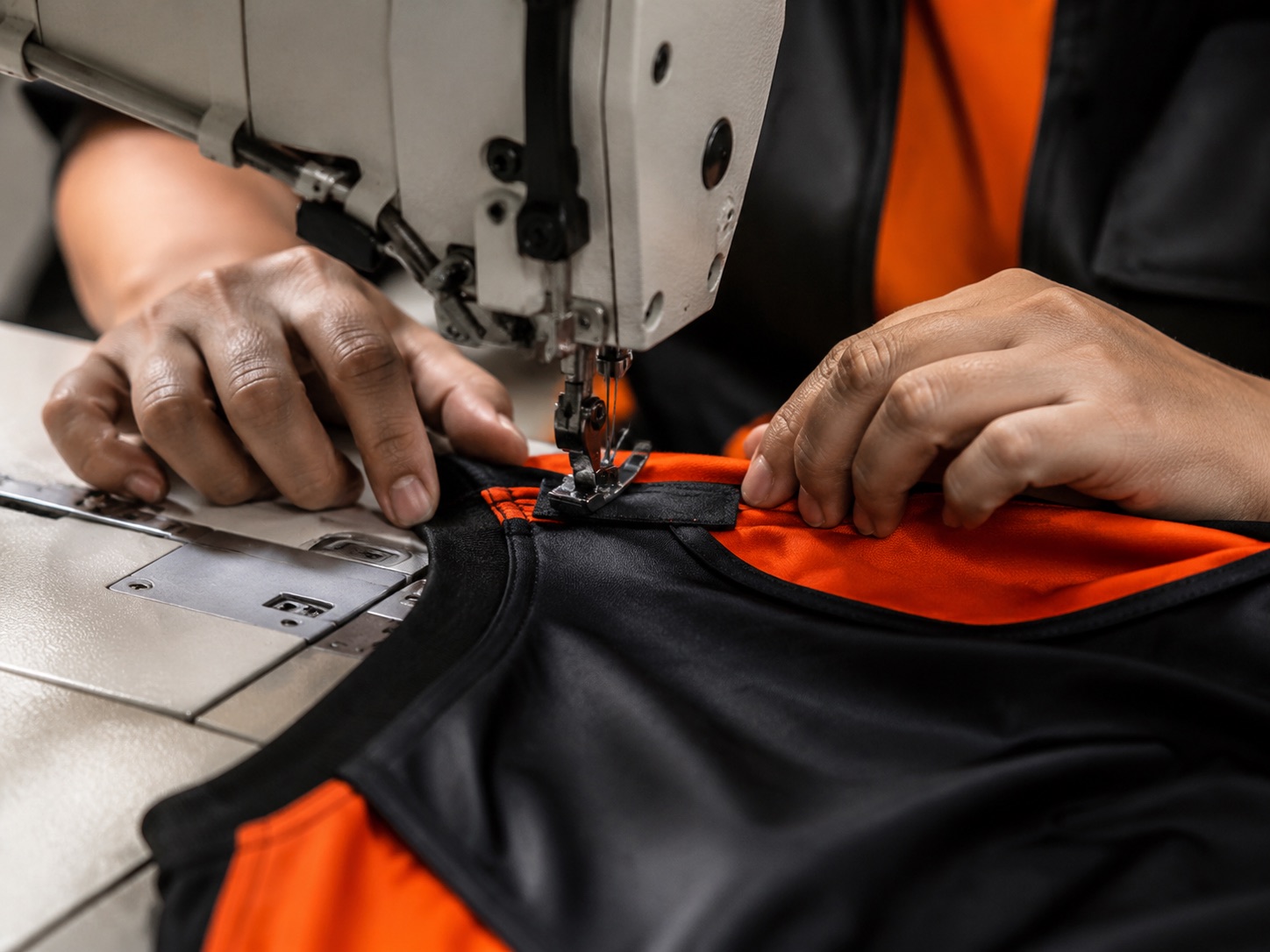
Labels are stitched in during garment assembly here, at the neck, side seam or hem — not added afterwards, which is what keeps them flat and secure.
Where It Works, and Where It Doesn't
Every method has real limits. Knowing them before you commit is worth more than a supplier telling you everything is possible.
Best for
- Private-label and own-brand ranges
- Neck labels, size tabs and hem tags
- Care and composition labels required for retail
- Brands who will reorder — labels amortise across runs
- Anywhere a garment needs to read as yours rather than a decorated blank
Not suited to
- One-off club orders, where the minimum exceeds the garment count
- Very small text or fine detail — thread cannot resolve it
- Photographic or gradient artwork
- Short lead times, since weaving is a separate production cycle
- Garments where a soft tagless print is preferred against the skin
Full Specification
| Property | Specification |
|---|---|
| Damask | Finest weave, best detail — the standard for premium neck labels |
| Satin | Smooth and lustrous, softer against skin, less fine detail |
| Taffeta | Most economical, crisper hand, best for care and size labels |
| Loop fold | Folded in half, both ends stitched — the usual neck label |
| End fold | Ends turned under, sewn flat — common for hem tabs |
| Mitre fold | Corners folded, sits flat with a finished edge |
| Tagless option | Heat-transfer printed neck branding, no label at all |
| Minimum text | About 4 mm — below that, thread closes the letterform |
| Lead time | Longer than garment production; order ahead |
What to Send Us
Label artwork is drawn at actual size, which is usually far smaller than people expect. A logo that works on a chest print often needs simplifying for a 40 mm label.
| Requirement | Detail |
|---|---|
| Format | Vector — AI, EPS or PDF |
| Size | Specify the finished label dimensions in millimetres |
| Colours | Pantone references; thread colour count affects cost |
| Minimum text | About 4 mm letter height |
| Care symbols | Supply required wash symbols and composition wording |
| What we will flag | Detail that will not survive at label scale |
Not sure whether your files will work? Send them over and we will tell you before you commit — see the full artwork guidelines.
Choosing a method
Labels & Trims Compared
The decision is usually between a woven label, a printed one, or no label at all. Each is legitimate for different orders.
- Woven vs printed labels
- Woven lasts the life of the garment and feels considerably more premium. Printed satin is cheaper with lower minimums and handles finer detail, but fades and cracks with washing. For a brand, woven; for a short-run club order, printed.
- Woven label vs tagless print
- A heat-transfer tagless neck print has no minimum, no lead time and nothing to irritate the skin — which is why performance brands increasingly use it. A woven label still reads as more premium on the hanger. Some ranges use both, on different garments.
- vs Embroidered branding
- Embroidery is better where branding is meant to be seen from outside. A label is flatter, sits inside the garment and is what a buyer checks to see whose product it is.
Up Close
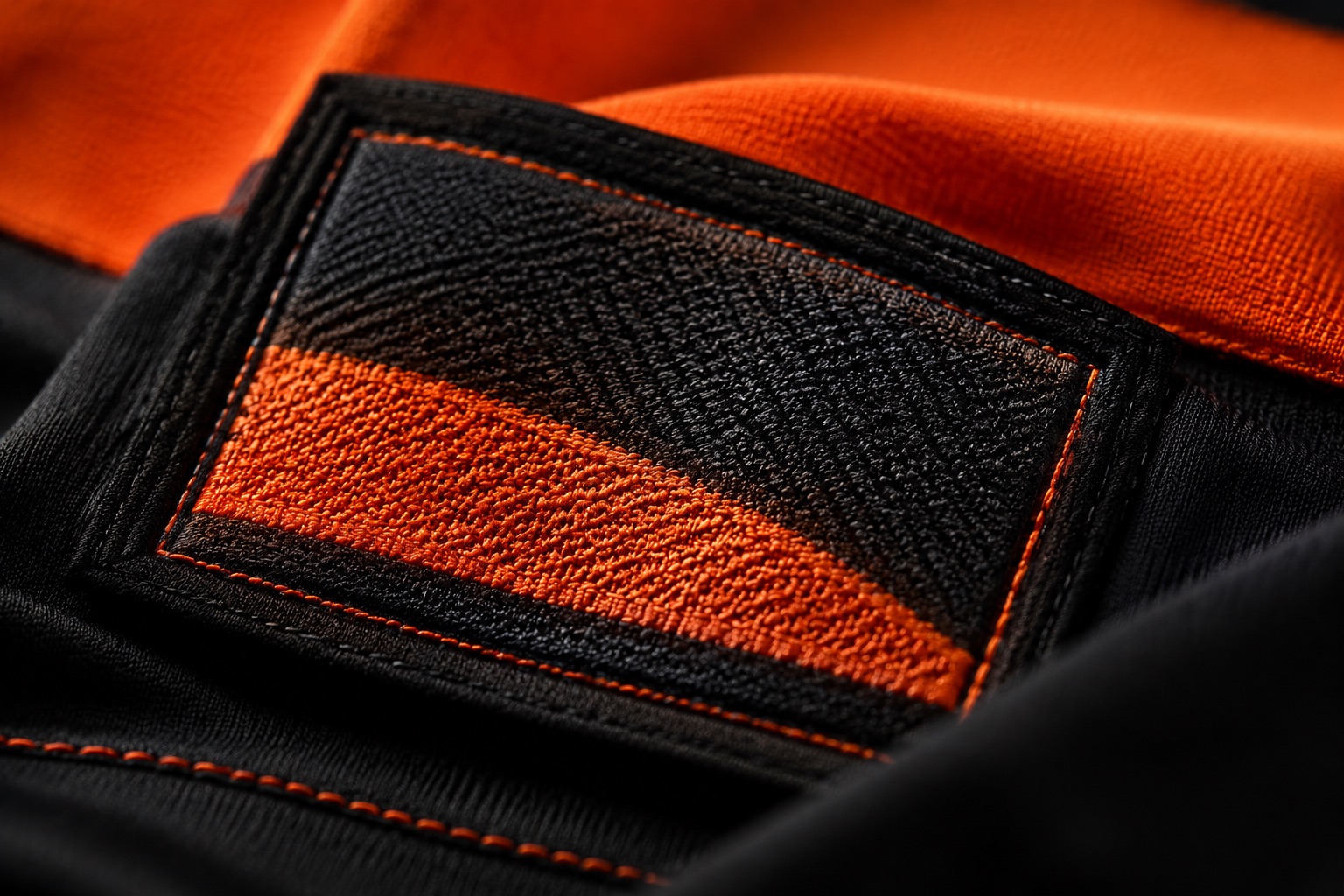
Woven, not printed
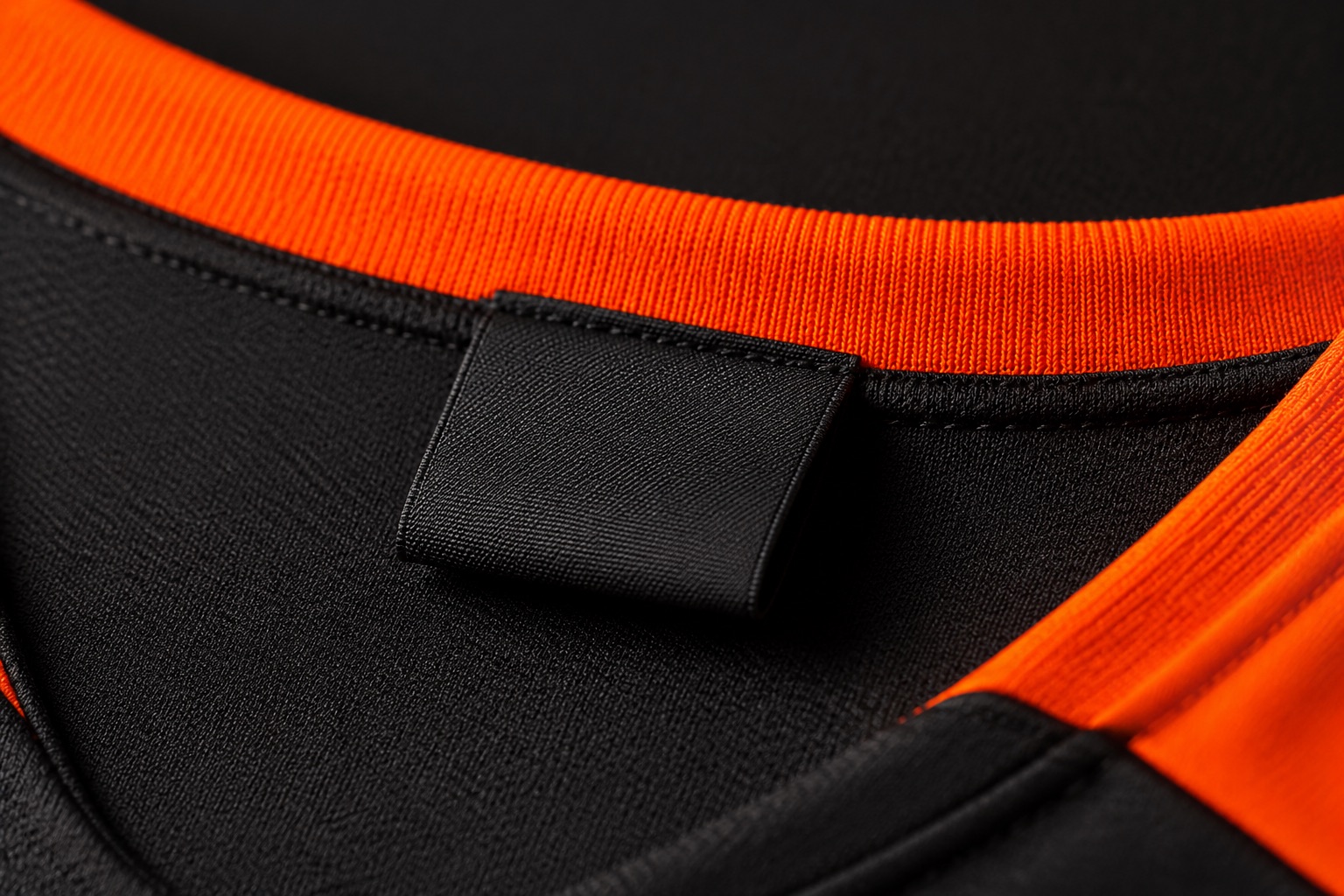
Loop fold at the neck
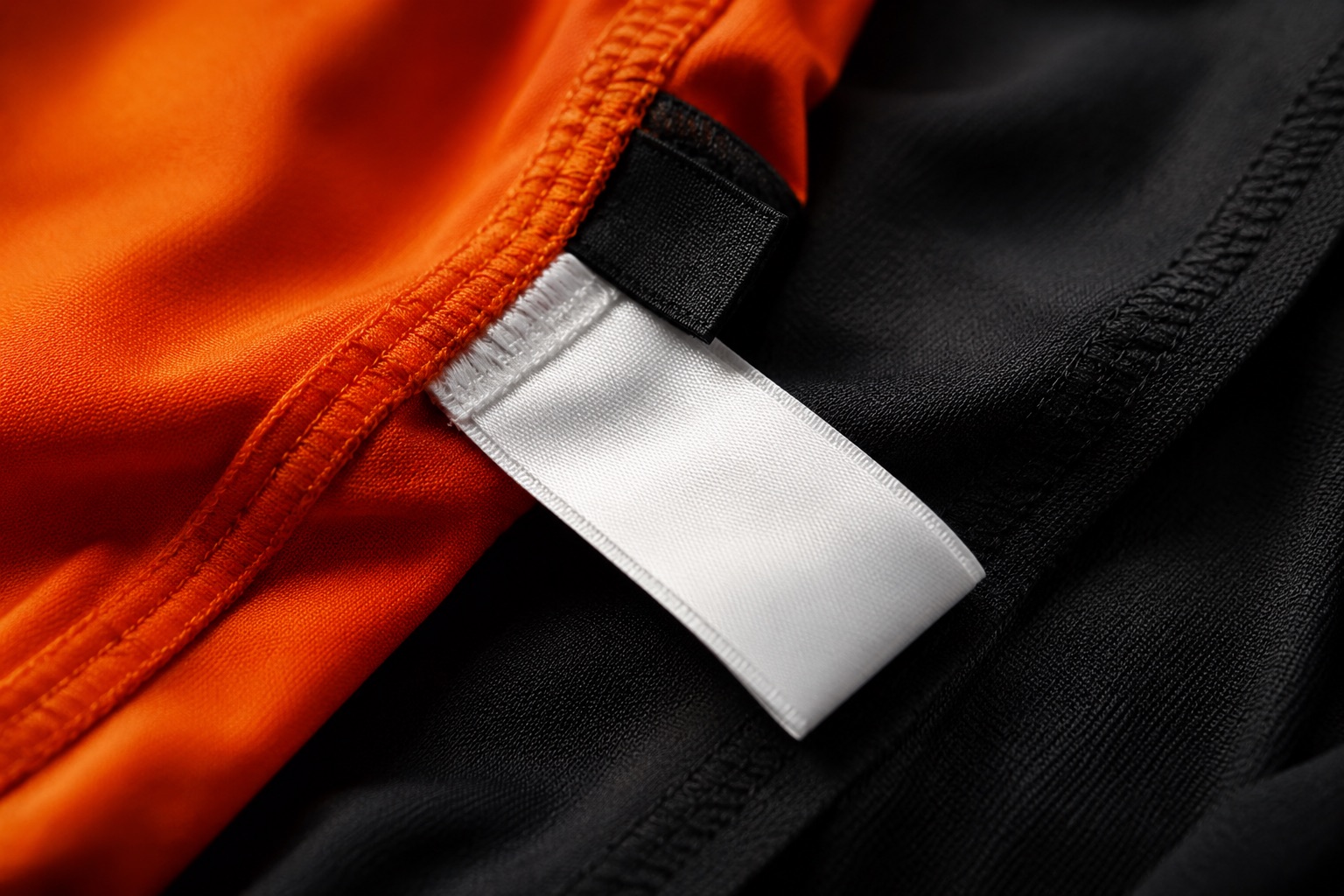
Size tab and care label
Where We Use It
This method is part of the range we build for every sport below.
Labels & Trims FAQs
Do you weave labels yourselves?
No — this is the one part of the process we do not run in-house. Labels are woven by our long-standing trim partner to our specification, then applied here during garment make-up. We would rather be straight about that than imply a loom we do not own.
What is the minimum order for woven labels?
Higher than for garments, because a loom has to be set up regardless of quantity. That is why labels are usually ordered ahead and across several production runs rather than per order — and why a one-off club order is often better served by a printed label.
What is the difference between damask, satin and taffeta?
Damask has the finest weave and holds the most detail — the standard for a premium neck label. Satin is smoother and softer against the skin with less fine detail. Taffeta is the most economical and crispest to the touch, usually used for care and size labels.
How small can text be on a label?
About 4 mm letter height. Below that the thread closes up the letterform and it becomes a smudge. Since labels are small to begin with, a logo that works on a chest print often needs simplifying for a 40 mm label — we will show you before it is woven.
Can you do tagless neck printing instead?
Yes. A heat-transfer neck print has no minimum, no separate lead time and nothing against the skin, which is why many performance brands prefer it. A woven label still looks more premium on the hanger, so some ranges use both across different garments.
Can you supply care and composition labels?
Yes, and for retail you will generally need them. Send us the wash symbols and composition wording required for your market and we will specify them alongside the brand label.
When should I order labels relative to the garments?
Ahead of them. Weaving is a separate production cycle with its own lead time, so labels ordered at the same time as the garments become the thing everything else waits for. Ordering a label quantity that covers several runs solves this and lowers the unit cost.
Need labels & trims on your next order?
Send us your artwork and quantities. We will confirm whether this is the right method for your garment — and tell you if it isn't.