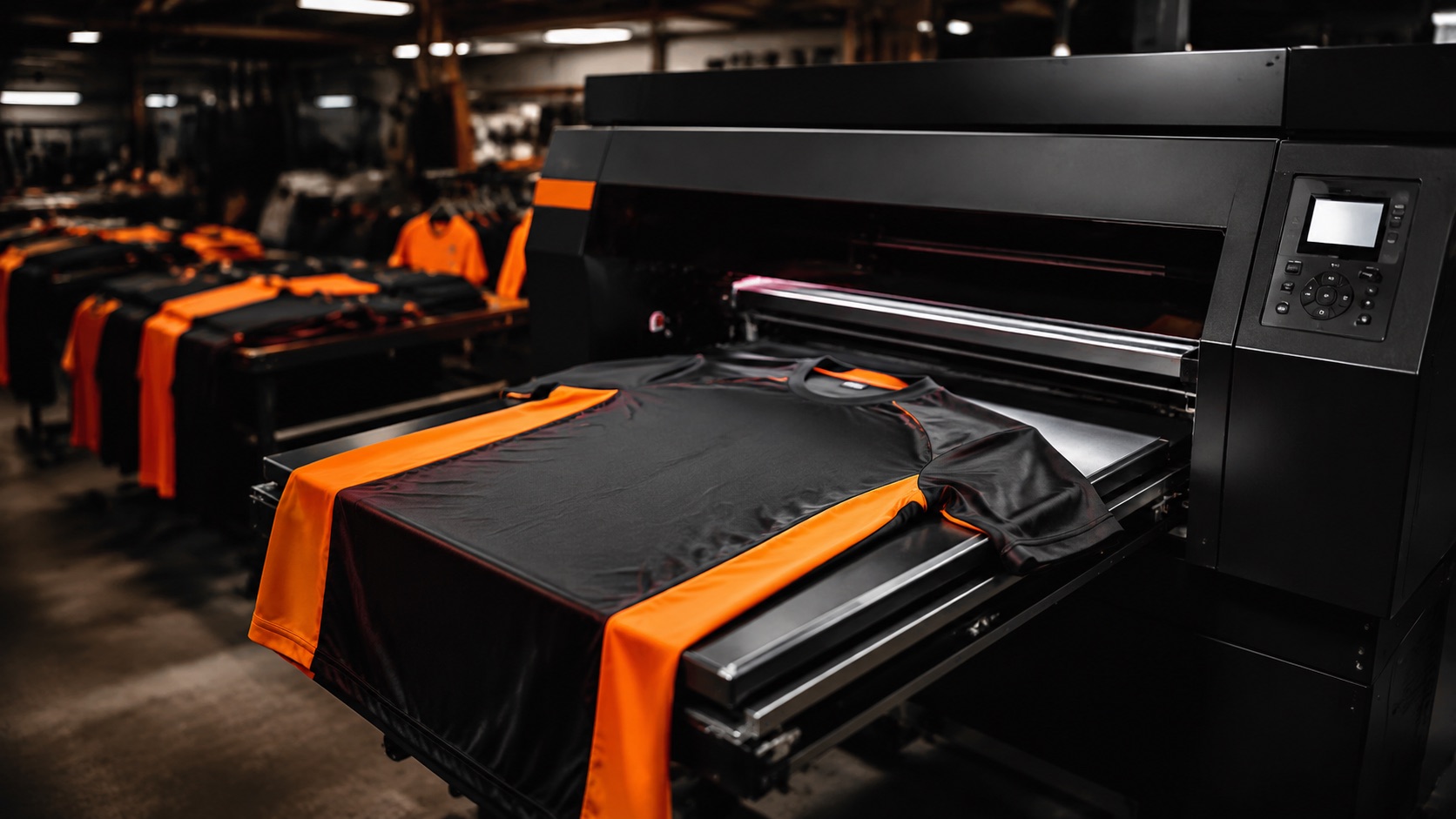
DTG — Photographic Detail on Cotton
An inkjet printer for garments. Unlimited colours, no screens, no minimum, and the softest finish of any print method on a cotton tee — because the ink soaks in rather than sitting on top.
- 20
- pieces per design
- Minimum order
- 15–20
- working days
- Bulk lead time
- 7–10
- working days
- Sampling
- 4
- export markets
- Shipping to
What dtg actually is
DTG prints ink directly into the garment with what is essentially a very large, very precise inkjet printer. On cotton the ink soaks into the fibres, so a finished print feels closer to a dyed shirt than to a decoration applied on top.
Because there are no screens and no per-colour cost, complexity is free. A photograph with a thousand shades costs exactly the same to print as a two-colour logo, and a single garment is as viable as fifty. That combination — unlimited colour, no minimum — is unique among the methods we run.
What it does not do is scale. Each garment is printed individually and takes minutes rather than seconds, so at three hundred pieces screen printing will be dramatically cheaper and faster. And it wants cotton: polyester needs different treatment and never gives quite the same result, which is why for technical sportswear we would point you to sublimation or DTF instead.
Equipment we run
- Epson direct-to-garment printer
- Pre-treatment station
- Curing tunnel
How It Works
Every stage below happens under our own roof, which is what keeps a reorder matching the original.
 1
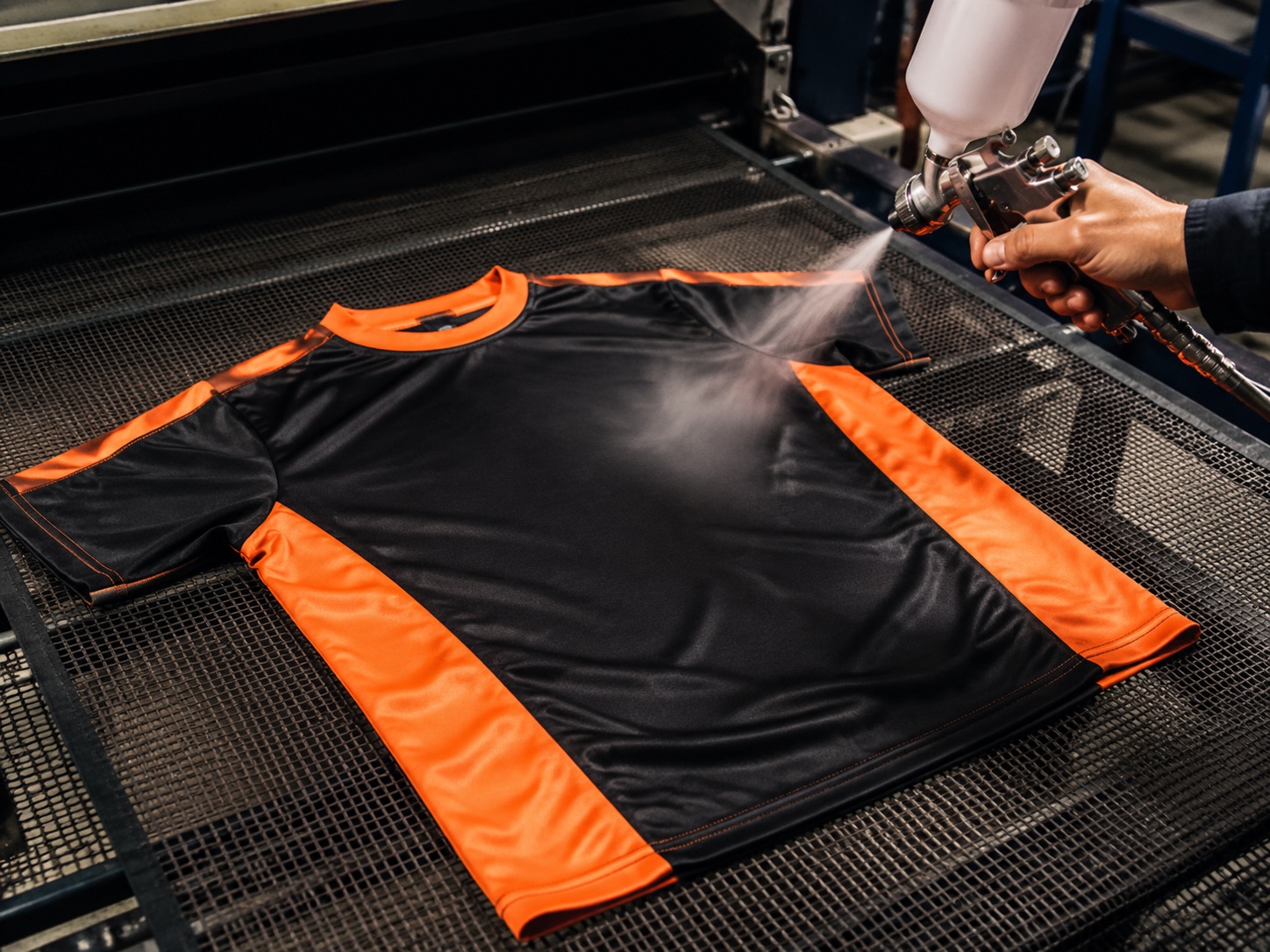
1Pre-treatment
The garment is sprayed with a pre-treat solution and pressed. On dark fabric this is what allows white ink to sit brightly rather than sinking away.
 2
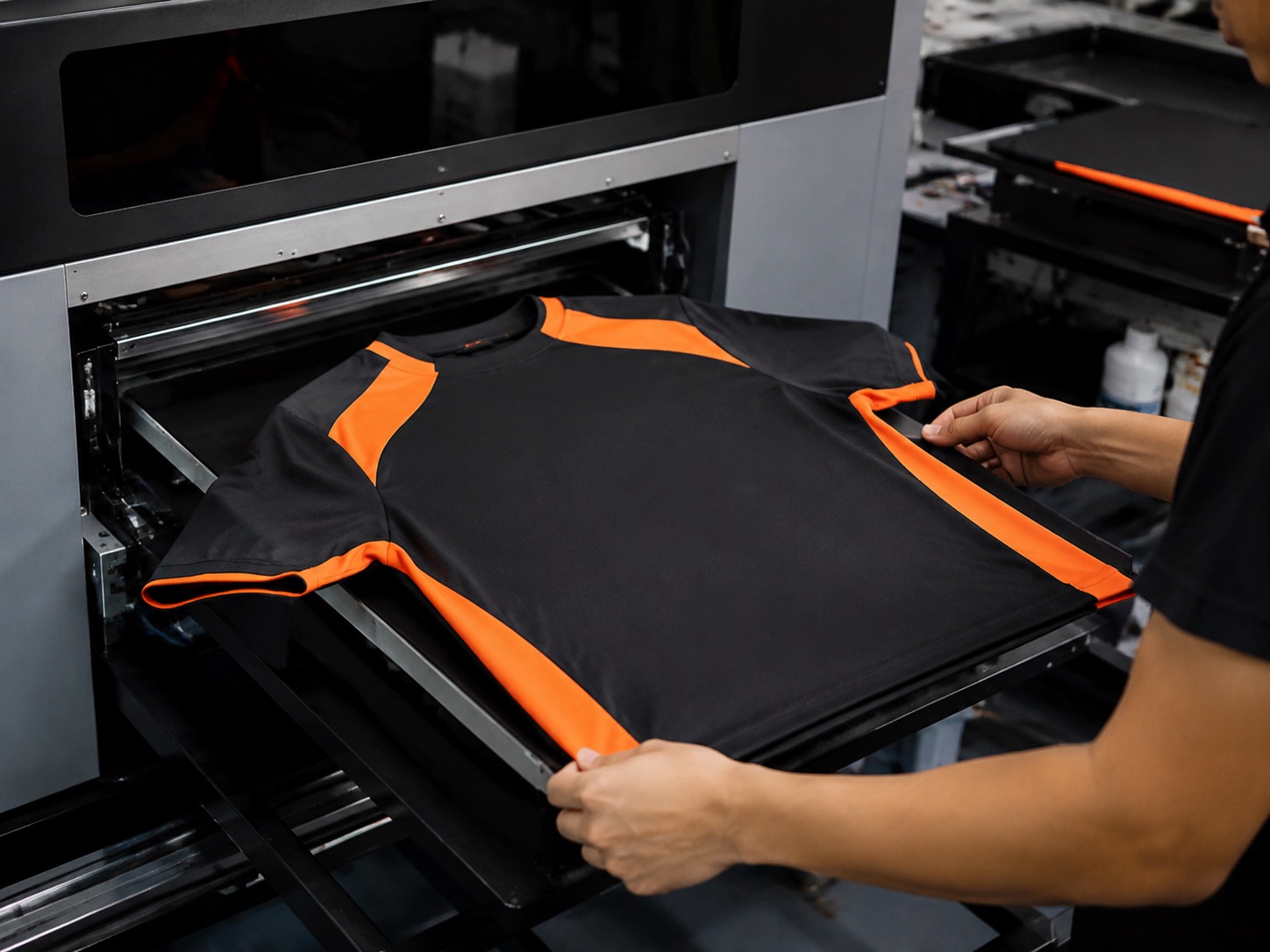
2Load & align
The garment is fixed on the platen, flat and square. Alignment here is what decides whether the print sits centred on the finished shirt.
 3
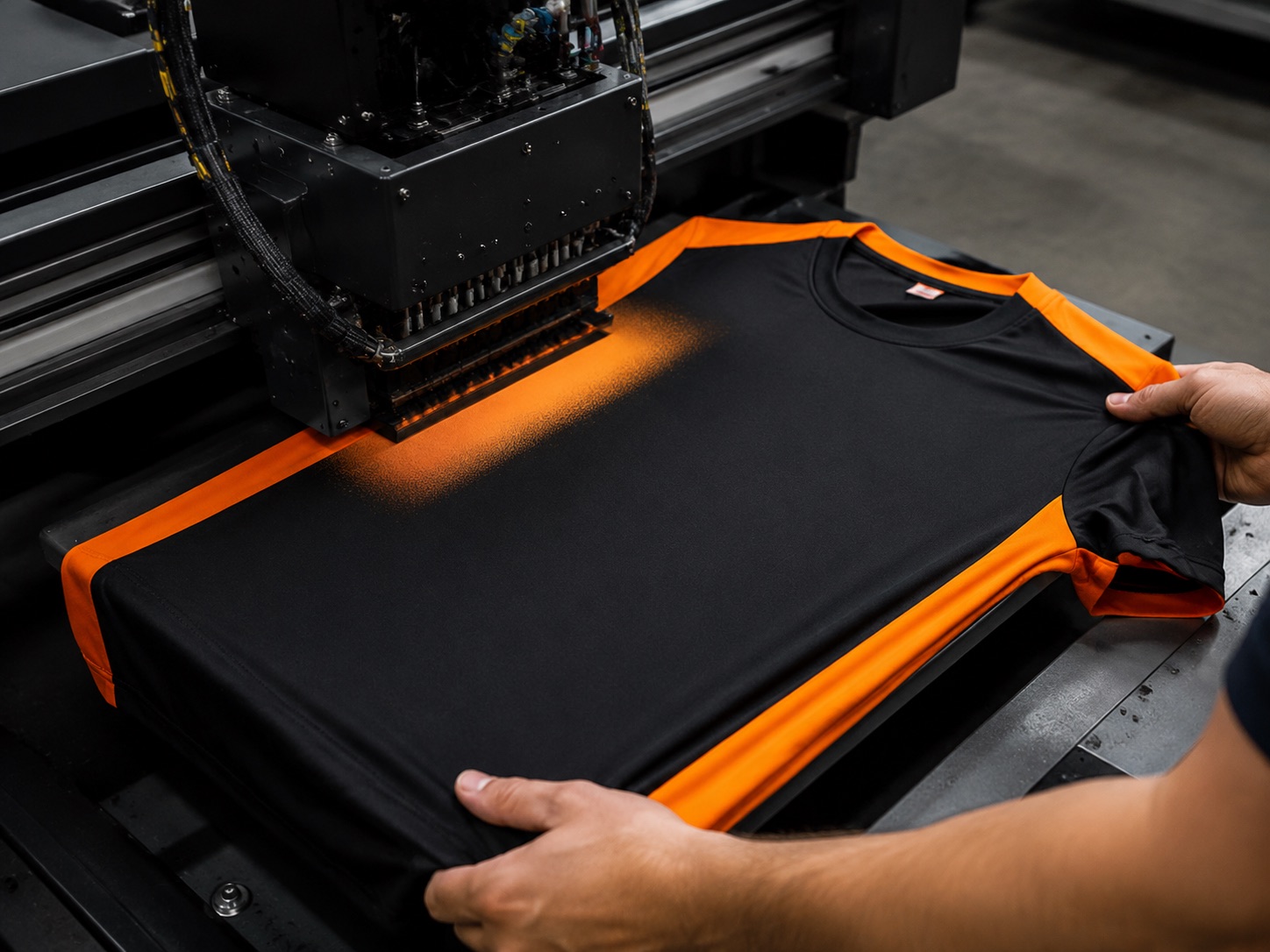
3Print
The head passes across the garment laying a white underbase where needed, then colour on top. Nothing is applied where the design is empty.
 4
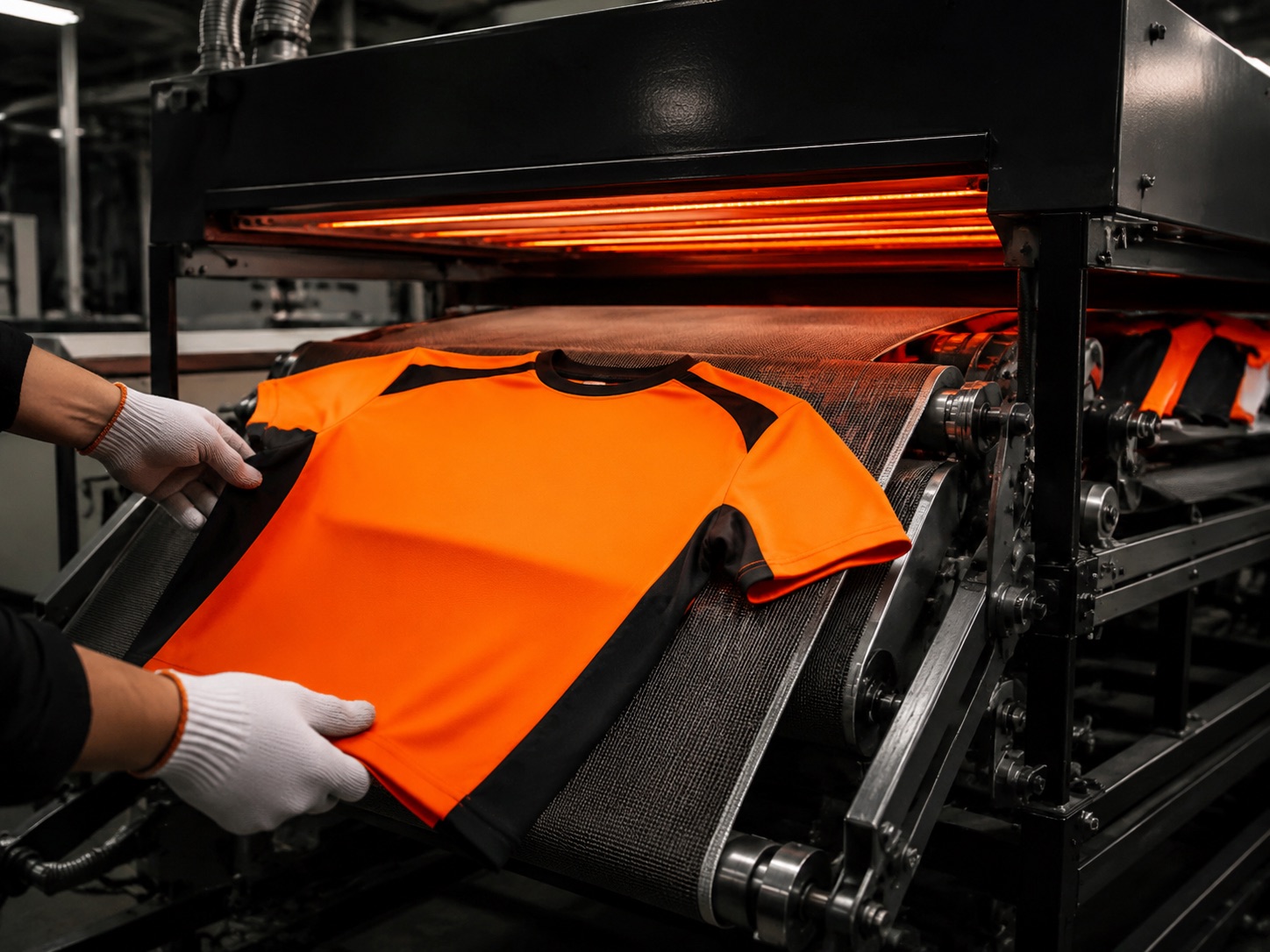
4Cure
The garment passes through a curing tunnel to fix the ink permanently into the fibre.
Where It Works, and Where It Doesn't
Every method has real limits. Knowing them before you commit is worth more than a supplier telling you everything is possible.
Best for
- Photographic and full-colour artwork
- Cotton tees, hoodies and supporter wear
- One-offs, samples and very small runs
- Designs with unlimited colours and fine tonal detail
- Soft-feel prints on light cotton garments
- Testing a design before committing to screens
Not suited to
- High volumes — it is slow per piece and does not scale
- Polyester and technical sportswear fabrics
- Very large solid blocks of colour, where screen printing is denser
- Neon and metallic colours, which inkjet cannot reproduce
- Anywhere a completely zero hand feel is required on dark fabric
Full Specification
| Property | Specification |
|---|---|
| Substrate | Cotton and cotton-rich blends; limited on polyester |
| Pre-treatment | Required on dark garments for white ink opacity |
| Colour range | Unlimited CMYK plus white, photographic tonal detail |
| Hand feel | Very soft on light cotton; noticeable underbase on dark |
| Setup cost | None — no screens, no per-colour charge |
| Speed | Minutes per garment — the limiting factor at volume |
| Minimum quantity | One piece |
| Wash durability | Good on cotton when cured and cared for correctly |
What to Send Us
DTG prints exactly what you supply, at final size, so file quality shows directly in the result. This is the method where a low-resolution file is most obviously exposed.
| Requirement | Detail |
|---|---|
| Preferred format | PNG with transparent background, or vector |
| Resolution | 300 dpi at final printed size, minimum |
| Colour space | sRGB — DTG is closer to screen colour than print colour |
| Transparency | Fully supported, unlike screen printing |
| Avoid | Neon and metallic colours — inkjet cannot reproduce them |
| Dark garments | Tell us — the white underbase changes how colours render |
Not sure whether your files will work? Send them over and we will tell you before you commit — see the full artwork guidelines.
Choosing a method
DTG Compared
DTG occupies a narrow but genuinely useful niche: complex artwork, on cotton, in small numbers. Outside that, another method is almost always better.
- vs Screen printing
- No contest at volume — screen printing is far cheaper and faster above about 100 pieces. DTG wins below that, and on any design with more colours than screens you would want to pay for.
- vs DTF transfer
- DTF works on any fabric and is faster per piece. DTG feels softer on cotton because the ink is in the fibre rather than bonded on top. On a cotton tee, DTG; on polyester or a blend, DTF.
- vs Sublimation
- Opposite substrates — DTG wants cotton, sublimation requires polyester. They almost never compete; the garment decides which one you are using.
Up Close
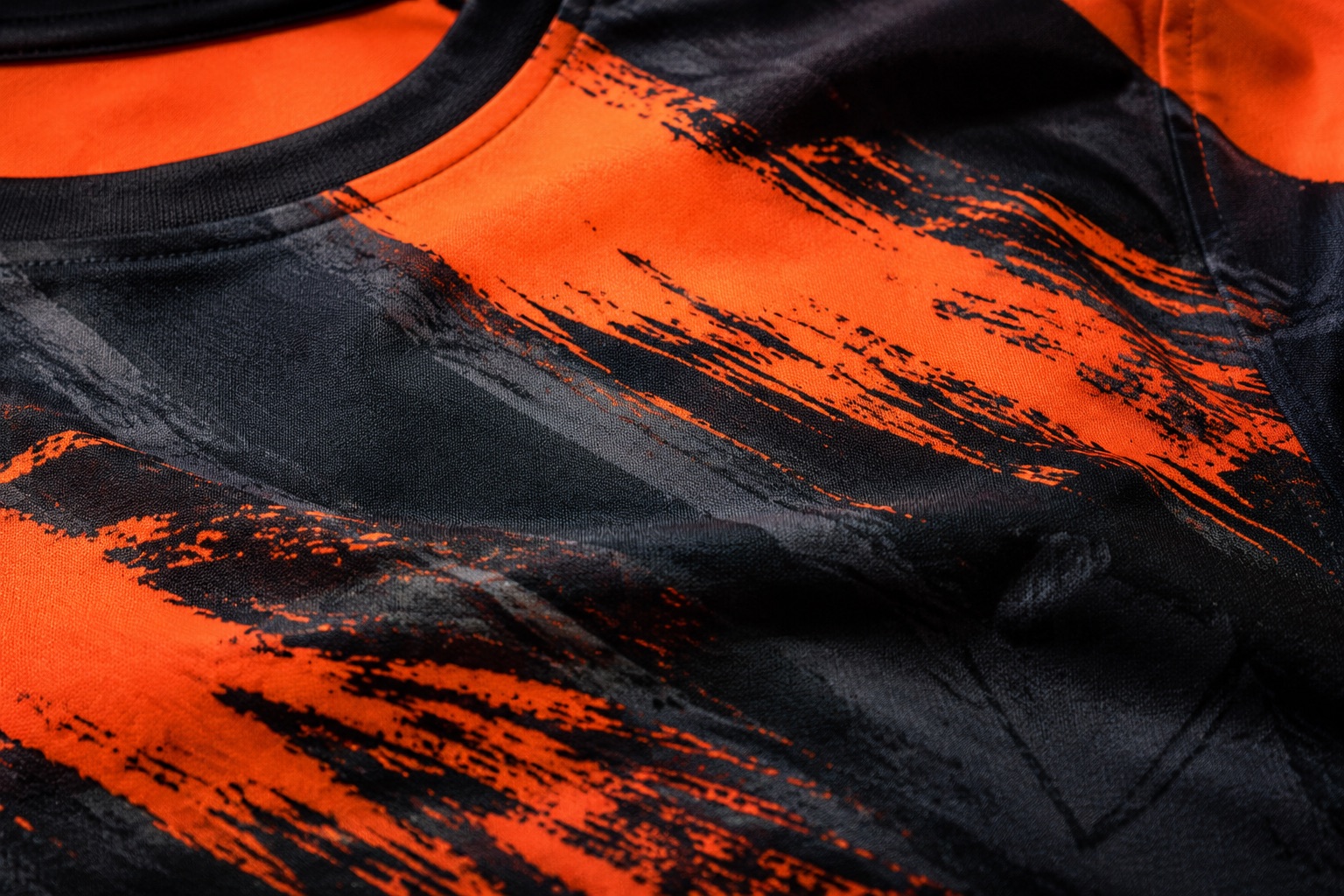
Photographic tonal detail
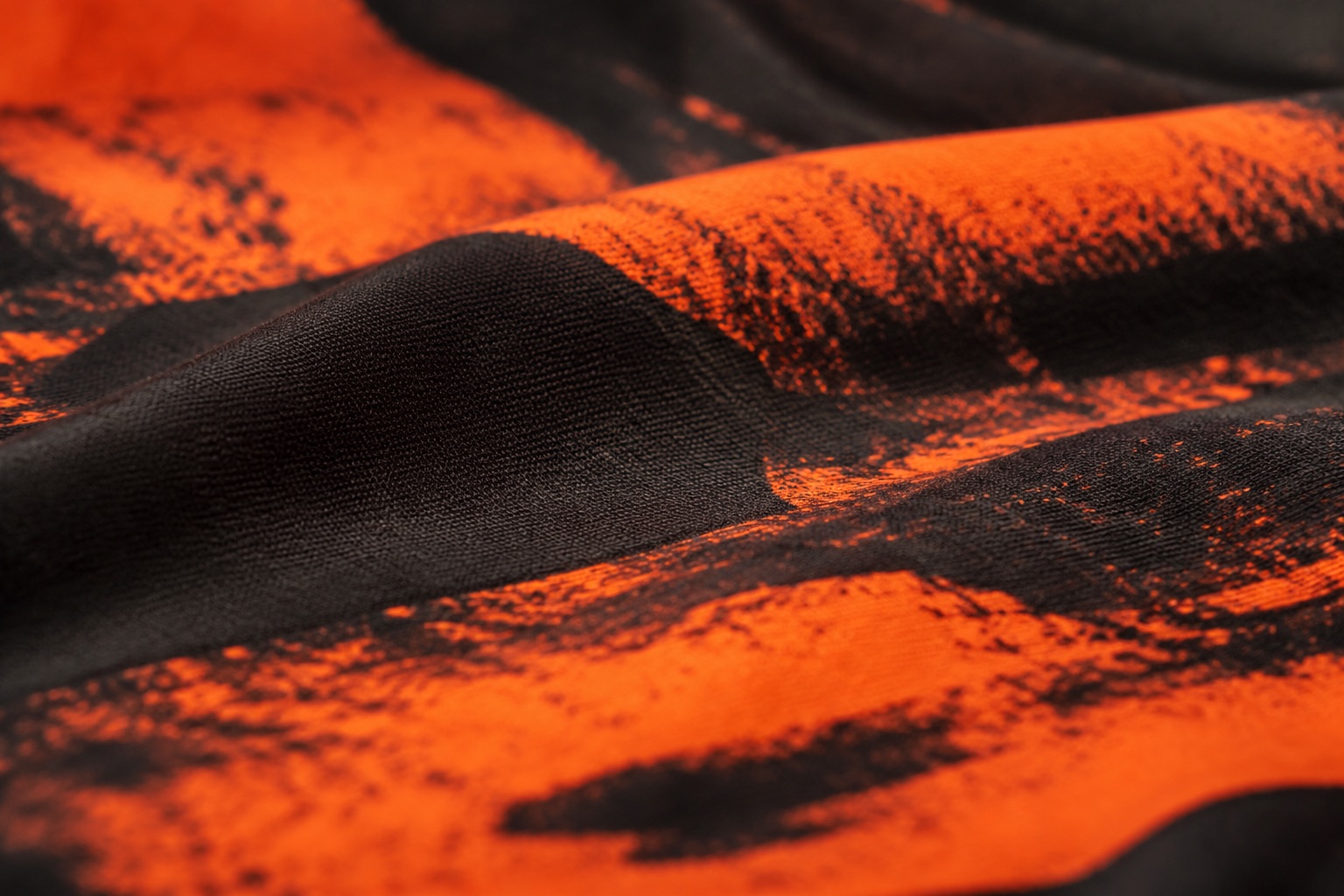
Ink in the fibre, not on it
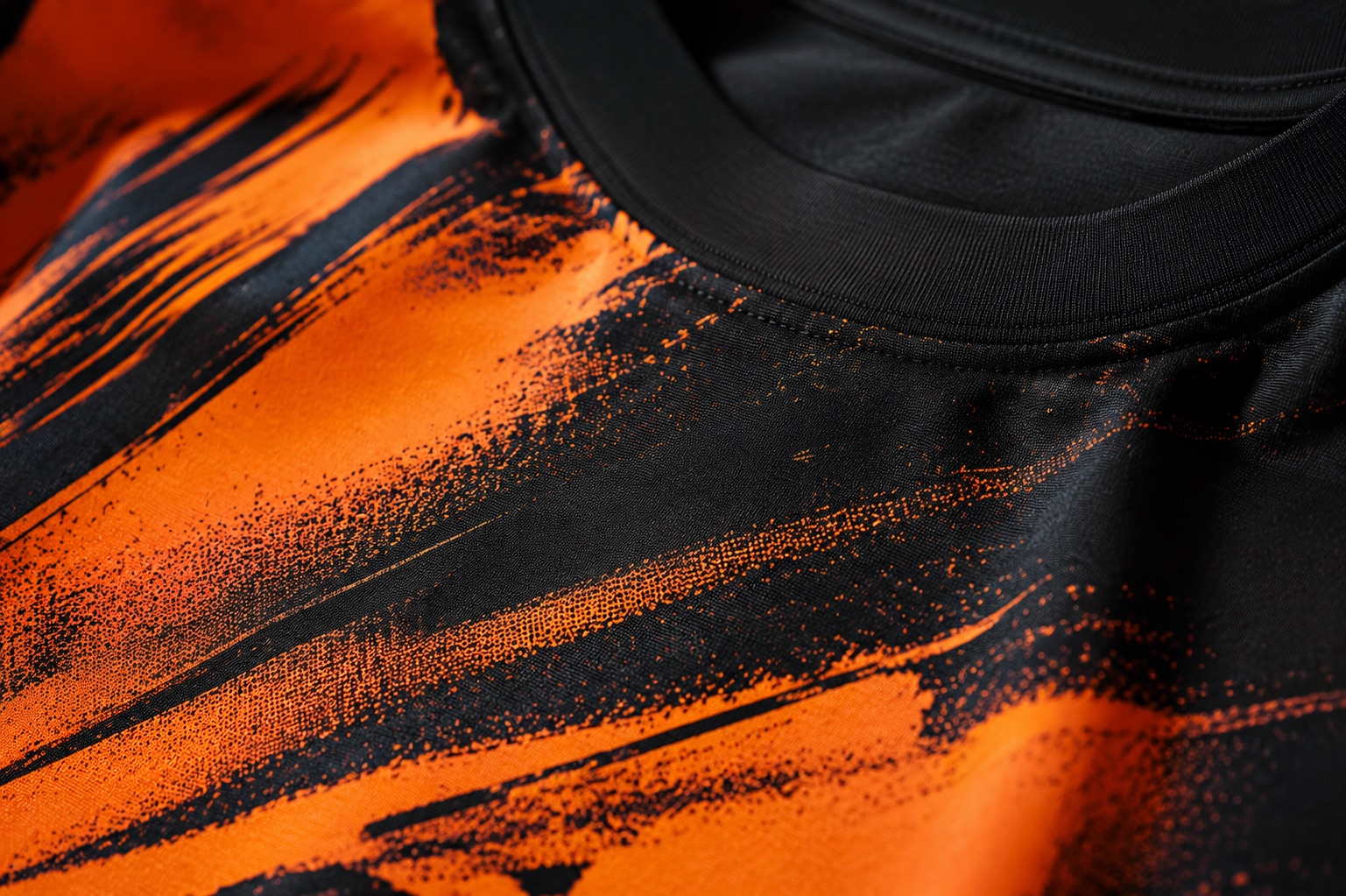
White underbase on dark cotton
Where We Use It
This method is part of the range we build for every sport below.
DTG FAQs
What is the minimum order for DTG?
One piece. There are no screens and no setup, so a single garment is entirely viable — which is why DTG is often how we produce samples and one-off staff or gift items.
Does a more complex design cost more?
No. Colour count is irrelevant to DTG, so a full photograph costs the same as a simple logo. Quantity and print area drive the price, not complexity.
Can you print DTG onto polyester sportswear?
Only to a limited degree, and not as well. DTG is formulated for cotton, where ink bonds into the fibre. For polyester teamwear, sublimation or DTF will give a far better and more durable result, and we will say so rather than take the order.
Why is pre-treatment needed?
On dark garments, white ink sprayed straight onto untreated cotton sinks in and goes grey. Pre-treatment creates a surface for the white underbase to sit on, which is what keeps colours bright. It is skipped on light garments.
How does DTG feel compared with screen printing?
Softer on light cotton — noticeably so, because the ink is in the fabric rather than a layer on top. On dark garments the white underbase adds some hand feel, so the gap narrows.
Can DTG print neon or metallic colours?
No. Inkjet builds colour from CMYK, which cannot produce fluorescents or metallics. Those need screen printing with a specialist ink, and we will flag it if your artwork depends on them.
Should we use DTG for 500 supporter tees?
No — screen printing, comfortably. DTG prints one garment at a time in minutes, so 500 pieces is neither fast nor economical. Its strength is the first fifty, not the next five hundred.
Need dtg on your next order?
Send us your artwork and quantities. We will confirm whether this is the right method for your garment — and tell you if it isn't.