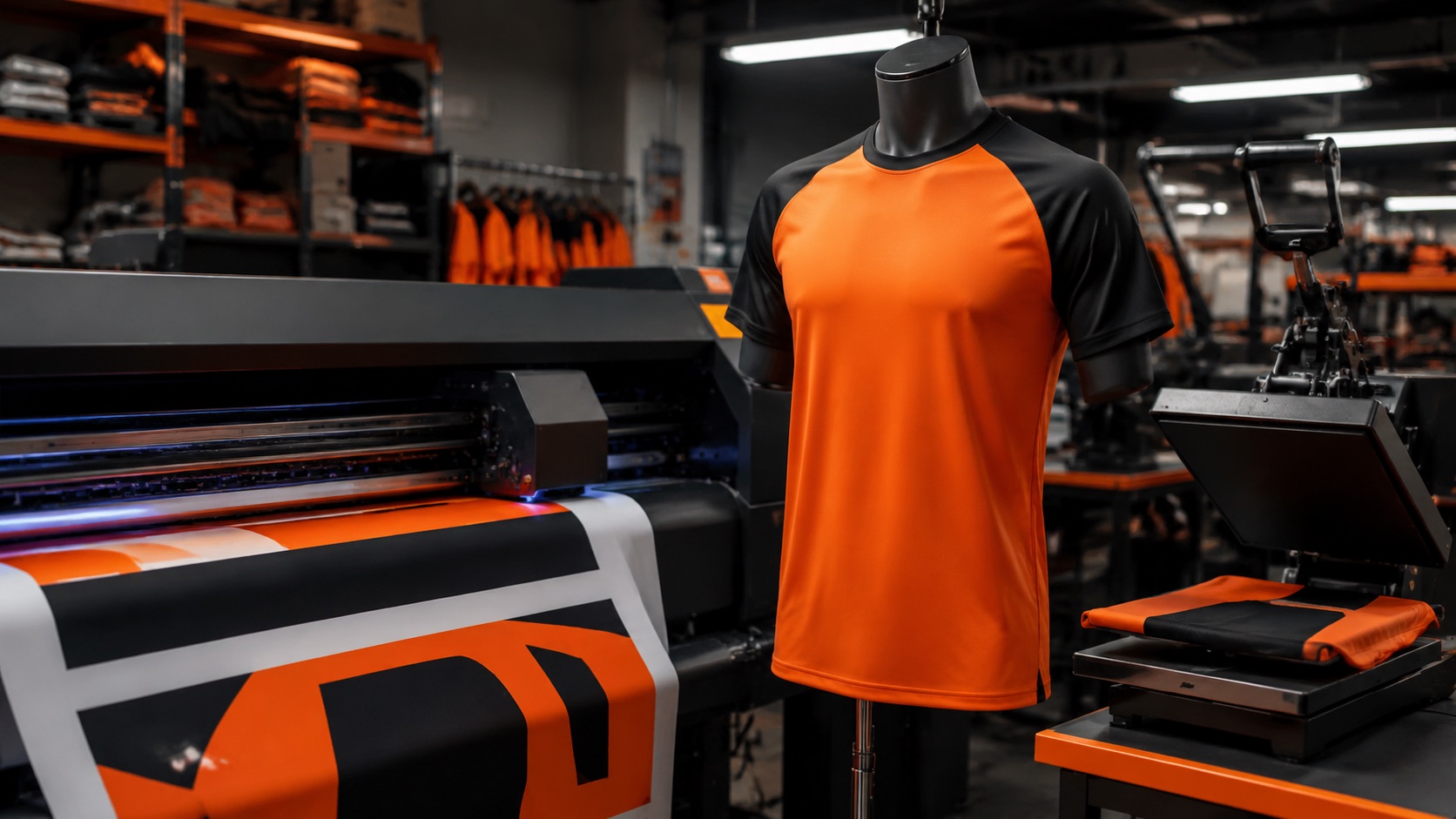
DTF — The Method With No Fabric Rules
Full-colour printing that works on cotton, polyester, blends, light or dark, and prints white. Applied after the garment is made, which is what makes it the answer for a late squad addition.
- 20
- pieces per design
- Minimum order
- 15–20
- working days
- Bulk lead time
- 7–10
- working days
- Sampling
- 4
- export markets
- Shipping to
What dtf actually is
DTF prints your design onto a PET film, coats it with a hot-melt adhesive powder, cures it, and then heat-presses it onto the garment. The design ends up bonded to the surface of the fabric rather than inside the fibre.
That surface bond is what gives DTF its defining advantage: it does not care what the fabric is. Cotton, polyester, blends, nylon, light or dark — all work. It prints white, which sublimation cannot do at all, and it can be applied to a finished garment, which sublimation also cannot.
The trade-off is that a DTF print sits on top of the cloth, so you can feel it. On a small crest or a squad number that is irrelevant. Across a full chest panel it becomes noticeable, and on a lightweight technical jersey it is the wrong choice. Sublimation is the better garment where the fabric allows it; DTF is the method for everywhere sublimation cannot go.
Equipment we run
- DTF printer with white ink
- Powder application and curing unit
- Heat presses
How It Works
Every stage below happens under our own roof, which is what keeps a reorder matching the original.
 1
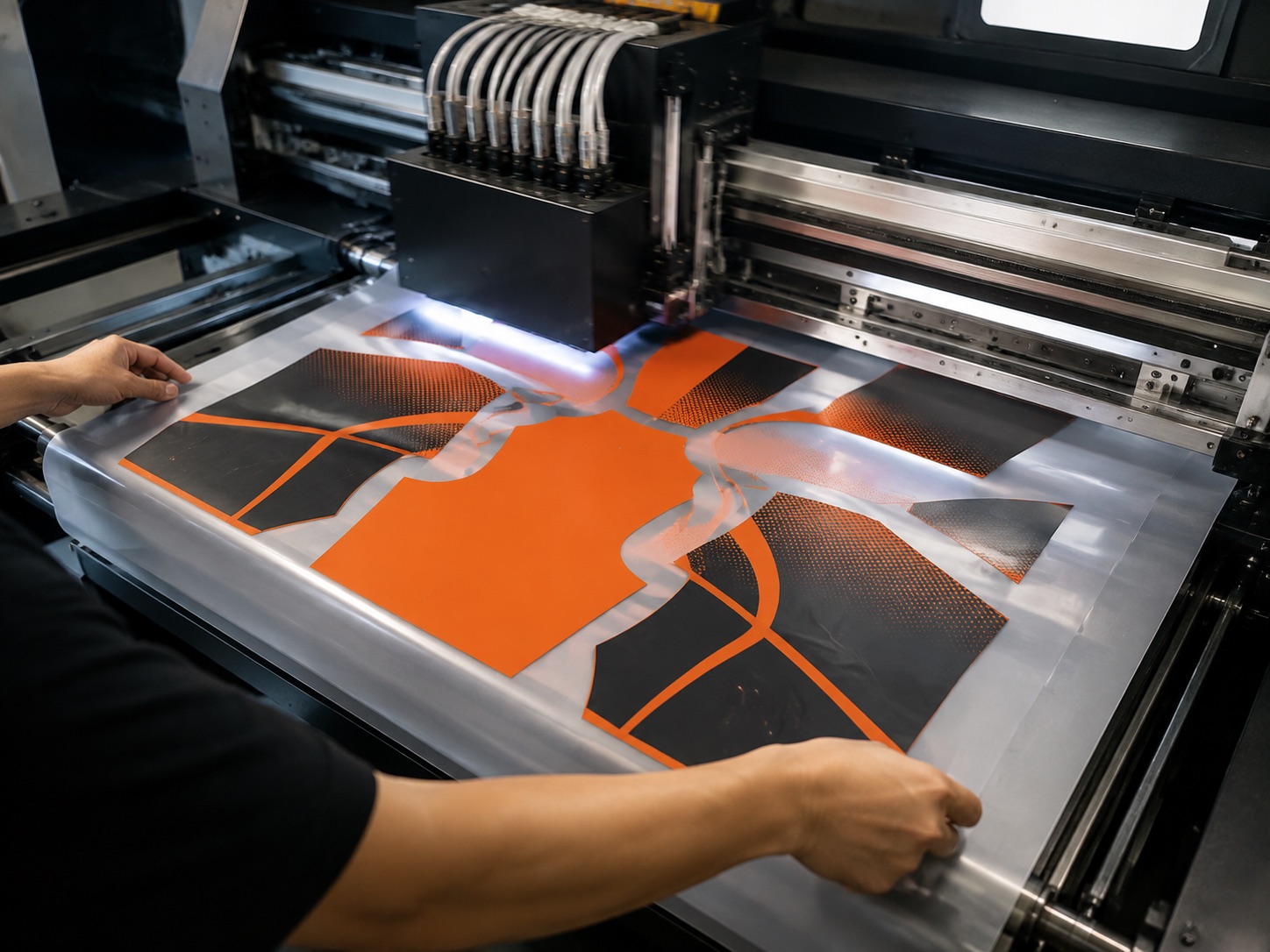
1Print to film
Your artwork prints onto PET film in full colour, with a white ink layer laid behind it so the design stays opaque on dark fabric.
 2
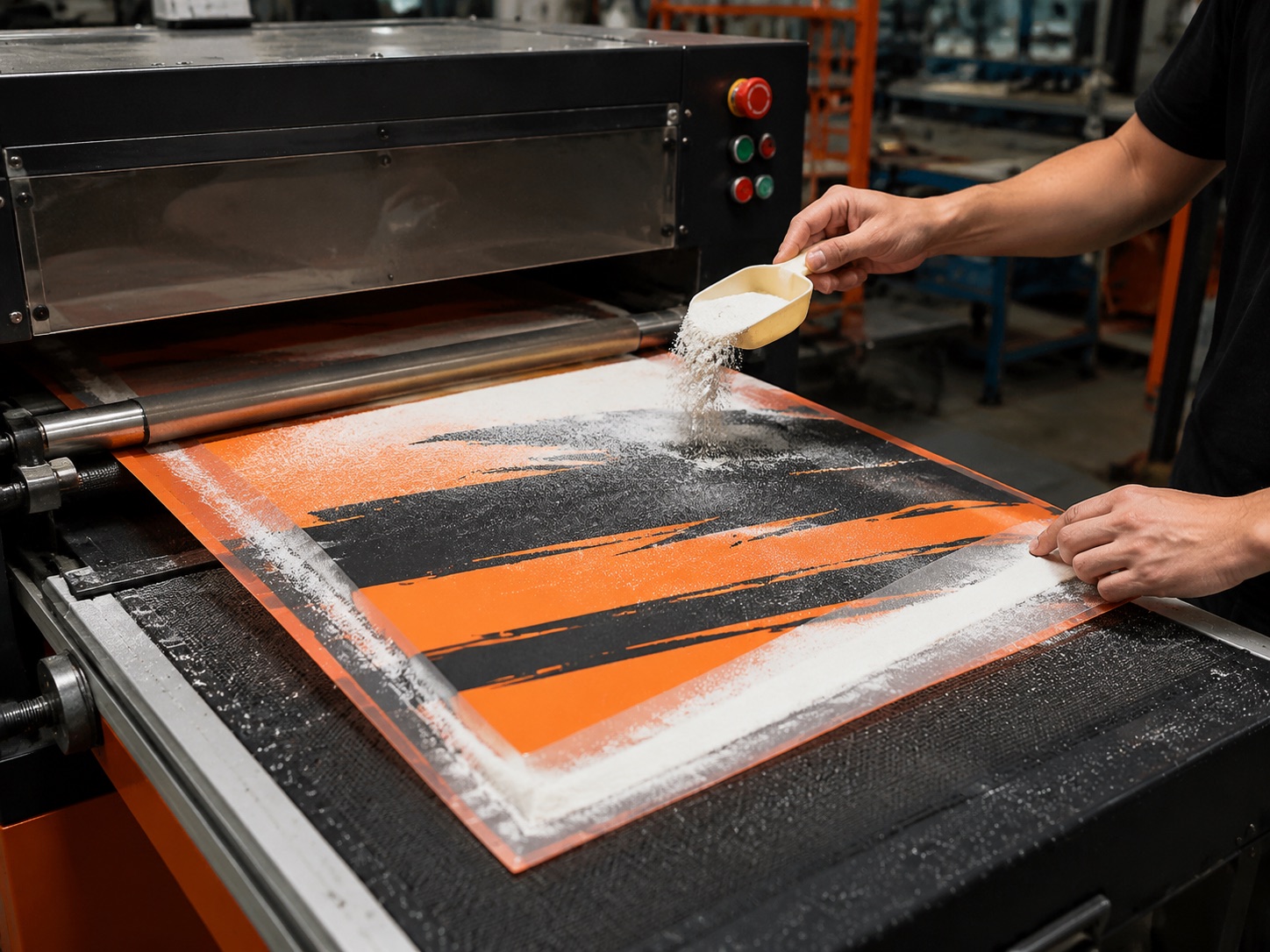
2Powder & cure
Hot-melt adhesive powder is applied to the wet ink and cured. This is the layer that will bond the print to the fabric.
 3
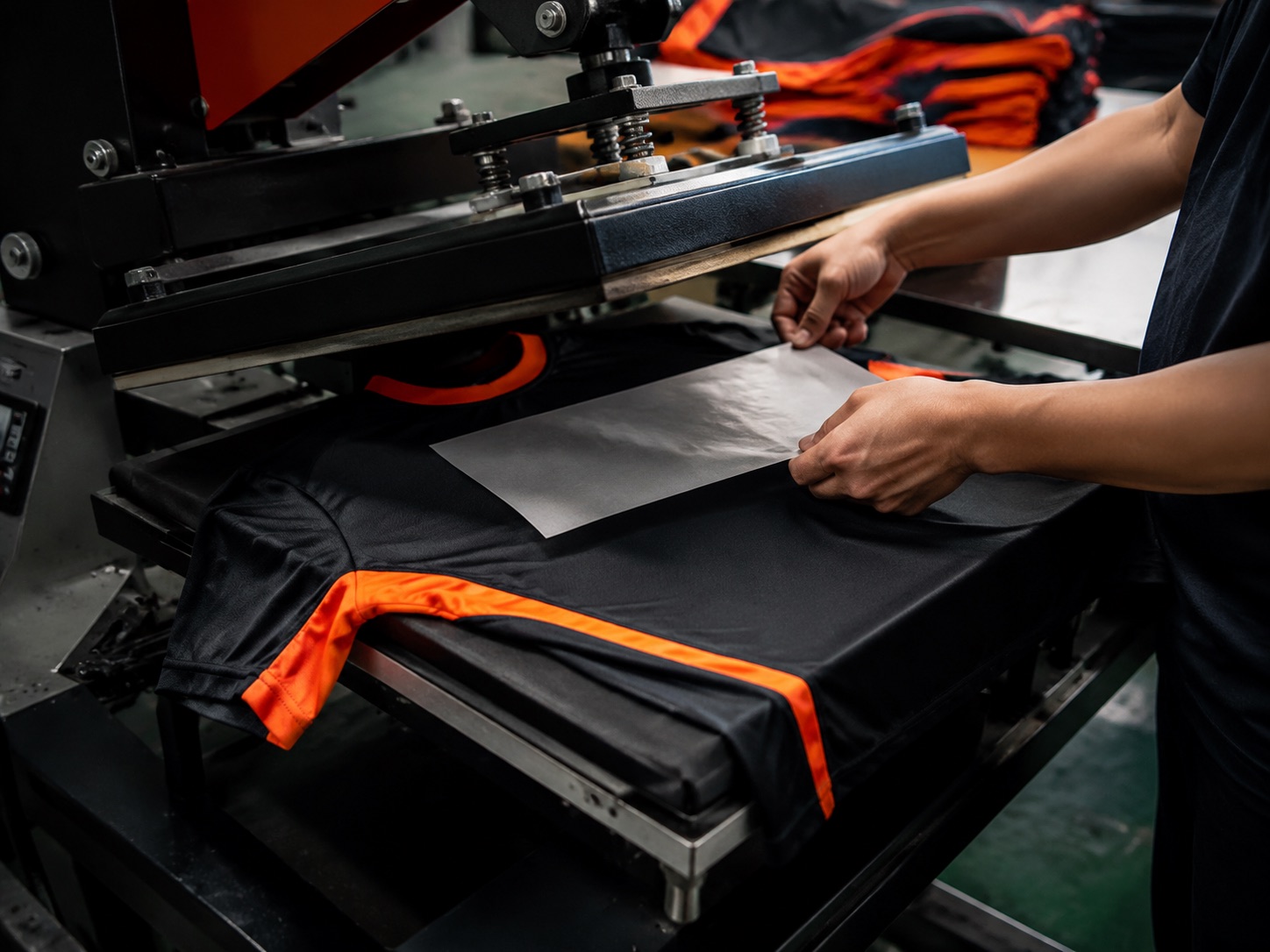
3Heat press
The film is pressed onto the garment at temperature and pressure, bonding the design into the surface of the cloth.
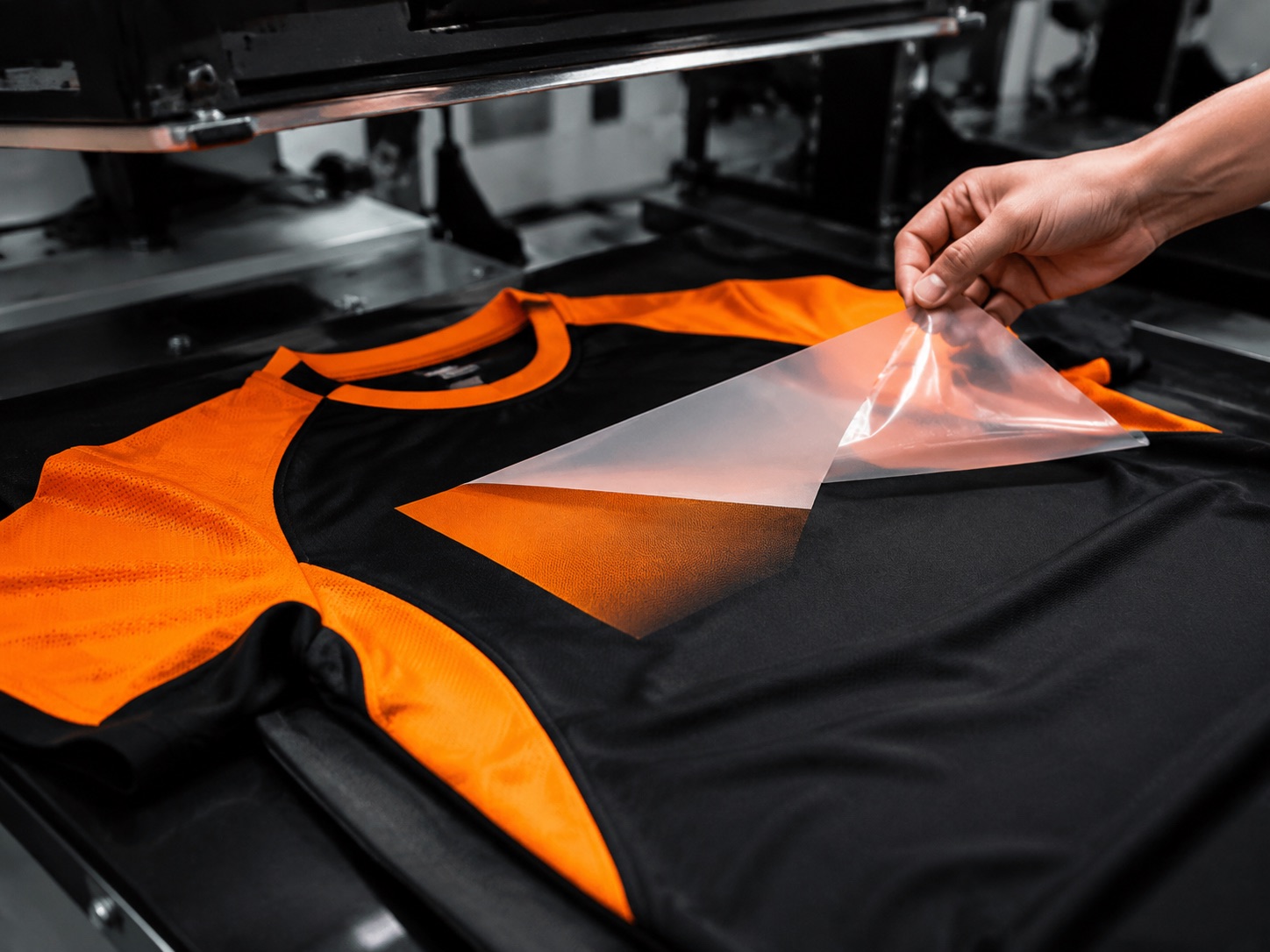 4
4Peel & finish
The carrier film peels away leaving the print behind. A second press sets the finish and removes any sheen from the film.
Where It Works, and Where It Doesn't
Every method has real limits. Knowing them before you commit is worth more than a supplier telling you everything is possible.
Best for
- Squad numbers, player names and initials
- Late additions after the bulk order is finished
- Cotton and cotton-blend garments
- Dark garments needing opaque colour
- Small runs and one-offs — there is no setup cost
- Fine detail and photographic artwork at small scale
Not suited to
- Full-coverage all-over designs — the hand feel becomes obvious
- Lightweight technical jerseys where breathability matters
- Very large prints across a stretch panel, which can crack over time
- High-volume simple designs, where screen printing is cheaper
- Anywhere sublimation is possible and a zero-feel finish is wanted
Full Specification
| Property | Specification |
|---|---|
| Substrate | Cotton, polyester, blends, nylon — any colour |
| White ink | Yes — printed as an underbase for opacity on dark |
| Colour range | Full CMYK plus white, including fine gradients |
| Hand feel | Slight raised layer on the fabric surface |
| Wash durability | Strong — typically well beyond 50 domestic washes |
| Application | After garment make-up, so late changes are possible |
| Setup cost | None — no screens, no per-colour charge |
| Minimum quantity | No practical minimum |
What to Send Us
DTF resolves fine detail well, but it is printing at final size onto film — so the file needs to be sharp at that size, not merely sharp on screen.
| Requirement | Detail |
|---|---|
| Preferred format | Vector — AI, EPS, PDF or SVG |
| Raster minimum | 300 dpi at final printed size |
| Background | Transparent PNG if supplying raster |
| Colour space | CMYK, with Pantone references where colour is critical |
| Fine detail | Lines above about 0.5 mm at final size |
| What we will flag | Very large solid areas — better suited to screen printing |
Not sure whether your files will work? Send them over and we will tell you before you commit — see the full artwork guidelines.
Choosing a method
DTF Compared
DTF is the most flexible decoration method we run, which makes it easy to over-use. It is the right answer when fabric or timing rules the alternatives out.
- vs Sublimation
- Sublimation gives a better garment — zero hand feel, unlimited coverage, nothing on the surface. But it only works on light polyester. DTF works on anything, prints white, and can be applied after make-up. Fabric and timing decide.
- vs Screen printing
- For 500 tees with a two-colour design, screen printing is significantly cheaper per piece and gives a flatter finish. For 20 pieces, or anything with photographic detail, DTF wins because there are no screens to make.
- vs DTG
- DTG has a softer finish on cotton because the ink soaks in. DTF works on polyester and blends where DTG struggles, and is faster per piece. On a cotton tee, DTG usually feels better; on anything technical, DTF is the one that works.
- vs Embroidery
- Embroidery is more premium and more durable, but cannot do photographic detail or fine text, and stiffens the fabric. DTF handles detail embroidery cannot, at lower cost.
Up Close
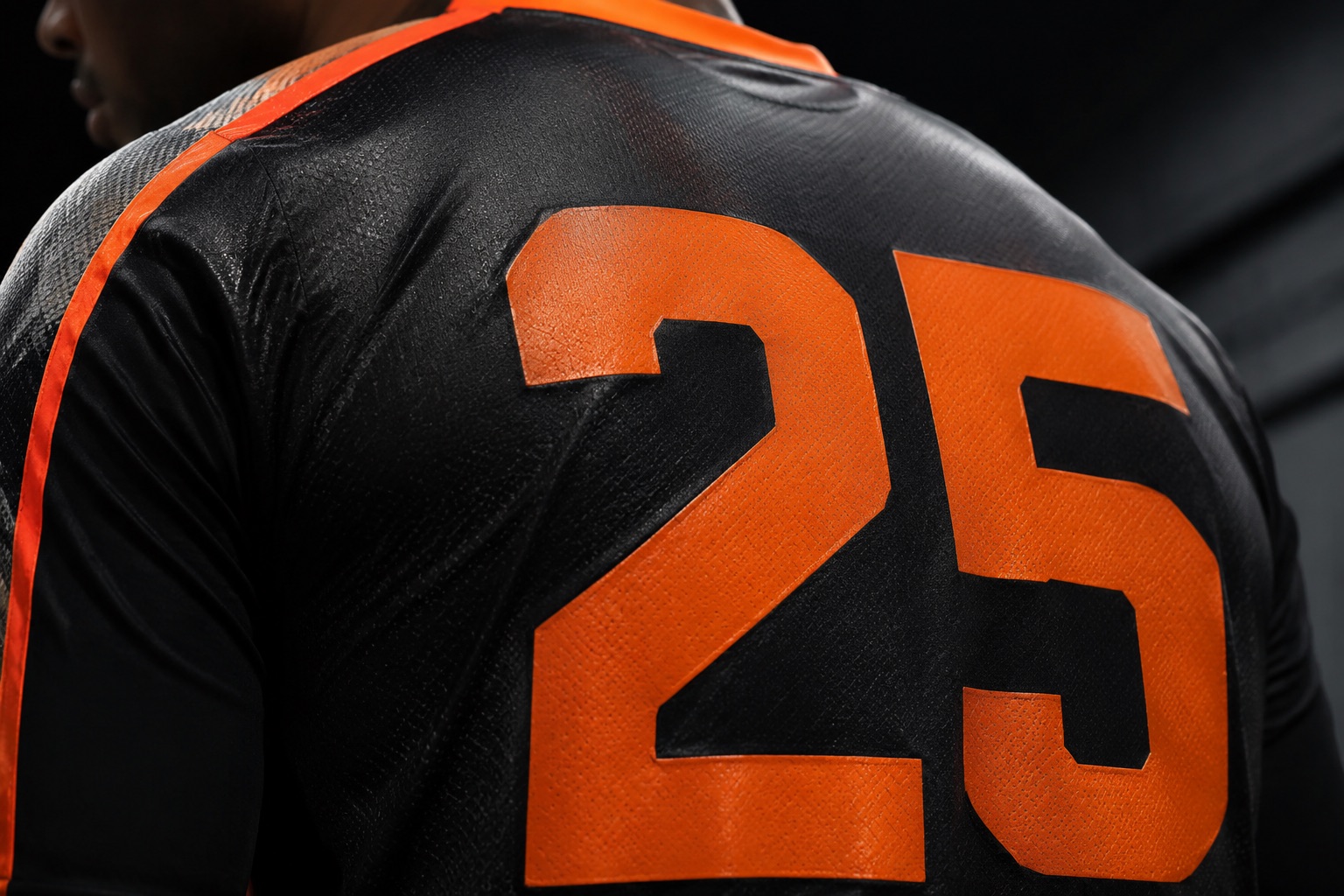
Opaque on dark fabric
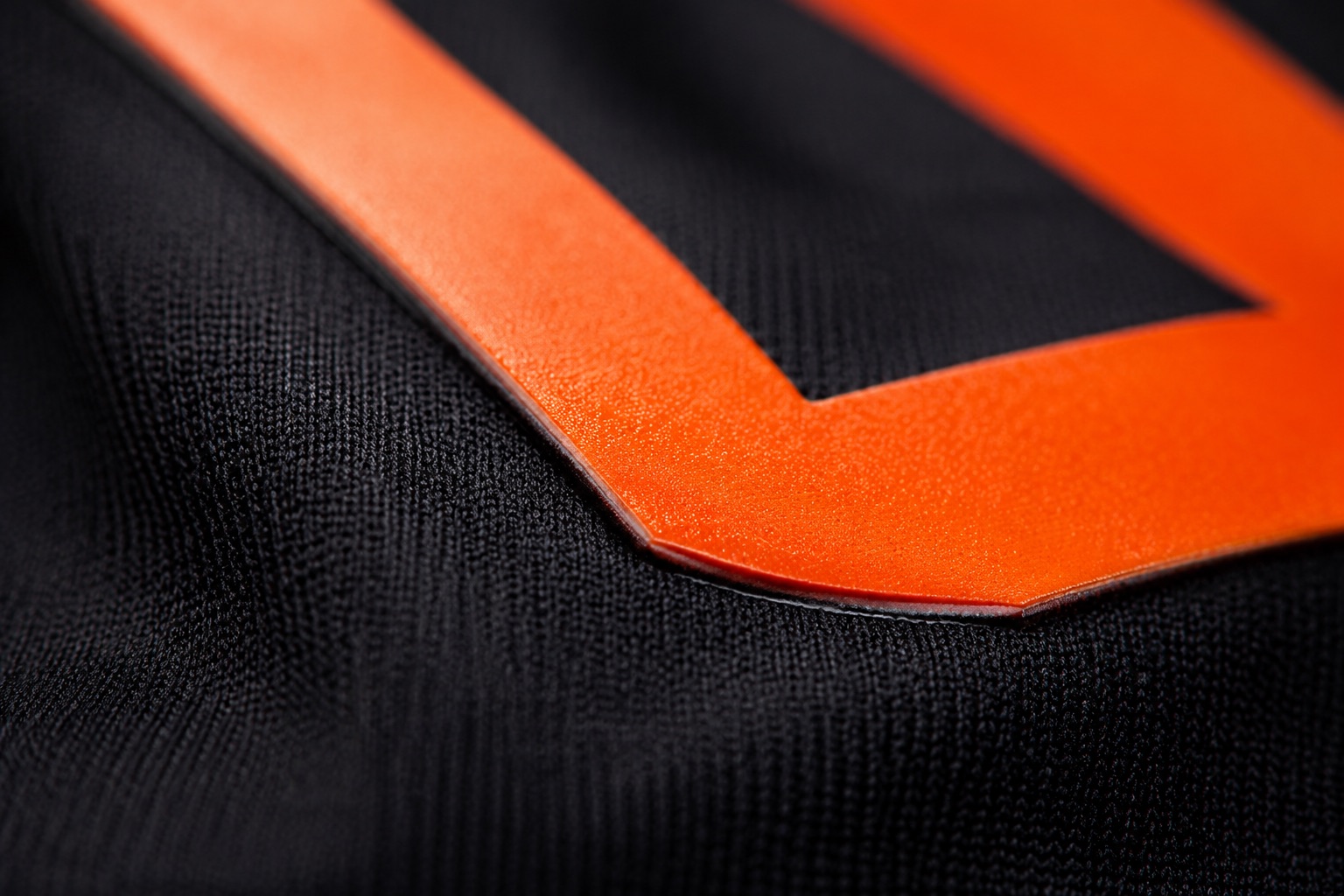
Bonded to the surface
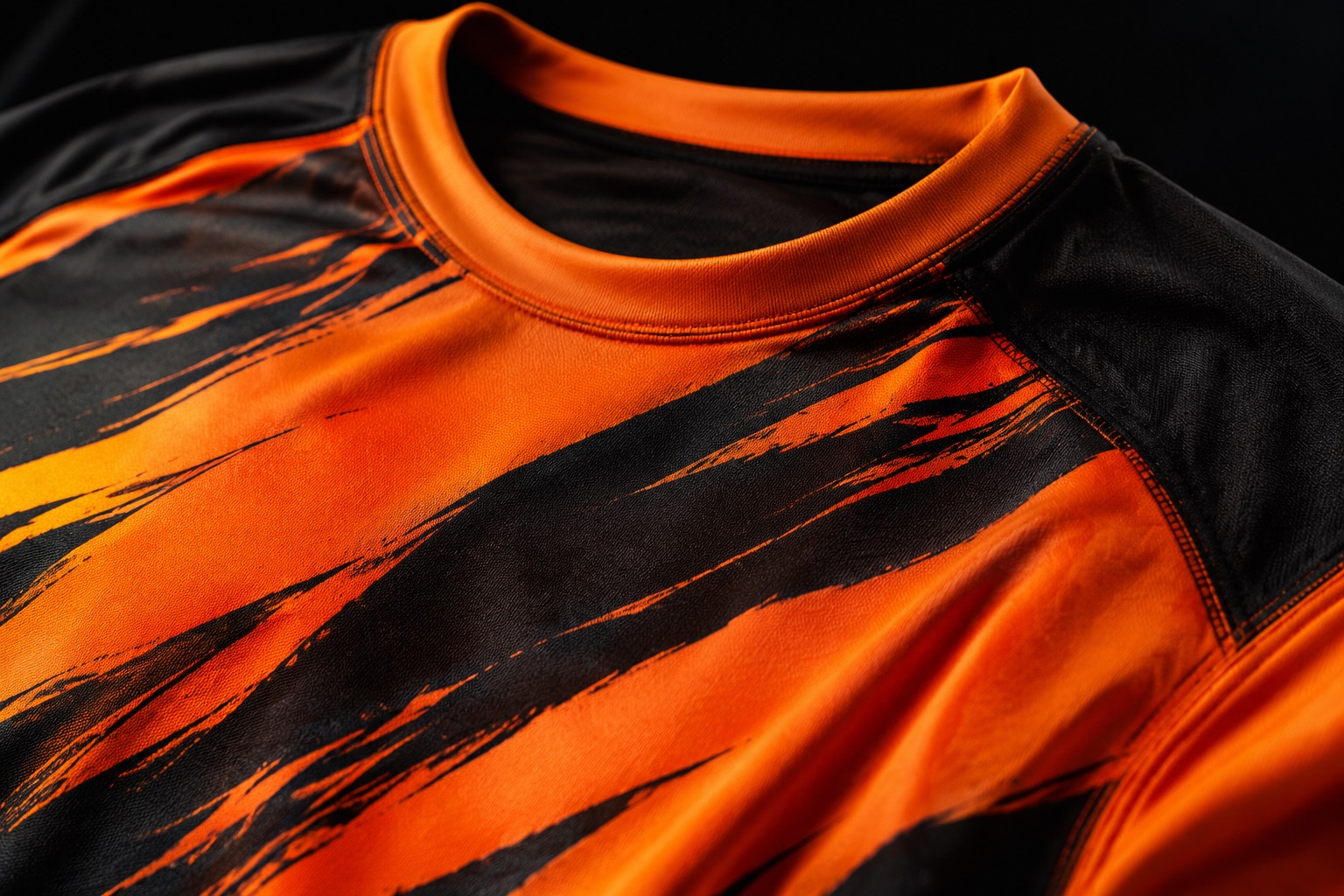
Fine detail, any fabric
Where We Use It
This method is part of the range we build for every sport below.
DTF FAQs
Does DTF work on cotton?
Yes, and on polyester, blends and nylon, in any colour. That fabric-agnosticism is the whole point of the method — it is what we reach for whenever sublimation is ruled out by the garment.
Can DTF print white?
Yes. A white ink underbase is printed behind the colours, which is what keeps the design opaque on a black or navy garment. Sublimation cannot do this at all, and it is the most common reason we recommend DTF instead.
Can you feel a DTF print on the garment?
Slightly, yes — it sits on the fabric surface rather than inside the fibre. On a crest or a number you would not notice. Across a full chest panel you would, which is why we do not recommend it for large coverage.
How long does a DTF print last?
Typically well beyond 50 domestic washes when cared for properly — wash inside out, avoid high heat tumble drying. It is durable, though not as permanent as sublimation, where there is nothing on the surface to wear at all.
Can you add a name and number after the kit is made?
Yes, and this is DTF’s single most useful property for teamwear. A player signing in January can have a shirt personalised from existing stock without a new production run.
Is there a minimum order?
No practical minimum. There are no screens to make and no per-colour setup, so a single garment is viable — which is exactly why it suits late additions and replacements.
Will a DTF print crack?
A small print on a stable fabric will not. A very large print across a four-way stretch panel can craze over time, because the print does not stretch as far as the fabric under it. Where that risk exists we will tell you and suggest sublimation instead.
DTF or screen printing for our supporter tees?
Depends on quantity and design. Two colours at 300 pieces: screen printing, comfortably cheaper. Full-colour artwork at 40 pieces: DTF, because screens would cost more than the shirts.
Need dtf on your next order?
Send us your artwork and quantities. We will confirm whether this is the right method for your garment — and tell you if it isn't.