Cut & Sew — We Make the Garment
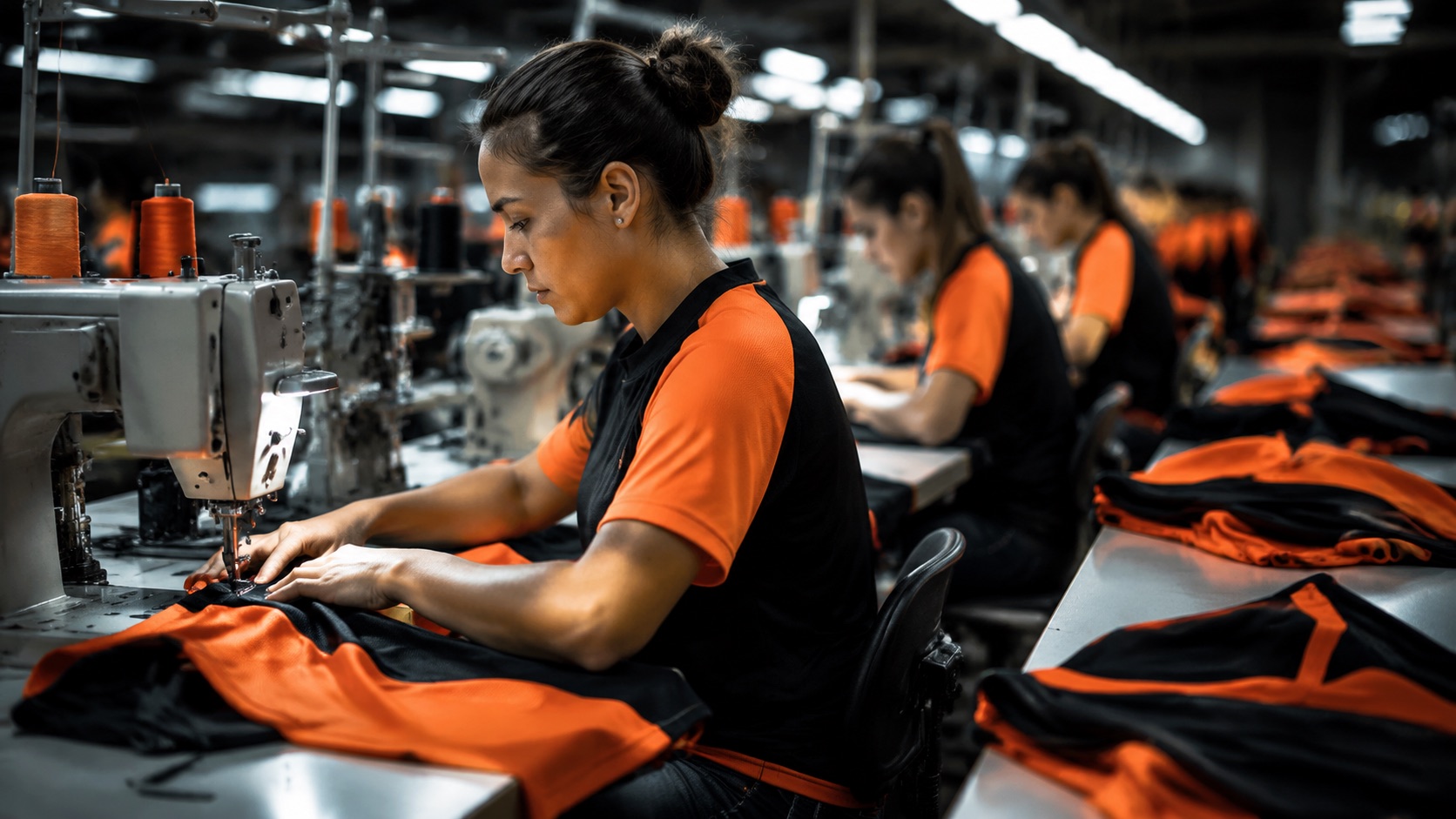
Fifty sewing machines building garments from flat fabric and your own patterns. That is a different business to buying blanks and printing on them, and it is the difference that decides whether your brand can have its own fit.
- 20
- pieces per design
- Minimum order
- 15–20
- working days
- Bulk lead time
- 7–10
- working days
- Sampling
- 4
- export markets
- Shipping to
What cut & sew actually is
Cut and sew means a garment is constructed from flat fabric panels cut to a pattern, rather than bought finished and decorated. It is the dividing line between an apparel manufacturer and a decorator, and it determines what a brand can actually control.
With cut and sew you own the fit. Panels can be different fabrics, colour blocking sits exactly on a seam rather than being printed to look like it does, mesh can be placed only where ventilation is needed, and the pattern can be adjusted for your market. None of that is available when you start from a blank.
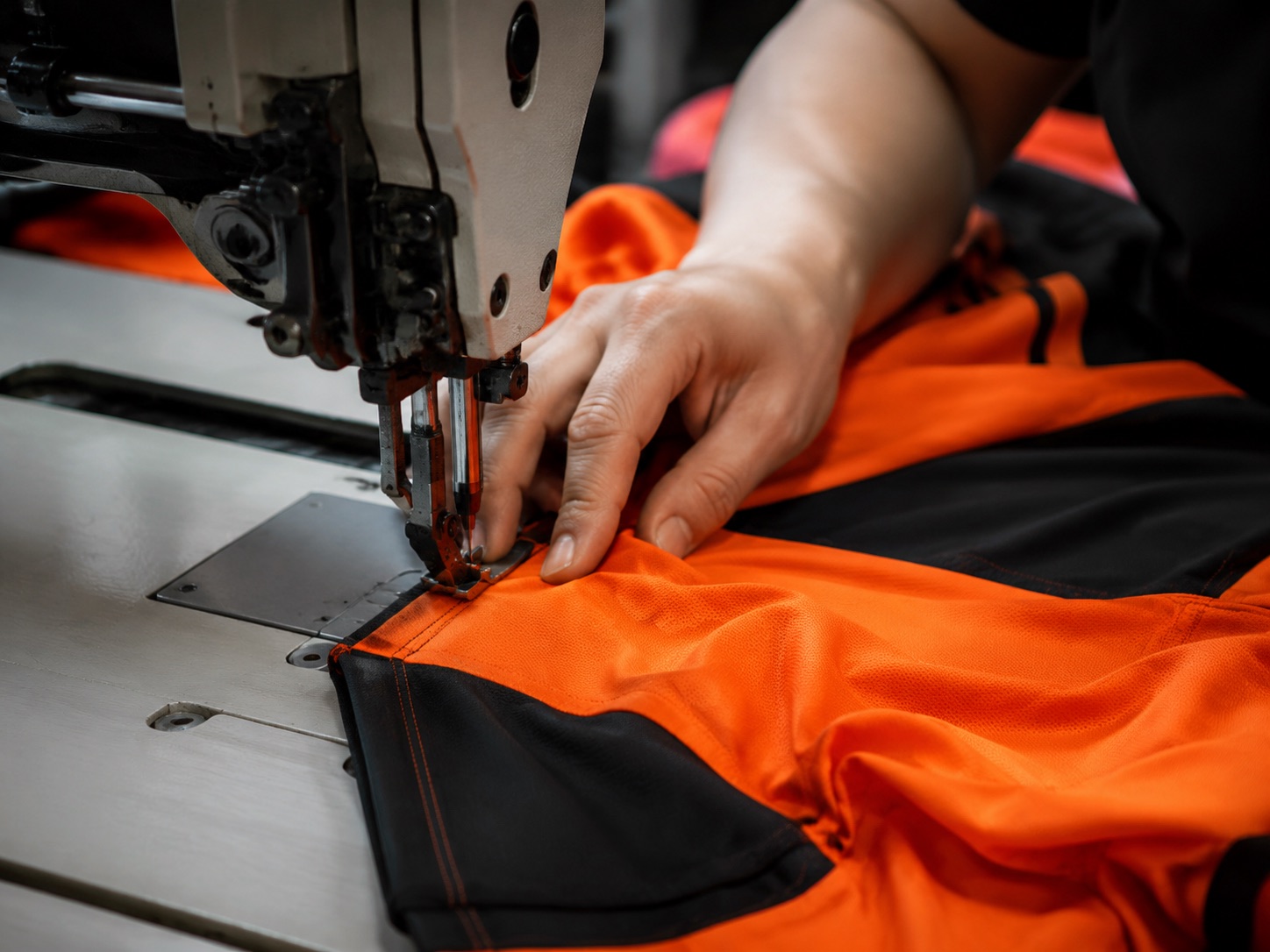
We run a 50-machine line covering the full range of stitch types this work needs — flatlock for seams that sit against skin, coverstitch for hems that must stretch, overlock for edges, and bar tacks at the stress points that fail first. Which stitch goes where is a construction decision that affects how long a garment survives, and it is specified on every order rather than left to the operator.
Equipment we run
- 50 industrial sewing machines
- Flatlock, coverstitch, overlock and bar-tack capability
- In-house cutting and pattern room
How It Works
Every stage below happens under our own roof, which is what keeps a reorder matching the original.
 1
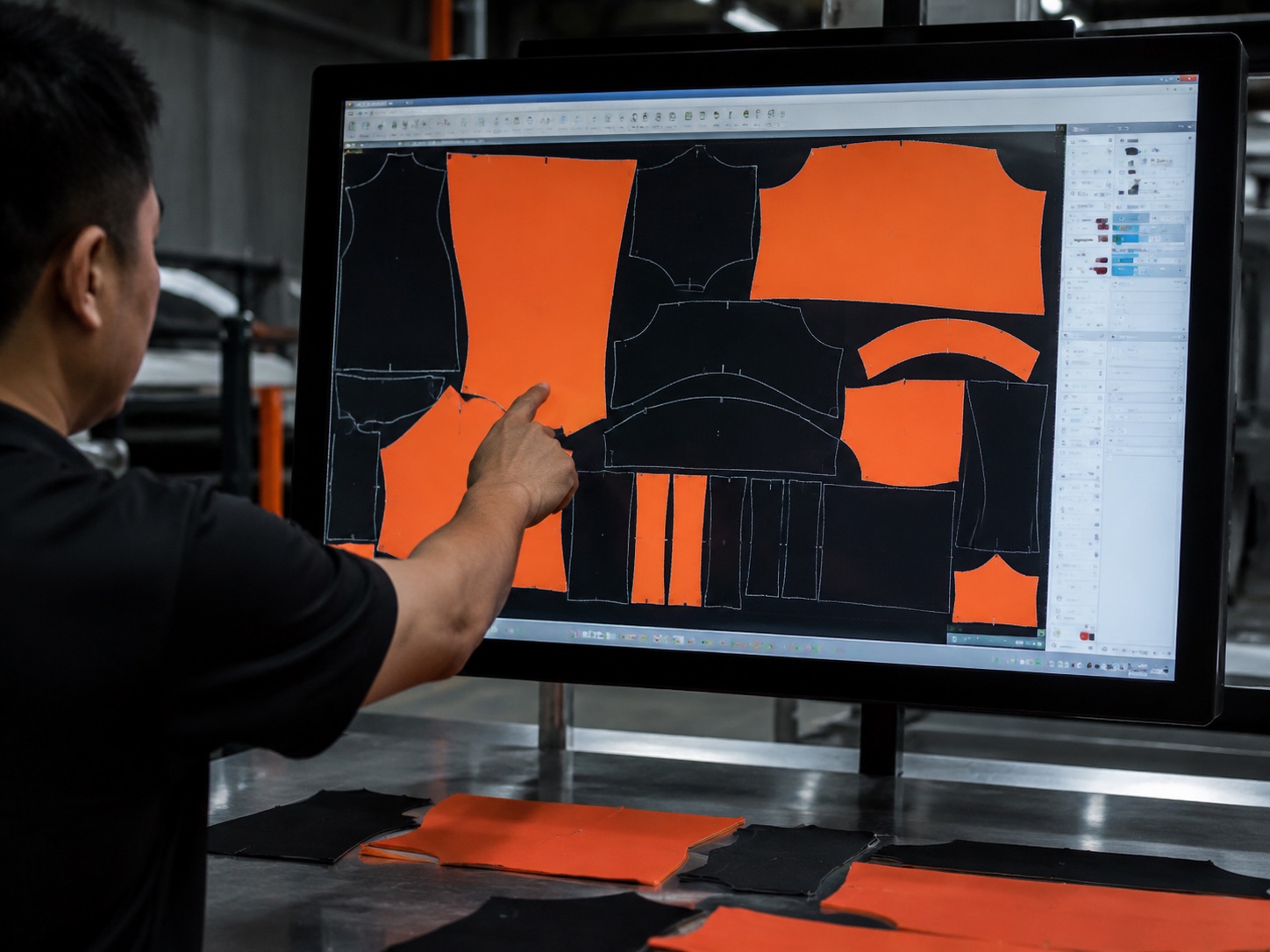
1Pattern & marker
Your pattern is graded across the size run and nested into a marker — the layout that decides how much fabric the order actually consumes.
 2
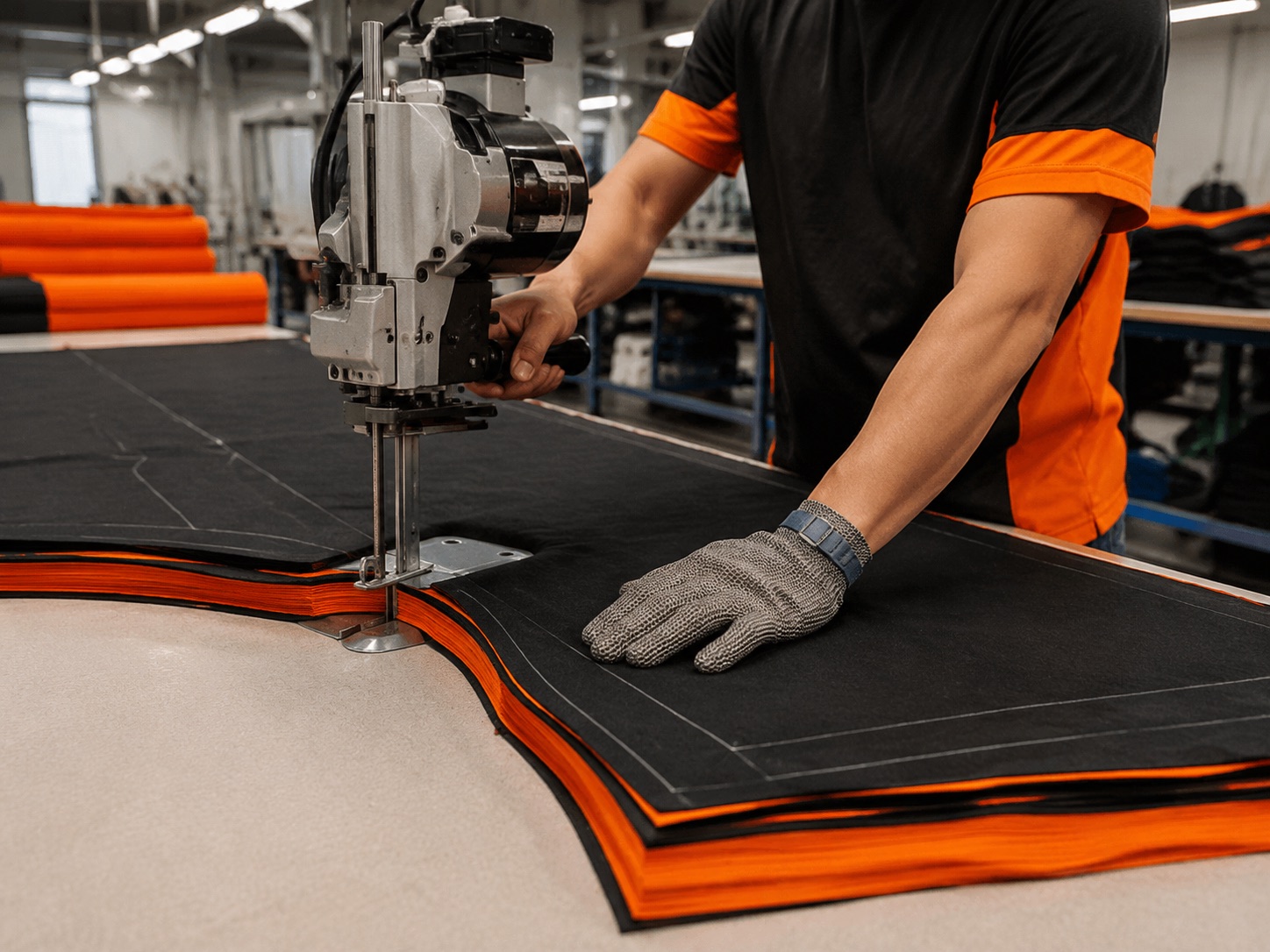
2Lay & cut
Fabric is laid in plies and cut to the marker. Cutting accuracy here decides whether panels match at the seam later.
 3
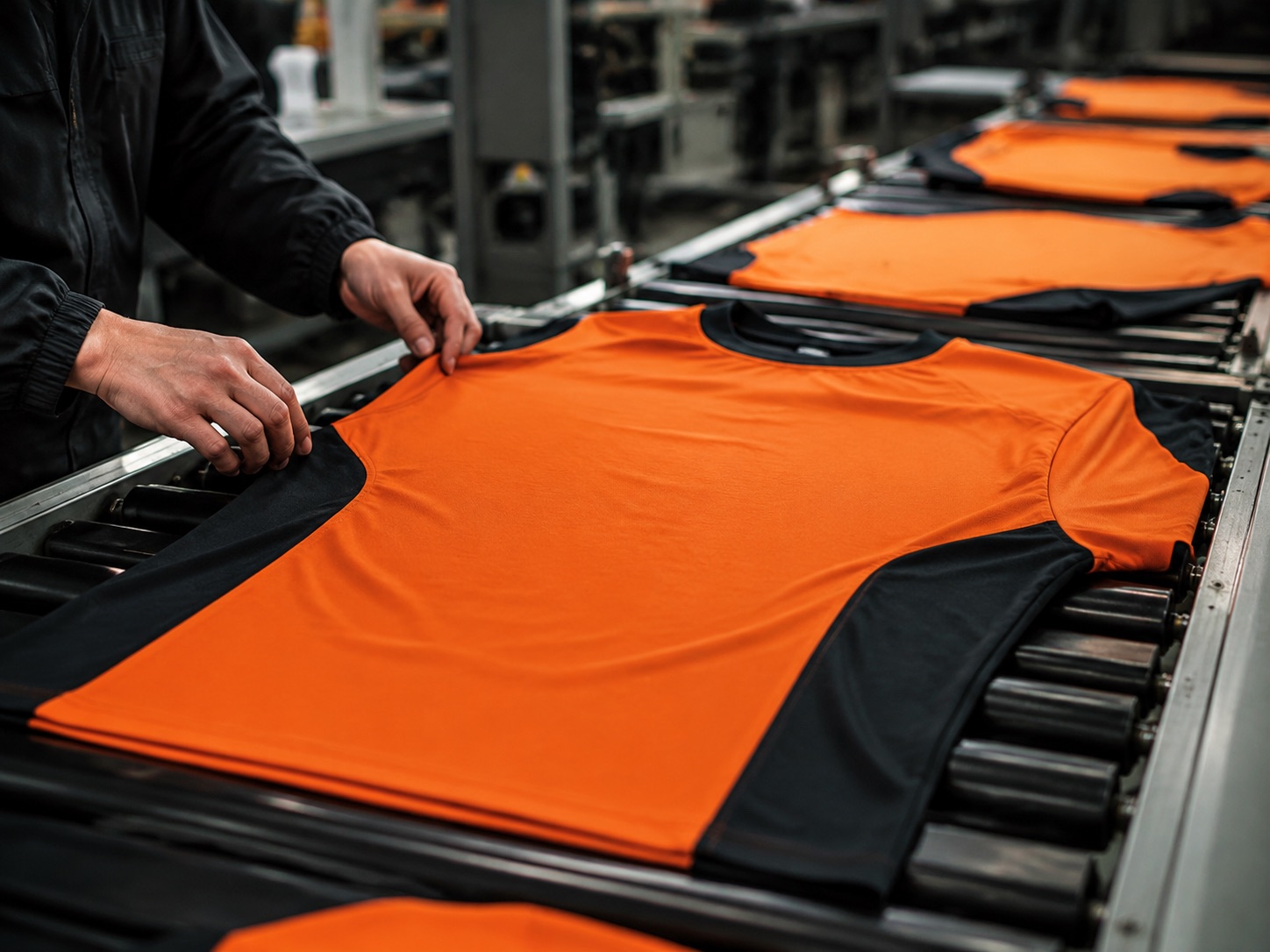
3Bundle & assemble
Cut panels are bundled by size and moved through the line. Each operation — shoulder, side seam, sleeve, hem — is a station.
 4
4Finish & reinforce
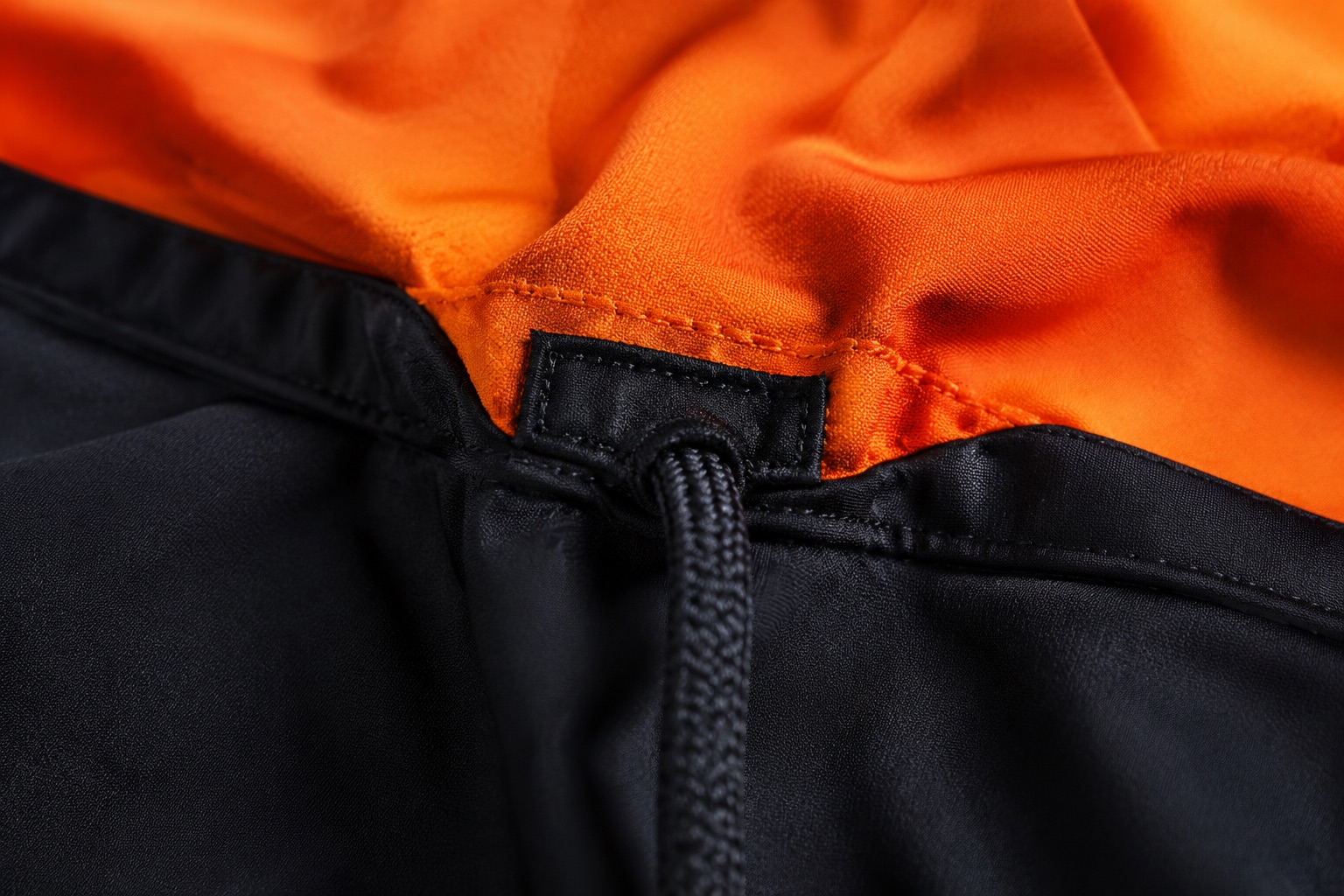
Hems are coverstitched, edges overlocked, and bar tacks placed at the pocket corners, vents and drawcord exits that take the load.
Where It Works, and Where It Doesn't
Every method has real limits. Knowing them before you commit is worth more than a supplier telling you everything is possible.
Best for
- Brands that need their own fit and pattern
- Colour blocking that sits exactly on a seam
- Mixing fabrics — mesh panels, stretch inserts, contrast trims
- Sublimated teamwear, where panels are printed before assembly
- Garments with real construction: plackets, gussets, padded panels
- Private-label ranges carrying your own labels and trims
Not suited to
- One-off samples of a design you have not committed to
- Very short runs below the minimum, where blank decoration is cheaper
- Buyers who want a specific branded blank rather than an original garment
- Timelines shorter than the sampling cycle allows
Full Specification
| Property | Specification |
|---|---|
| Line capacity | 50 industrial sewing machines |
| Seam types | Flatlock, coverstitch, overlock, lockstitch, bar tack |
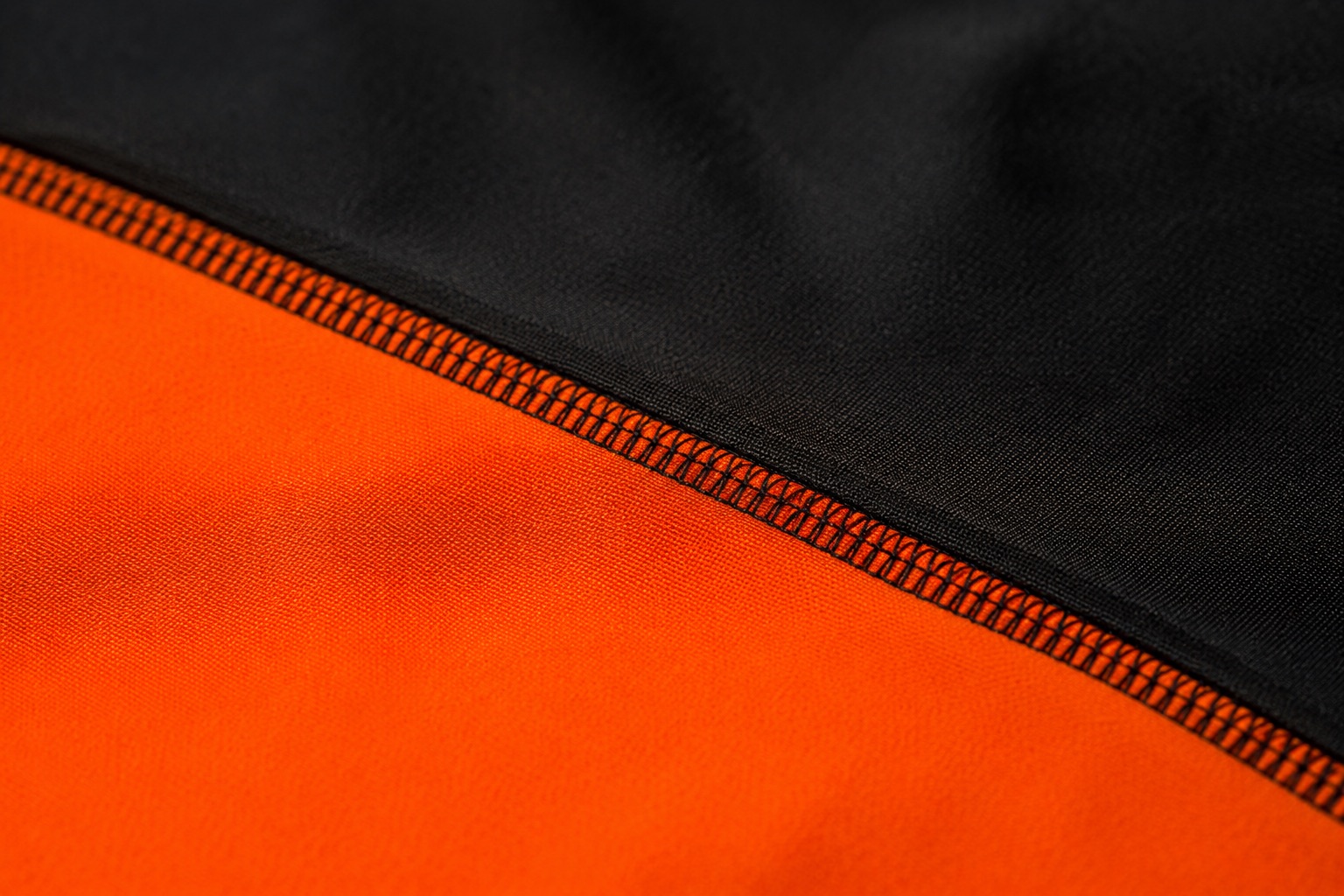
| Flatlock | Flat seam with no ridge — used where fabric meets skin |
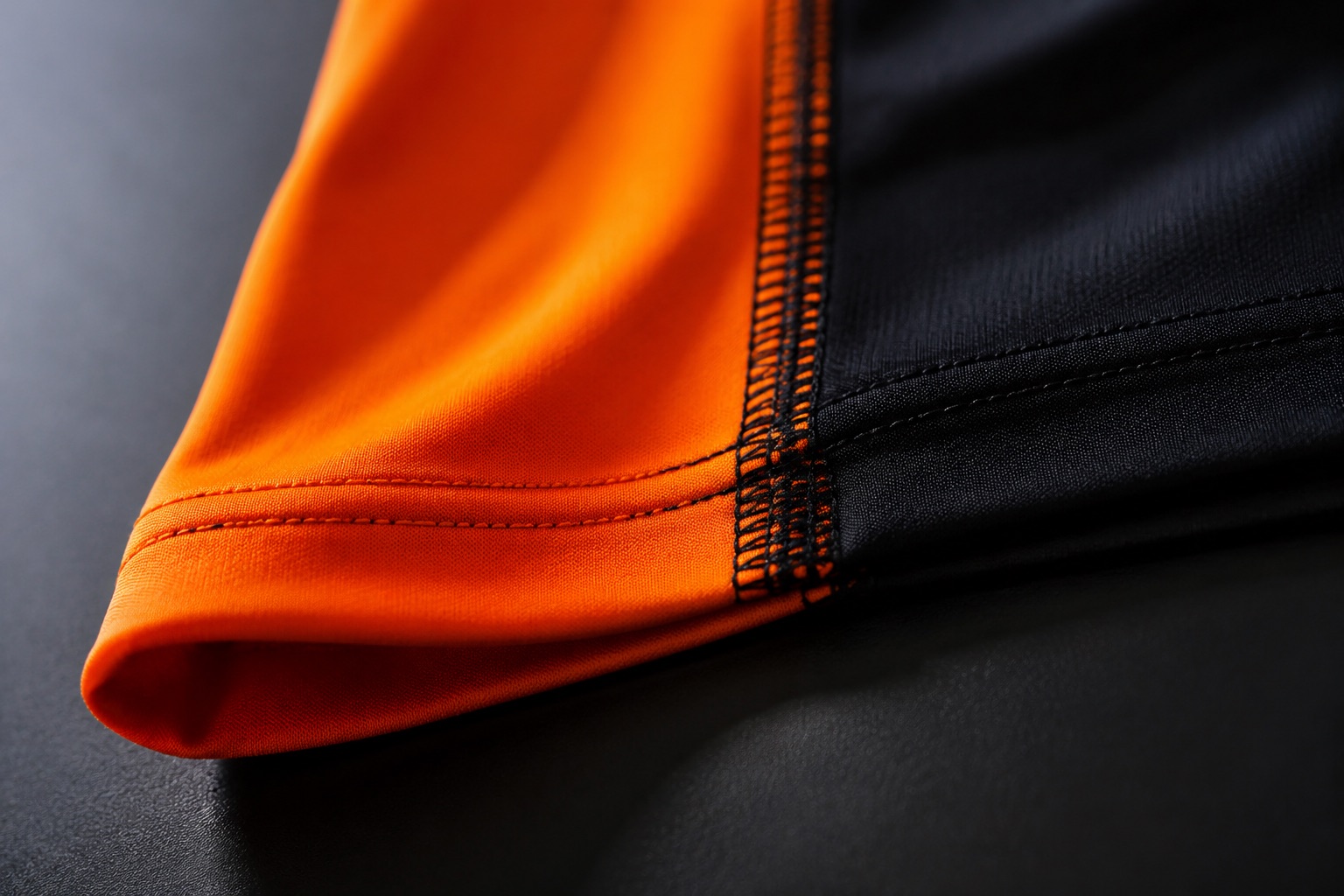
| Coverstitch | Stretchable hem finish — will not pop on a stretch garment |
| Bar tack | Concentrated reinforcement at stress points |
| Panels per garment | No practical limit — mixed fabrics supported |
| Patterns | Yours, or developed by us from a sample or description |
| Minimum quantity | 20 pieces per design |
What to Send Us
For cut and sew we need construction information, not just a picture. A tech pack is ideal, but we can develop one from a physical sample or a clear description — most clubs do not arrive with one and that is fine.
| Requirement | Detail |
|---|---|
| Ideal | Tech pack with measurements, construction and BOM |
| Also workable | A physical garment to copy and adjust |
| Minimum viable | Photos plus your size requirements |
| Artwork | Vector files for any printed or embroidered elements |
| Fit reference | Tell us the market — fits differ between regions |
| What we will produce | A tech pack for your approval if you do not have one |
Not sure whether your files will work? Send them over and we will tell you before you commit — see the full artwork guidelines.
Choosing a method
Cut & Sew Compared
The real comparison here is not with another decoration method — it is with buying blanks and decorating them. Both are legitimate; they suit different buyers.
- vs Decorating blanks
- Blanks are faster and cheaper at very low quantities, and you know exactly what the garment is. But you cannot change the fit, the fabric, the colour blocking or the labelling — so you cannot build a distinctive product. Cut and sew is what a brand needs; blanks are what an event needs.
- vs Sublimated cut & sew
- Sublimated cut and sew is a subset of this: the fabric panels are printed before assembly, which is how a design runs across a seam. Everything on this page still applies — sublimation changes the panel, not the construction.
- vs Overseas trading agents
- An agent subcontracts your order to a factory you never see. Working direct means the pattern, the sample and the line are the same people, which is what makes a fit problem fixable in days rather than shipments.
Up Close
Flatlock where it meets skin
Coverstitch hems that stretch
Bar tacks where load concentrates
Where We Use It
This method is part of the range we build for every sport below.
Cut & Sew FAQs
What is the difference between cut and sew and decorating blanks?
Cut and sew builds the garment from flat fabric using a pattern. Decorating blanks starts from a finished garment someone else made. With cut and sew you control fit, fabric, panel construction, colour blocking and labelling; with blanks you control only the print.
How many sewing machines do you run?
Fifty, covering flatlock, coverstitch, overlock, lockstitch and bar tack. That range matters as much as the count — a technical garment needs four different stitch types in different places.
Do I need a tech pack?
No. A tech pack is ideal and makes everything faster, but most clubs and new brands do not have one. We can work from a physical garment to copy, or from photos and a description, and we will produce a tech pack for your approval as part of the process.
Can one garment use several different fabrics?
Yes, and this is one of the main reasons to choose cut and sew. Mesh where ventilation is needed, stretch panels at the side, a heavier body fabric — all in one garment, with the change falling exactly on a seam rather than being printed to imitate one.
What is the difference between flatlock and overlock?
Overlock encloses a raw edge and leaves a small ridge on the inside. Flatlock joins two panels edge to edge with no ridge at all, so nothing rubs against skin. We use flatlock wherever a seam sits under load against the body, and overlock where it does not.
Can you copy a garment we already sell?
We can pattern from a physical sample and reproduce the fit, adjusting anything you want changed. We will not copy another brand’s protected design or trademarks — but replicating a fit you already know works is completely normal and we do it regularly.
What is your minimum for cut and sew?
20 pieces per design, and the run can be all different sizes. Below that, decorating blanks is usually the more sensible route and we will say so.
Can you make to our own labels?
Yes. Under private label the garment carries your woven neck label, hem tab and care label, and is packed to your specification, with no Addahar branding anywhere on it.
Need cut & sew on your next order?
Send us your artwork and quantities. We will confirm whether this is the right method for your garment — and tell you if it isn't.