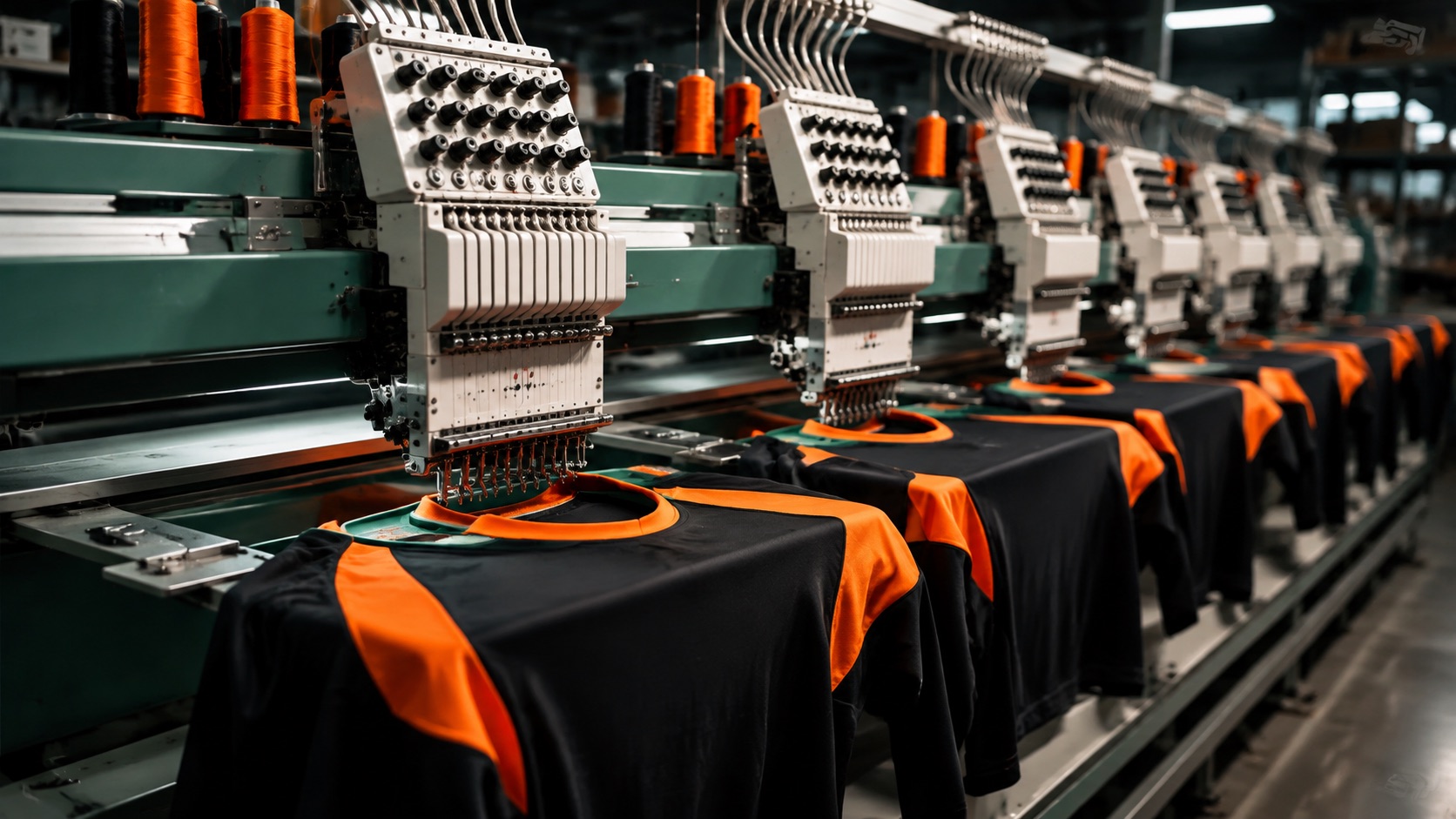
Embroidery on 40 Heads at Once
Two 20-head Tajima machines running under our own roof — the raised, permanent finish that a club crest or a private-label neck mark is expected to have.
- 20
- pieces per design
- Minimum order
- 15–20
- working days
- Bulk lead time
- 7–10
- working days
- Sampling
- 4
- export markets
- Shipping to
What embroidery actually is
Embroidery stitches your design into the fabric with thread rather than printing it on. It produces a raised, textured finish with a depth no print can imitate, and it is effectively permanent — the decoration fails only when the garment does.
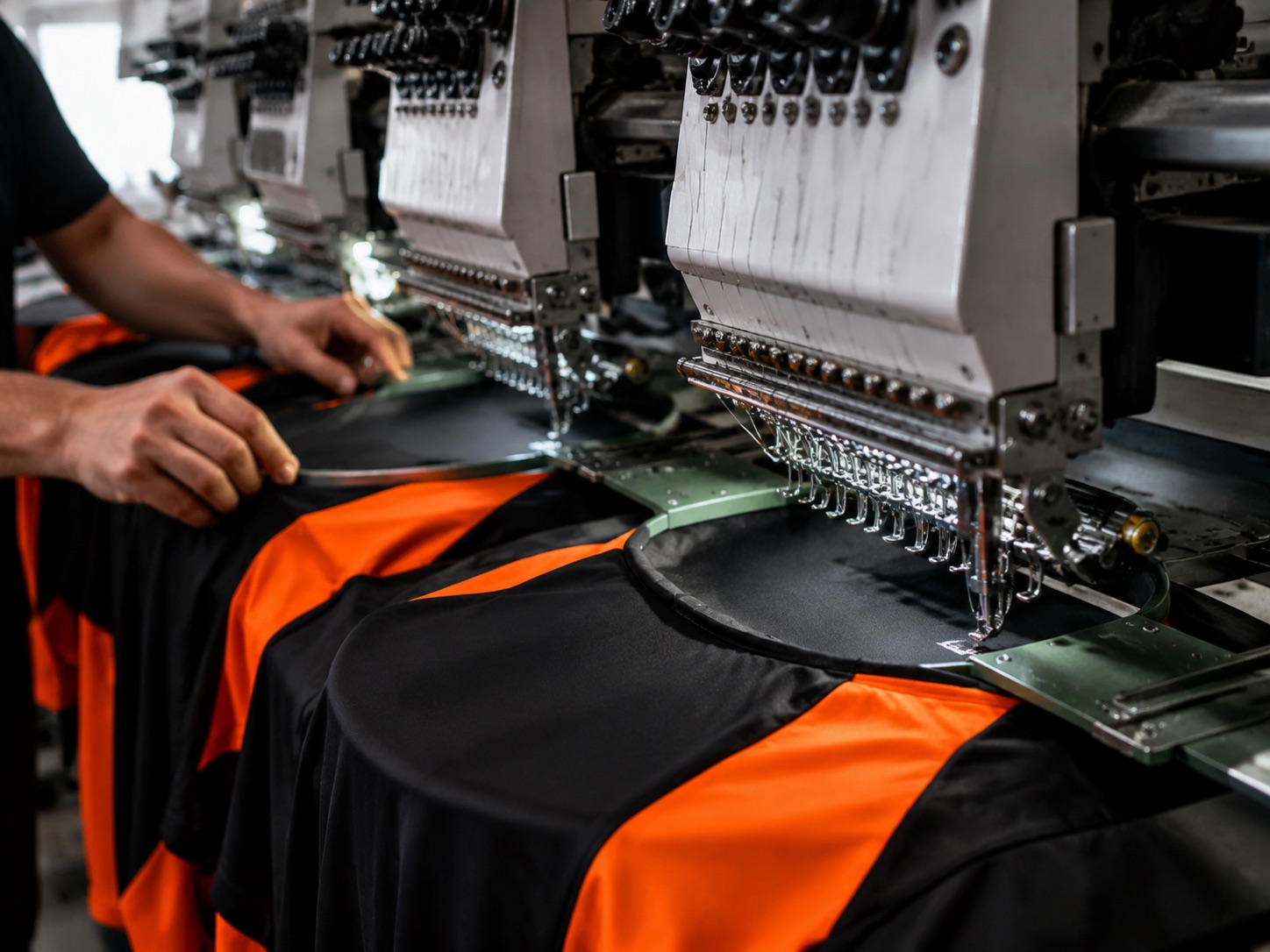
We run two 20-head Tajima machines, which means 40 garments are being embroidered simultaneously. That capacity is what makes embroidery viable for us at club quantities rather than only at bulk: a 40-piece order of polos is a single pass, not a week of sequential runs.
Embroidery is priced by stitch count, not by colour count — a common surprise for buyers used to screen printing. A ten-colour crest costs no more than a two-colour one of the same size; a densely filled logo costs considerably more than an outlined one. We will tell you the stitch count before you commit, and where a design can be simplified to save cost without losing its character, we will say so.
Equipment we run
- Two 20-head Tajima embroidery machines — 40 heads running simultaneously
- In-house digitising
- Full range of backings and stabilisers
How It Works
Every stage below happens under our own roof, which is what keeps a reorder matching the original.
 1
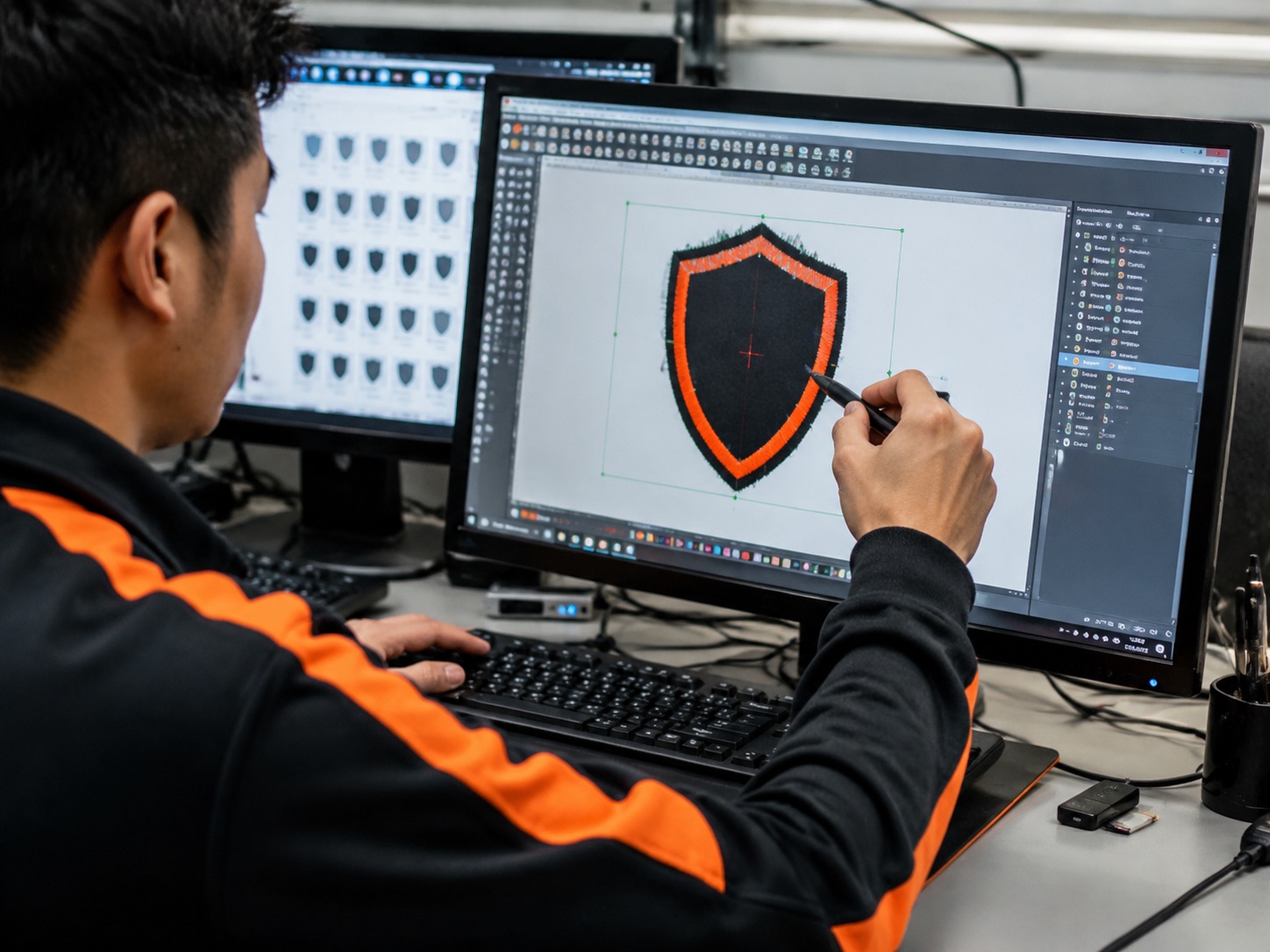
1Digitising
Your artwork is converted into a stitch file — the path, direction and density every needle follows. This is a craft step, not a file conversion, and it is where embroidery quality is decided.
 2
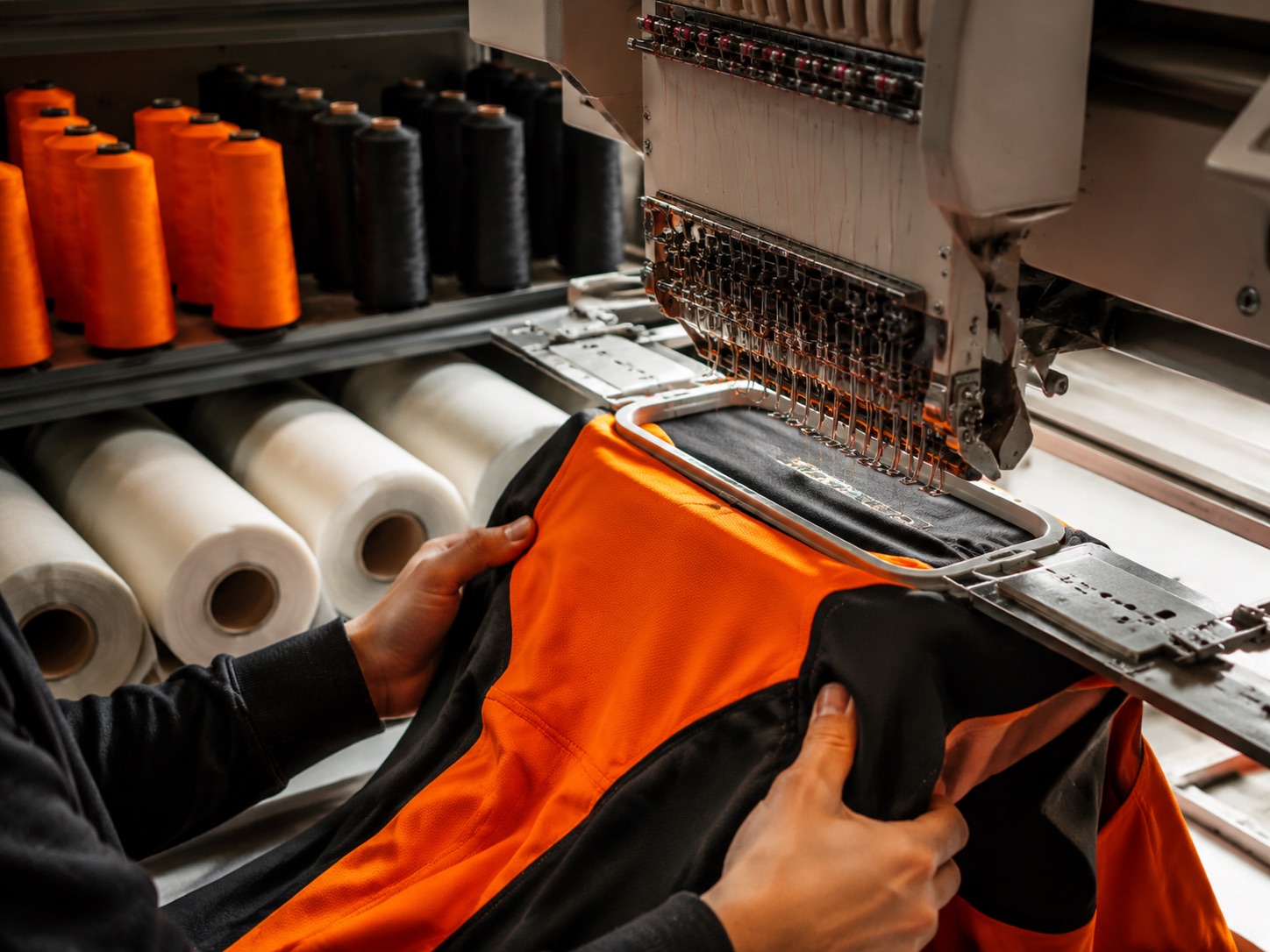
2Thread & backing selection
Thread colours are matched to your brand references and a backing chosen to suit the fabric — too light and the stitch puckers, too heavy and the garment stiffens.
 3
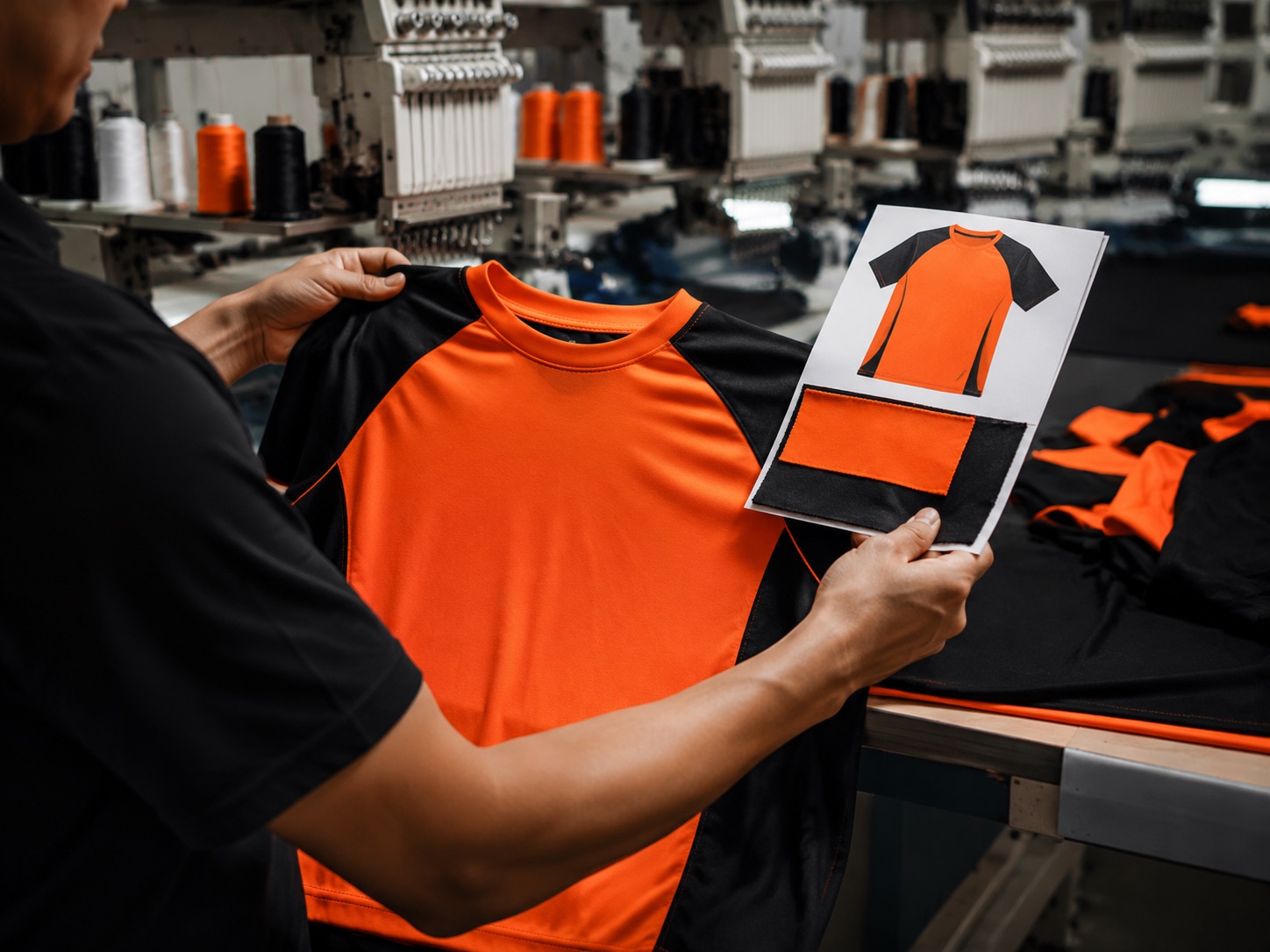
3Sew-out approval
We run a physical sample on the actual fabric before bulk. A crest that looks right on screen can lose fine detail in thread, and this is where we catch it.
 4
4Production run
The approved file runs across 40 heads simultaneously, with in-line checks for thread breaks, registration and density.
Where It Works, and Where It Doesn't
Every method has real limits. Knowing them before you commit is worth more than a supplier telling you everything is possible.
Best for
- Club crests, badges and honours
- Caps, polos, jackets and tracksuits
- Private-label neck and hem branding
- Staff and corporate wear
- Traditional finishes — cricket sweaters, heritage shirts, blazers
- Any fabric, any colour, including dark garments
Not suited to
- Lightweight technical jerseys — it adds weight and restricts stretch
- Racing vests and singlets, where a stiff patch chafes
- Open pro mesh, which will not support a dense stitch
- Photographic or gradient artwork
- Very small text below about 5 mm letter height
- Large all-over designs — the stitch count becomes prohibitive
Full Specification
| Property | Specification |
|---|---|
| Substrate | Almost any woven or stable knit, any colour |
| Machines | Two 20-head Tajima — 40 heads at once |
| Pricing basis | Stitch count, not number of colours |
| Typical crest | 6,000–12,000 stitches |
| Minimum legible text | About 5 mm letter height |
| Colour matching | Thread matched to Pantone references |
| Options | 3D puff, appliqué, metallic and tonal threads |
| Setup | One-off digitising charge per design, reusable on reorders |
| Minimum quantity | 20 pieces per design |
What to Send Us
Embroidery is a reductive process — thread cannot resolve detail as finely as ink. The best embroidered logos are usually slightly simplified versions of the print original, and we will propose that where it helps.
| Requirement | Detail |
|---|---|
| Preferred format | Vector — AI, EPS or PDF |
| Also accepted | High-resolution PNG with clean edges |
| Colour | Pantone references for thread matching |
| Minimum detail | Lines no finer than about 1 mm at final size |
| Minimum text | About 5 mm letter height |
| What we will flag | Gradients, drop shadows and hairline detail — none of which stitch |
Not sure whether your files will work? Send them over and we will tell you before you commit — see the full artwork guidelines.
Choosing a method
Embroidery Compared
Embroidery and print are not really competitors — they suit different garments. The mistake is using embroidery where a print belongs, which is how you end up with a stiff patch on a lightweight jersey.
- vs Sublimation
- Sublimation is better on lightweight technical jerseys — no weight, no stiffness, no stretch restriction. Embroidery is better on caps, polos, jackets and anything where a raised premium finish is expected.
- vs DTF transfer
- DTF handles photographic detail and fine text that thread cannot resolve, and adds no stiffness. Embroidery looks and feels considerably more premium, and lasts longer on a garment that gets heavy wear.
- vs Screen printing
- Screen printing is far cheaper at high volume for a simple flat design. Embroidery costs the same per piece at 20 or 2,000 — there is no volume break beyond the one-off digitising.
- vs Woven labels
- For a neck mark, a woven label is flatter and more comfortable against the skin. Embroidery is better anywhere the branding is meant to be seen and felt from the outside.
Up Close
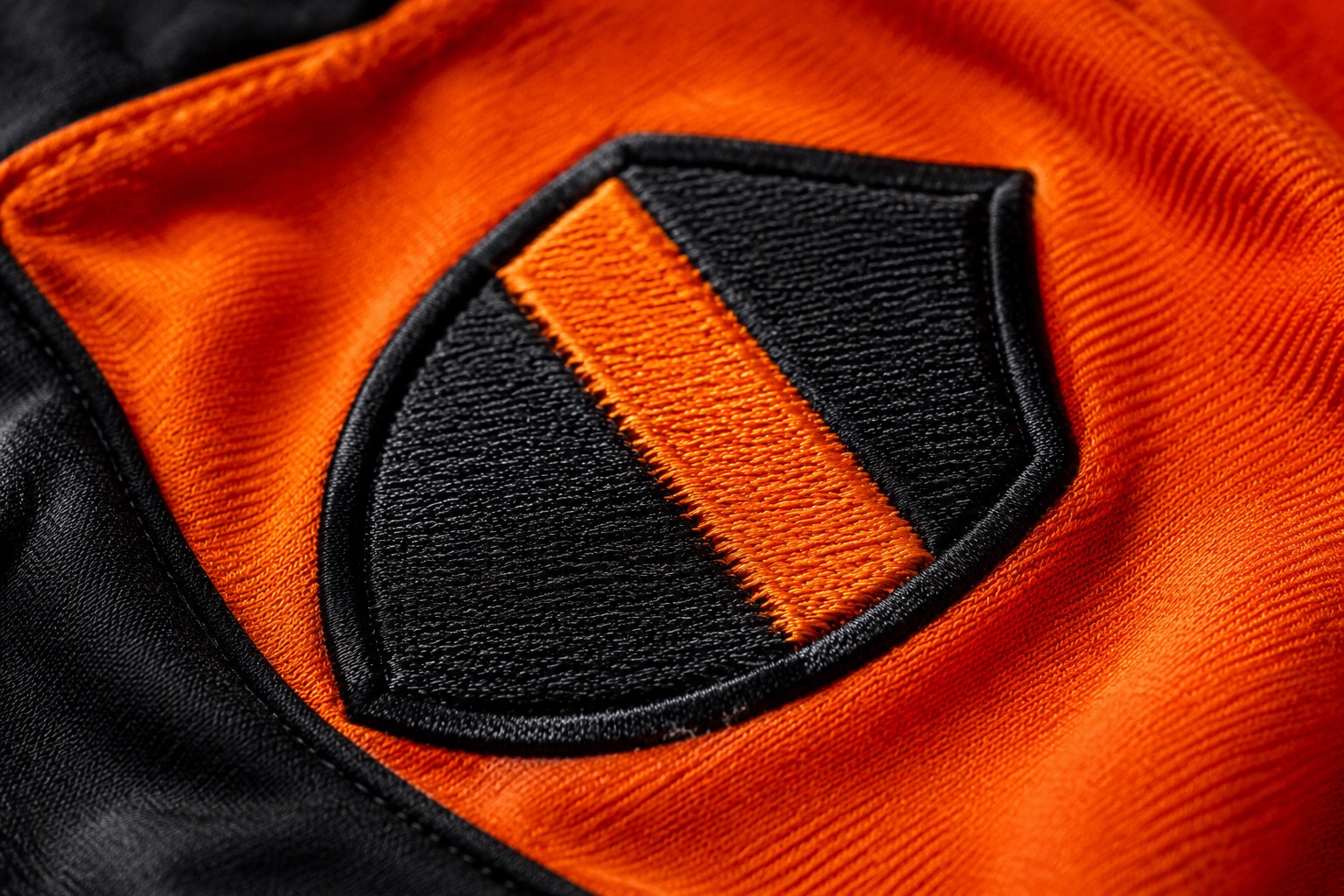
Raised, dense, permanent
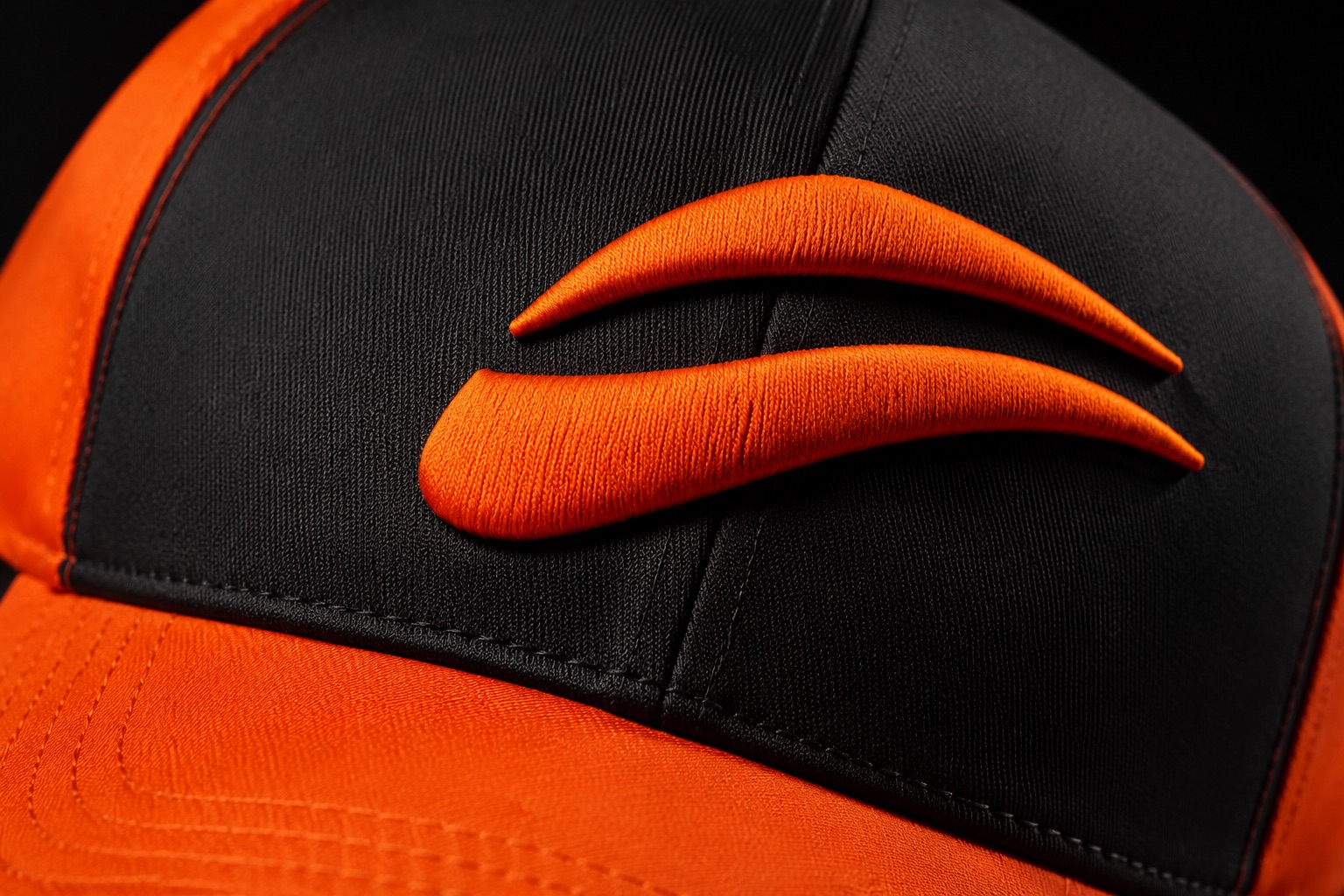
3D puff on headwear
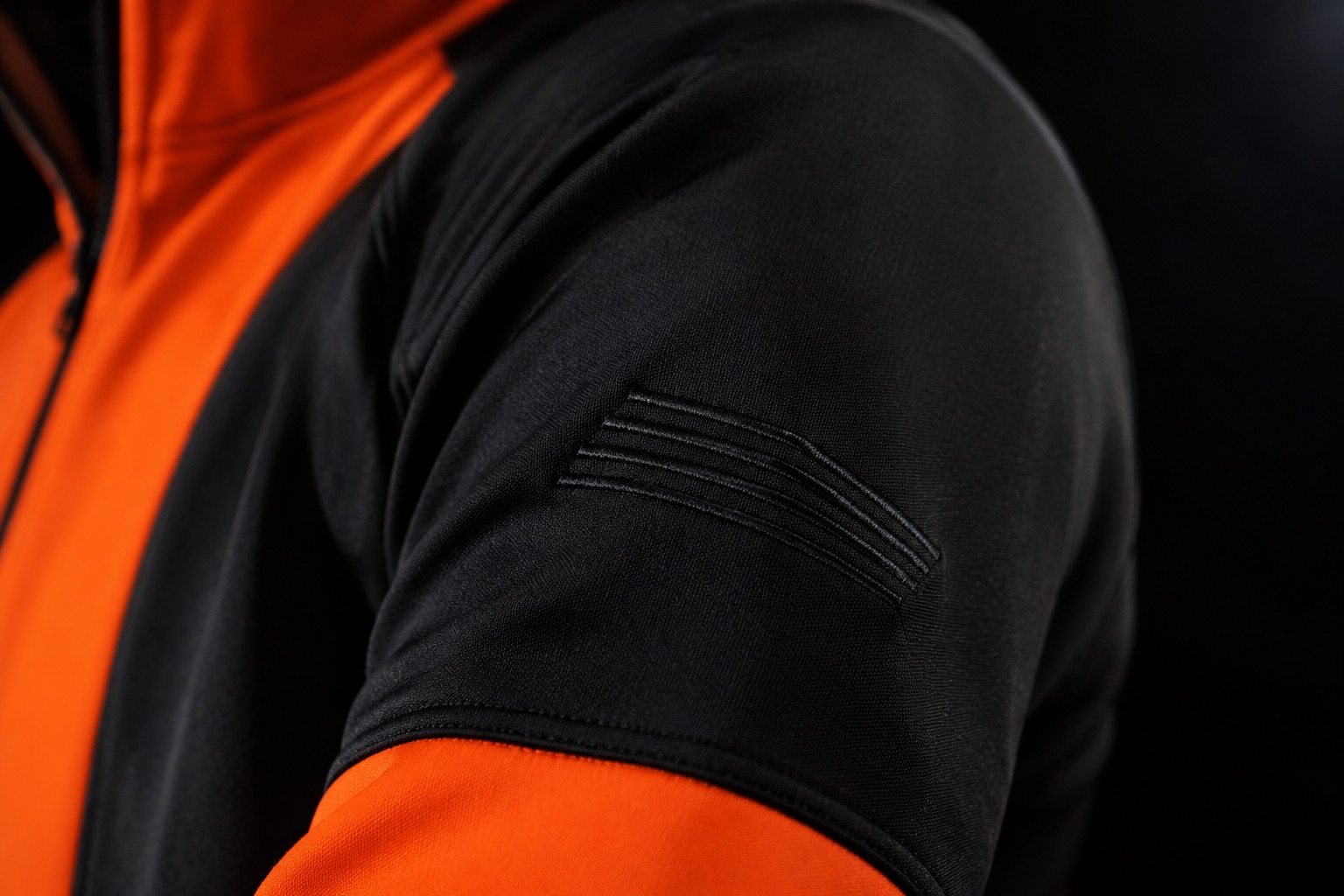
Tonal thread on dark fabric
Where We Use It
This method is part of the range we build for every sport below.
Embroidery FAQs
How many embroidery machines do you run?
Two 20-head Tajima machines, so 40 garments are embroidered at the same time. That capacity is why we can take club-sized embroidery orders on sensible lead times rather than only bulk runs.
Is embroidery priced per colour?
No — that is screen printing. Embroidery is priced by stitch count. A ten-colour crest costs the same as a two-colour one of the same size and density; a heavily filled design costs more than an outlined one regardless of colours.
What is digitising and do I pay for it twice?
Digitising converts your artwork into a stitch file — the path and density every needle follows. It is a one-off charge per design, and the file is kept on your account, so reorders and new garments using the same crest carry no further digitising cost.
How small can text be?
About 5 mm letter height is the practical floor. Below that, thread cannot hold the letterform and it closes up into a blur. If your design has smaller text we will either enlarge it, simplify it, or recommend DTF for that element.
Can you embroider onto a match jersey?
We can, but we usually advise against it. A dense stitch adds weight and restricts the stretch a technical jersey depends on, and on open pro mesh there is not enough fabric to support it. Sublimation is the better answer on playing kit; embroidery belongs on the polo, jacket and cap.
Will you match our exact brand colours?
We match thread to your Pantone references. Thread is a physical product with a finite colour range, so occasionally the closest match is very slightly off — where that happens we show you the options on a sew-out before bulk rather than deciding for you.
What is a sew-out and why does it matter?
A sew-out is a physical embroidery sample on your actual fabric. A crest that looks perfect on screen can lose fine detail once it is thread, and the sew-out is where that gets caught — before 500 garments are decorated rather than after.
Do you offer 3D puff and appliqué?
Yes. 3D puff raises the stitch over foam for a bolder finish, standard on caps. Appliqué stitches a fabric patch down at the edges, which is a cost-effective way to fill a large area that would otherwise need a punishing stitch count.
Need embroidery on your next order?
Send us your artwork and quantities. We will confirm whether this is the right method for your garment — and tell you if it isn't.