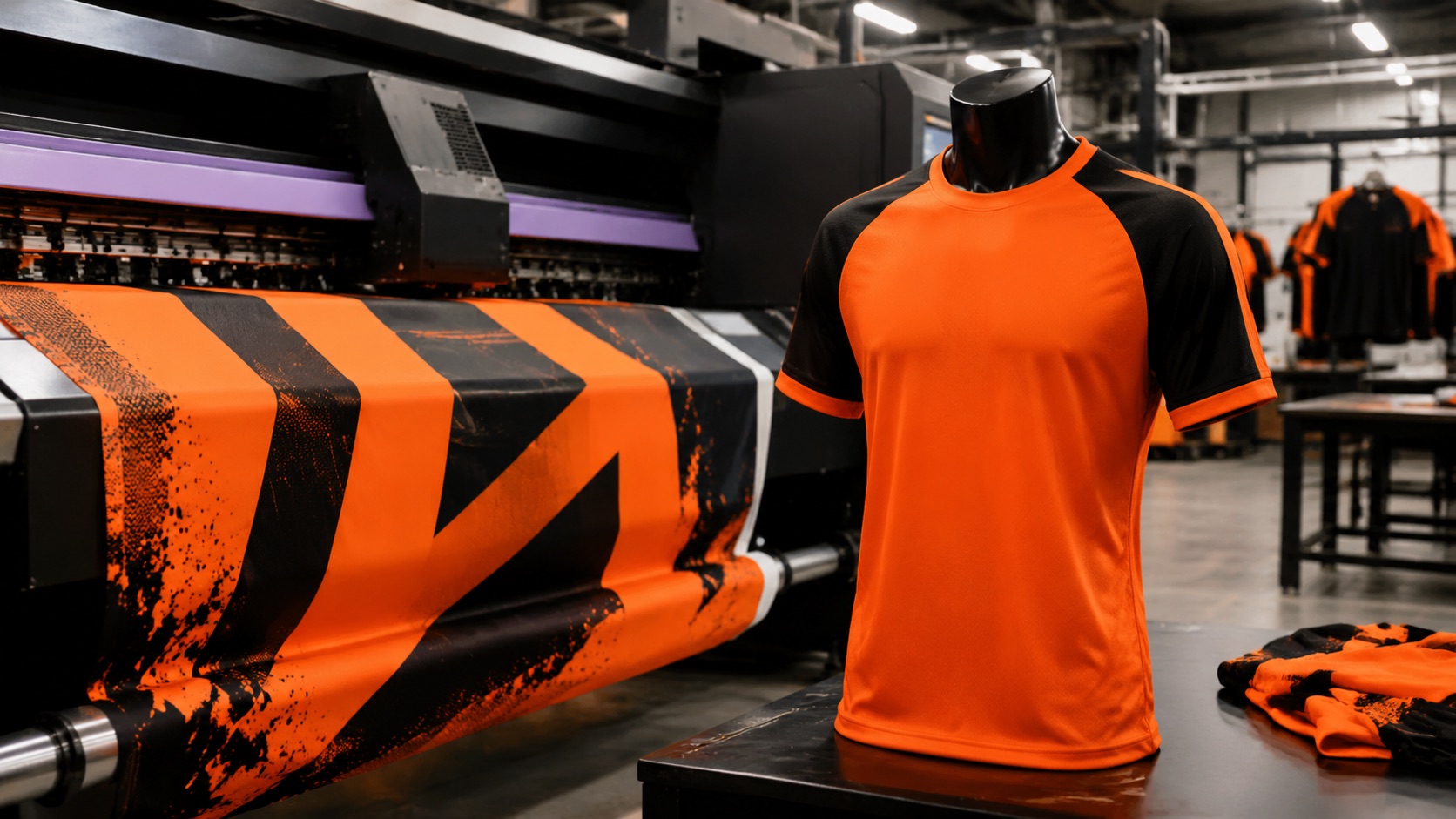
Sublimation Printing, Done In-House
Full-colour designs printed into the fibre rather than onto it — no hand feel, no cracking, no peeling, and no limit on how much of the garment you cover.
- 20
- pieces per design
- Minimum order
- 15–20
- working days
- Bulk lead time
- 7–10
- working days
- Sampling
- 4
- export markets
- Shipping to
What sublimation actually is
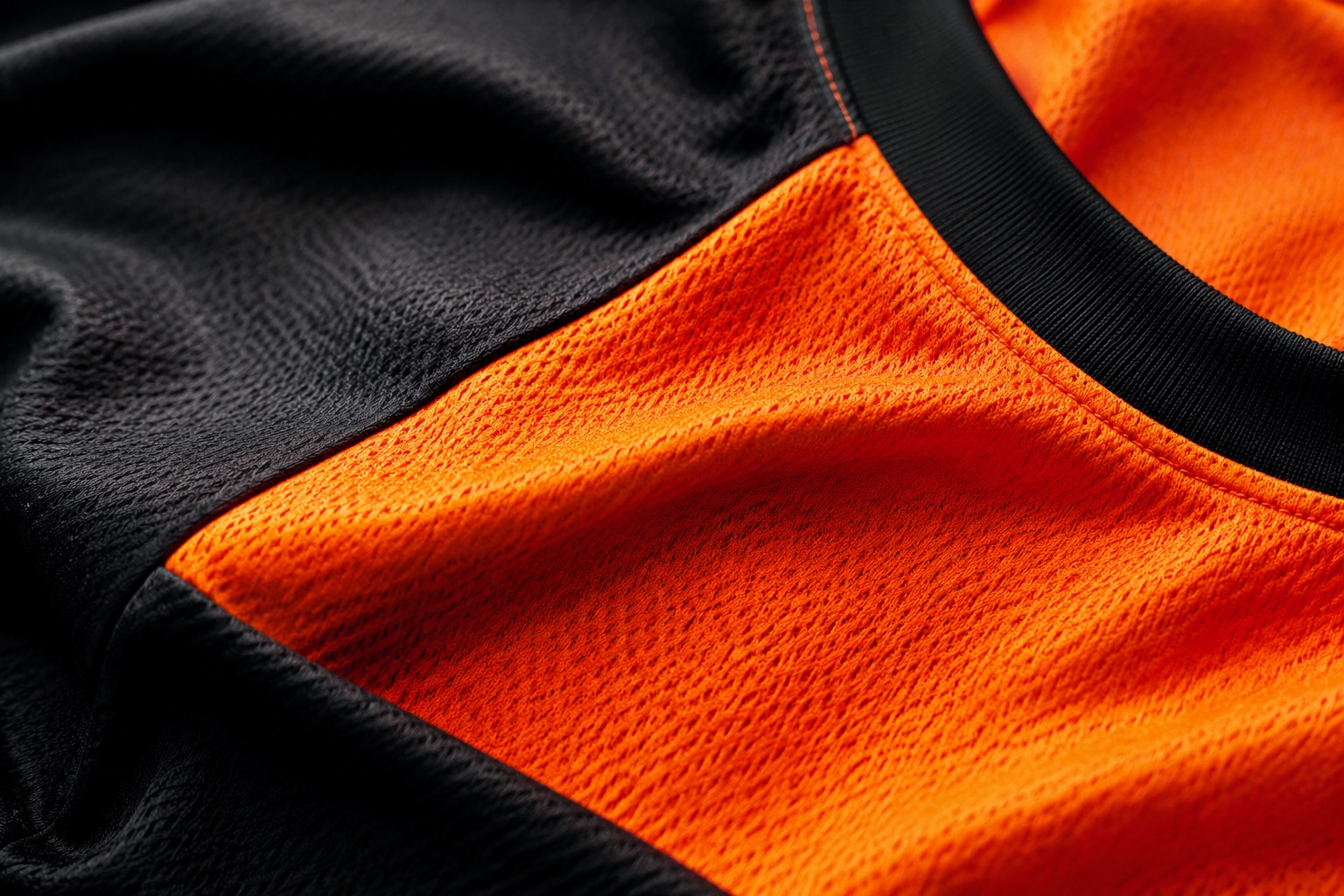
Dye sublimation turns solid ink into gas under heat and pressure, so the colour bonds inside the polyester fibre instead of sitting on the surface. There is nothing on top of the fabric to crack, peel or lift, and the printed area feels identical to the unprinted area.
That property is why sublimation is the default for teamwear. A jersey printed this way can be washed twice a week for a full season and the colour will not degrade at the print edge — the usual failure point for any applied decoration. It is also the only method that lets a design run edge to edge, across seams and around the body, because we print the fabric panels before the garment is cut.
The trade-off is that sublimation is chemically fussy: it only works on polyester, and only on white or very light fabric. It cannot print white ink, and it cannot be used on cotton at all. If your design needs any of those things, one of the other methods is the right answer, and we will tell you so rather than talk you into a process that will disappoint you.
Equipment we run
- Mimaki wide-format dye sublimation printer
- Heat press calendars
- In-house colour management
How It Works
Every stage below happens under our own roof, which is what keeps a reorder matching the original.
 1
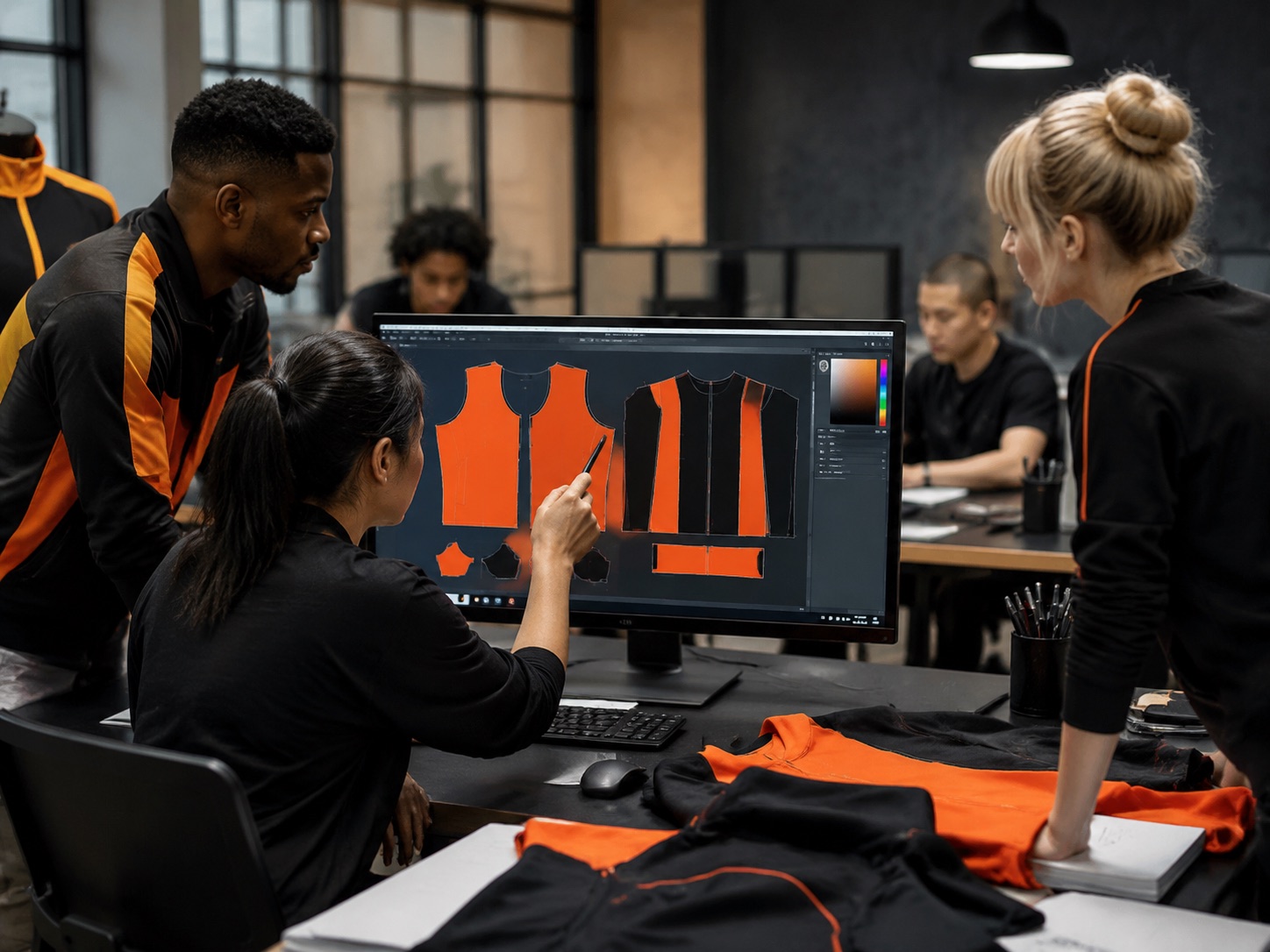
1Artwork & colour proof
Your design is laid out across the garment pattern pieces, not the finished garment. We proof colour against your Pantone references before anything is printed.
 2
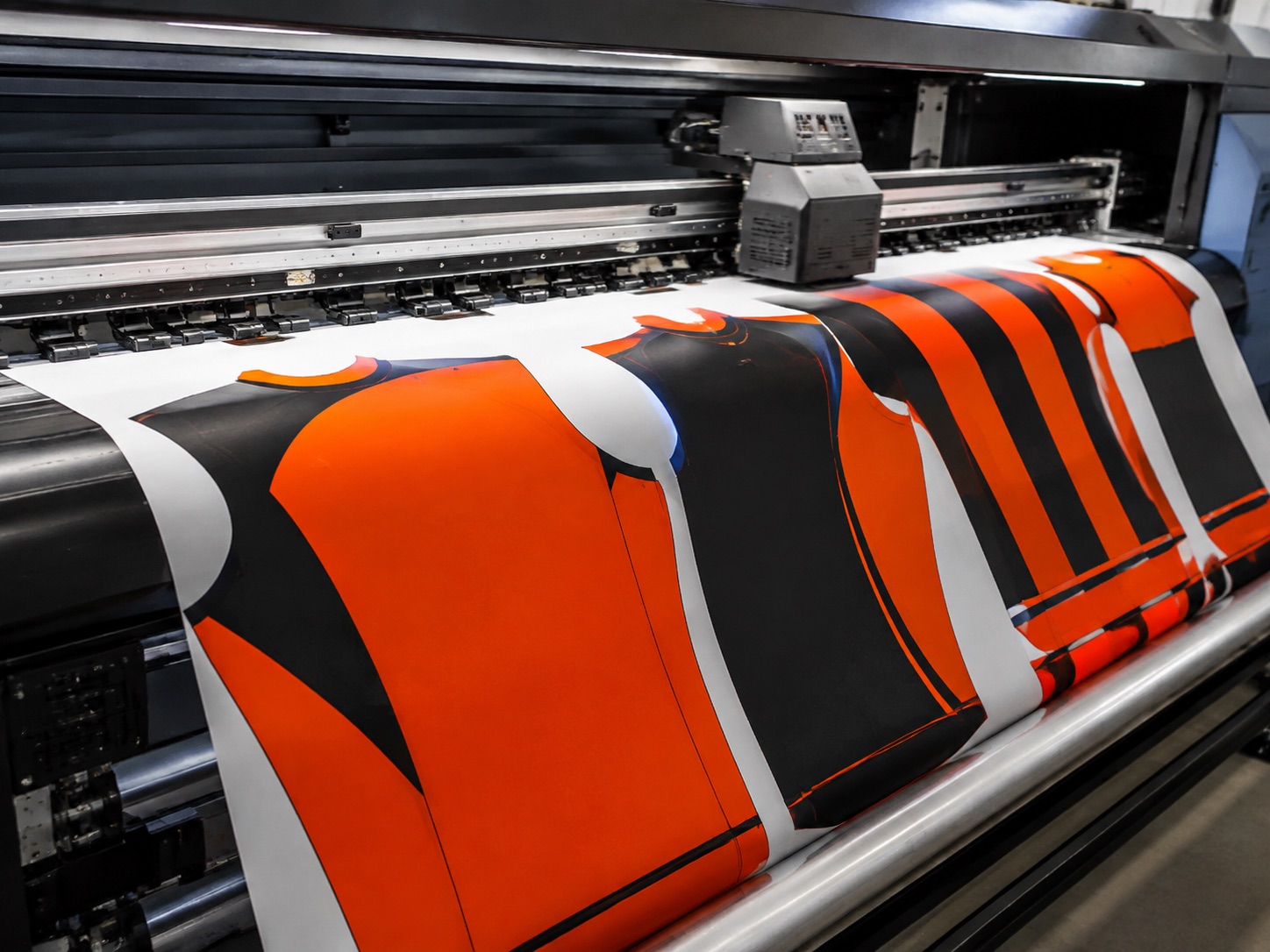
2Print to transfer paper
The design prints onto transfer paper on our Mimaki wide-format printer, mirrored and colour-managed.
 3
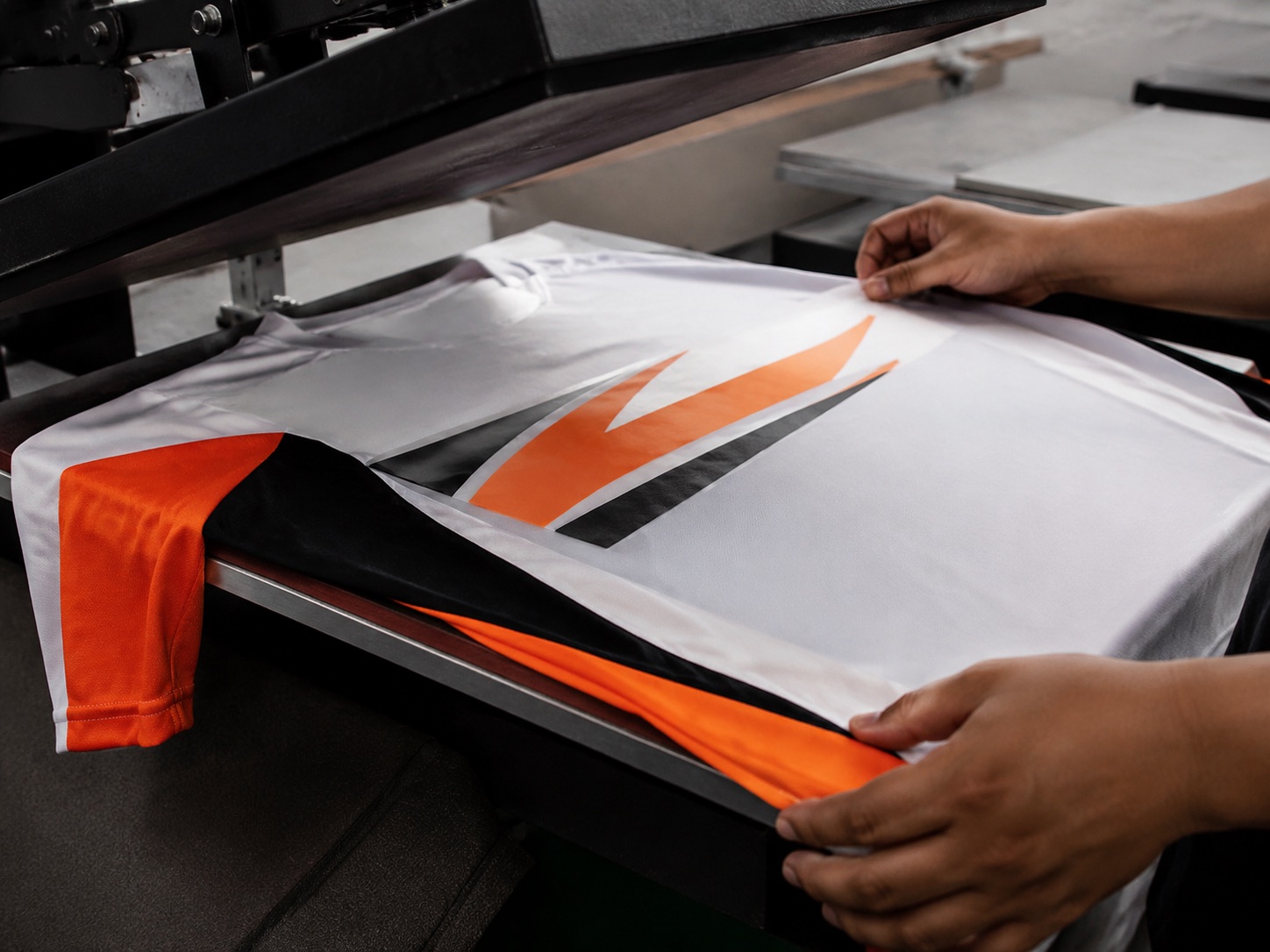
3Heat press
Paper and fabric pass through a heat press at around 200°C. The ink turns to gas and bonds into the fibre.
 4
4Cut & sew
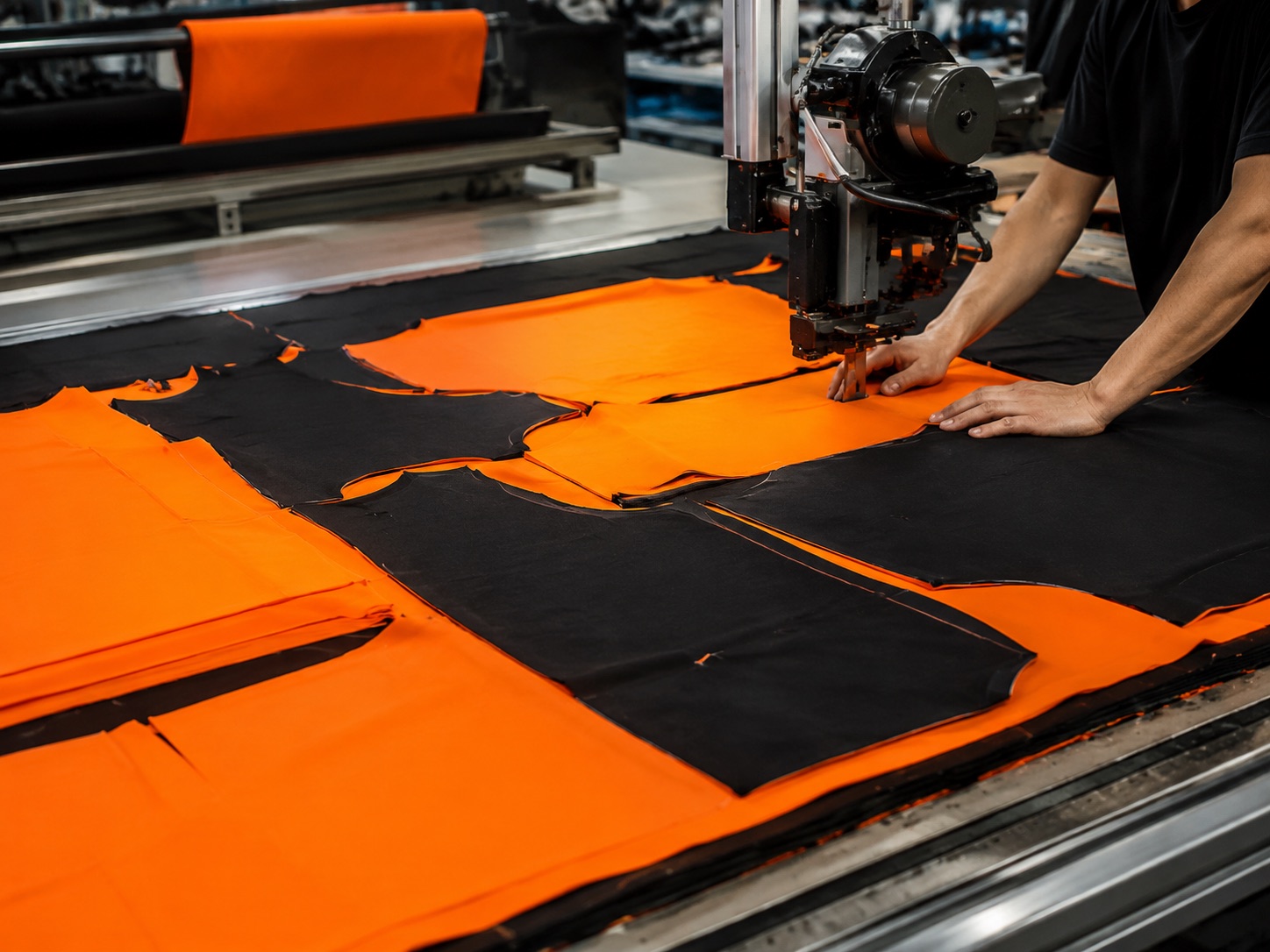
The printed fabric is then cut to pattern and sewn, which is what allows a design to run continuously across a seam.
Where It Works, and Where It Doesn't
Every method has real limits. Knowing them before you commit is worth more than a supplier telling you everything is possible.
Best for
- All-over designs, stripes, hoops and gradients
- Photographic or highly detailed artwork
- Designs that run across seams edge to edge
- Match jerseys washed repeatedly through a season
- Squad numbers and player names built into the garment
- Low quantities — there is no per-colour setup cost
Not suited to
- Cotton or cotton-blend garments — it will not bond
- Dark or strongly coloured base fabric
- Designs needing white ink (white is the unprinted fabric)
- Metallic, fluorescent or true neon colours
- Decorating finished blanks bought in from elsewhere
- Adding a late name or number after production
Full Specification
| Property | Specification |
|---|---|
| Substrate | Polyester and high-polyester blends only |
| Base colour | White or very light — colour is added, never removed |
| White ink | Not possible — white areas are unprinted fabric |
| Colour matching | Pantone-referenced, proofed before bulk |
| Coverage | Edge to edge, across seams, front and back |
| Hand feel | None — printed and unprinted areas feel identical |
| Wash durability | Will not crack, peel or fade at the edge |
| Minimum quantity | 20 pieces per design |
| Setup cost | None per colour — a 12-colour design costs the same as one |
What to Send Us
Sublimation rewards good source files. Because the design is printed at full garment scale, a low-resolution logo that looks fine on a website will look soft across a chest panel.
| Requirement | Detail |
|---|---|
| Preferred format | Vector — AI, EPS or PDF |
| Raster minimum | 300 dpi at final printed size |
| Colour space | CMYK, with Pantone references for brand colours |
| Fonts | Outlined or supplied with the file |
| Bleed | We add it — supply artwork to the trim line |
| What we cannot use | Screenshots, JPEGs from social media, low-res PNGs |
Not sure whether your files will work? Send them over and we will tell you before you commit — see the full artwork guidelines.
Choosing a method
Sublimation Compared
Sublimation is the right answer more often than not for polyester teamwear, but it is genuinely wrong in several situations. Here is how it sits against the alternatives.
- vs Screen printing
- Screen printing wins on high-volume simple designs — one or two colours at 500 pieces is cheaper by screen. Sublimation wins on anything with more than three colours, any gradient, or any run under about 100, because it has no per-colour setup cost.
- vs DTF transfer
- DTF works on cotton and on dark fabric, and can be applied after the garment is made. Sublimation cannot do either. But DTF sits on the surface with a slight hand feel, where sublimation has none — so for a full match jersey, sublimation is the better garment.
- vs DTG printing
- DTG is for cotton; sublimation is for polyester. They rarely compete. If you are choosing between them, the fabric has already made the decision for you.
- vs Embroidery
- Embroidery gives a premium raised finish and works on any fabric, but adds weight and restricts stretch. On a lightweight technical jersey sublimation is better; on a cap, polo or jacket, embroidery is.
Up Close
Colour inside the fibre
Runs across the seam
Gradients at no extra cost
Where We Use It
This method is part of the range we build for every sport below.
Sublimation FAQs
Can you sublimate onto cotton?
No. Sublimation ink bonds to polyester fibres and has nothing to bond to in cotton — it will wash straight out. For cotton garments we use DTF or DTG instead, and we will tell you at the quote stage if your fabric choice rules sublimation out.
Can you print white with sublimation?
No. Sublimation adds colour to fabric, so white areas in your design are simply unprinted fabric. That is why the base must start white or very light. If your design needs white on a dark garment, DTF is the method.
Will the print crack or peel after washing?
No, because there is nothing sitting on the surface to crack. The colour is inside the fibre, so the printed area wears at exactly the same rate as the fabric around it. This is the main reason sublimation is standard for match kit.
Does a more complex design cost more?
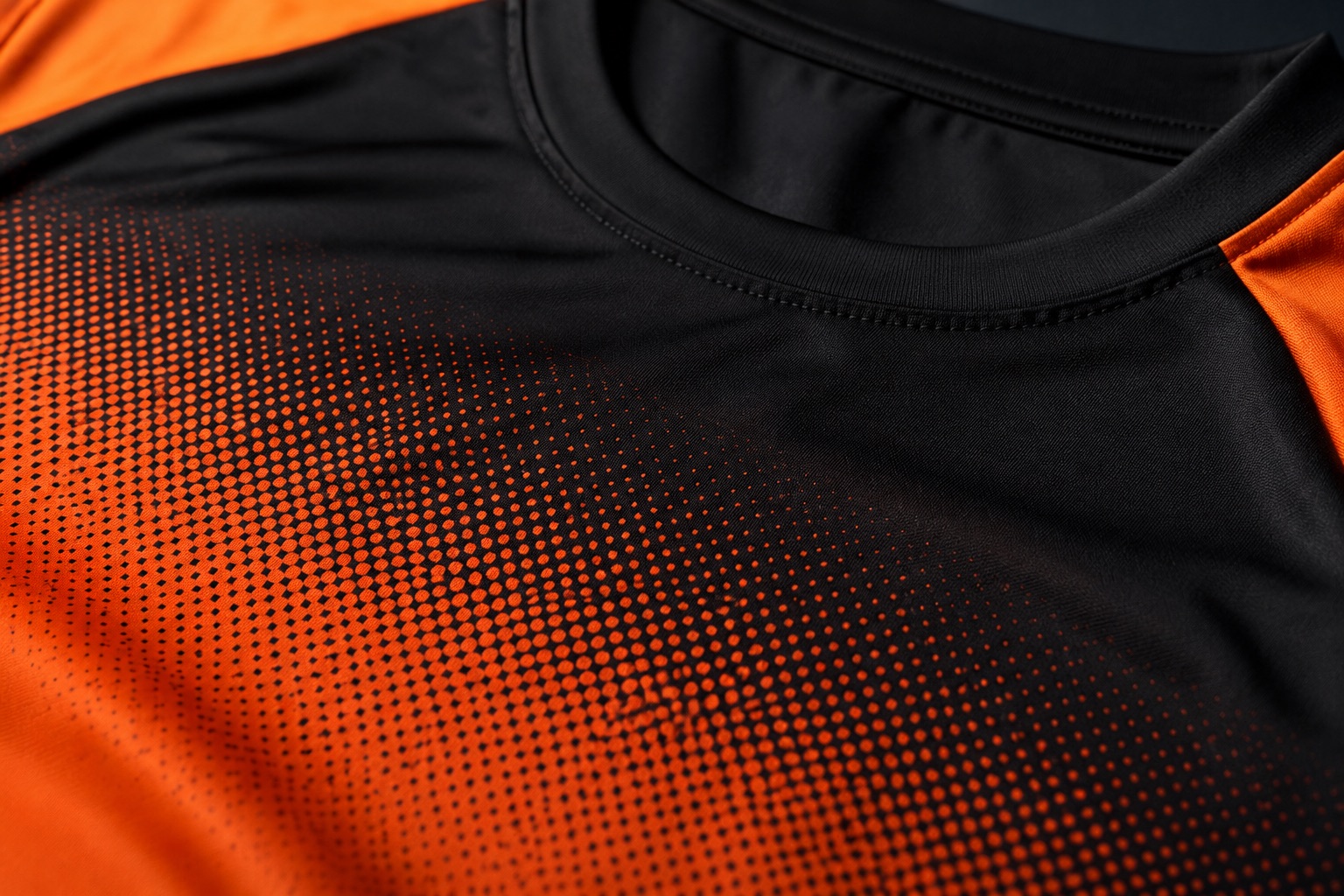
No. Unlike screen printing there is no per-colour setup, so a twelve-colour photographic design costs the same to print as a single-colour one. Complexity is free; quantity is what drives price.
Can a design run across a seam?
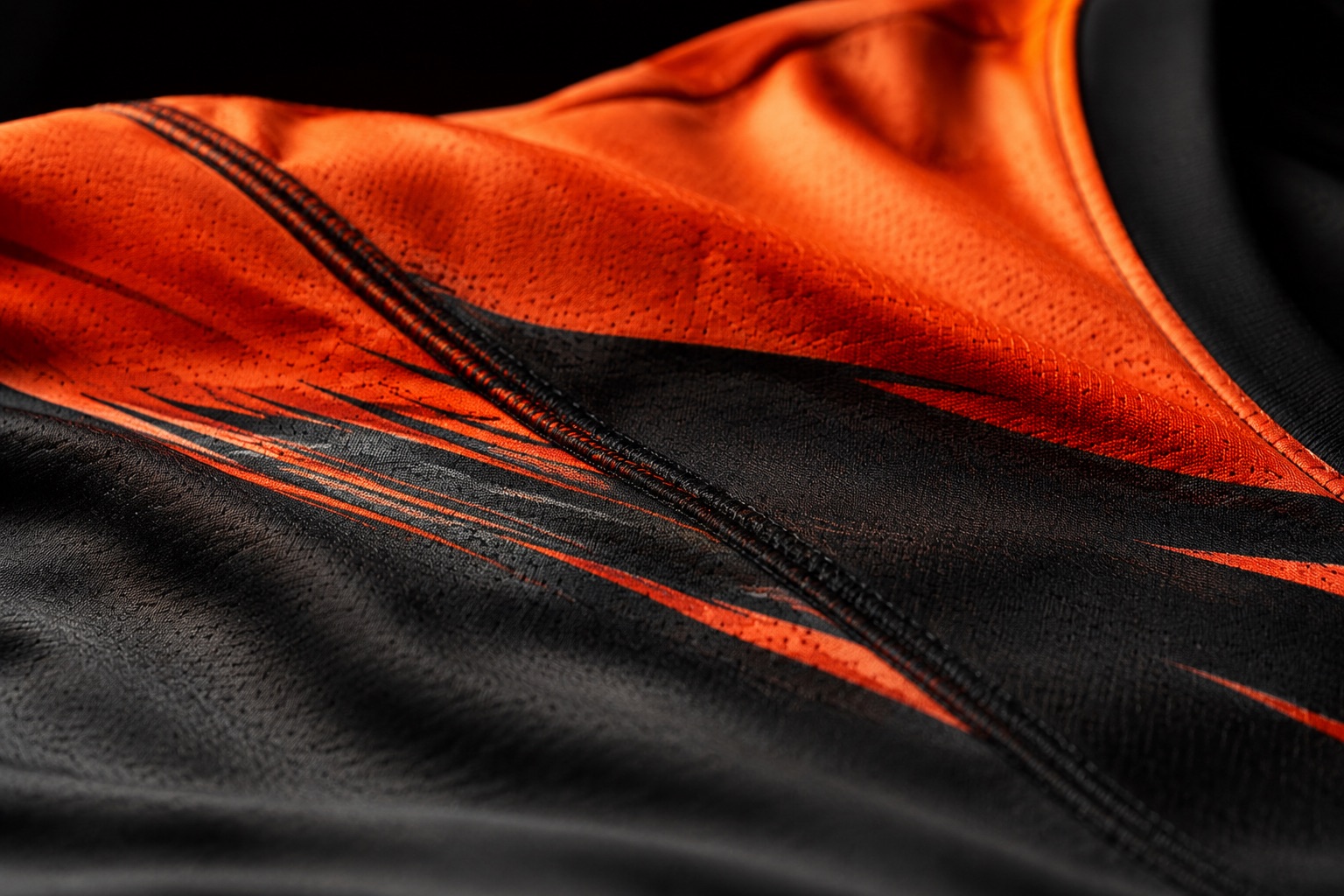
Yes — that is one of sublimation’s real advantages. We print the fabric panels before the garment is cut, so a stripe or graphic can continue uninterrupted from front to back or across a sleeve join.
Can you sublimate a garment we already have?
Not usually. True sublimated teamwear is printed as flat panels and then cut and sewn. Decorating a finished blank is possible in limited areas, but it is not how the best results are achieved — and if the blank is cotton or dark, it is not possible at all.
How exactly can you match our club colours?
We work from Pantone references and proof colour before bulk production. The proof is what you approve, and we record the recipe against your account so a reorder next season comes back the same rather than drifting a shade.
What is the minimum order?
20 pieces per design, and the run can be all different sizes. Because there is no per-colour setup cost, small sublimated orders are far more economical than small screen-printed ones.
Need sublimation on your next order?
Send us your artwork and quantities. We will confirm whether this is the right method for your garment — and tell you if it isn't.