Screen Printing, Where Volume Pays
One screen per colour, then hundreds of identical prints. The economics invert compared with digital methods — expensive at twenty pieces, unbeatable at five hundred.
- 20
- pieces per design
- Minimum order
- 15–20
- working days
- Bulk lead time
- 7–10
- working days
- Sampling
- 4
- export markets
- Shipping to
What screen actually is
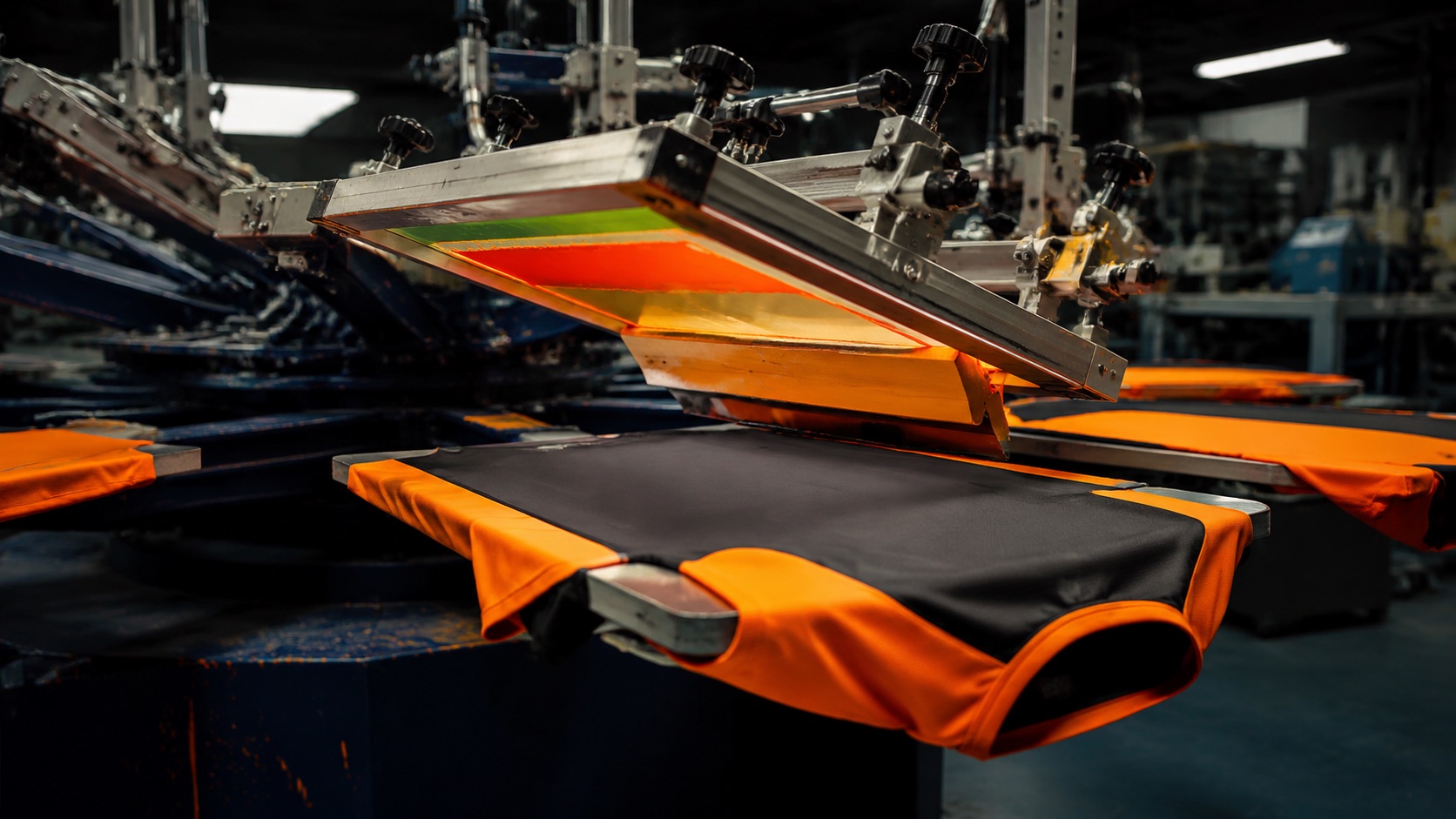
Screen printing pushes ink through a fine mesh stencil onto the garment, one screen per colour. Each screen has to be made, aligned and cleaned, which is a fixed cost — and once it exists, every additional print costs almost nothing.
That single fact governs everything about when to use it. At twenty pieces the screens dominate the price and a digital method is cheaper. At five hundred, the screens are trivial and nothing else comes close. Somewhere around one hundred to two hundred pieces the curves cross, and where exactly depends on how many colours your design uses.
It also produces the most accurate colour of any method we run. Screen inks are mixed to Pantone rather than built from CMYK dots, so a brand colour comes out as that colour rather than an approximation of it. For a supporter tee in a club’s exact red, screen printing is still the benchmark.
Equipment we run
- Rotary screen printing carousels
- Exposure and reclaim unit
- Pantone ink mixing
How It Works
Every stage below happens under our own roof, which is what keeps a reorder matching the original.
 1
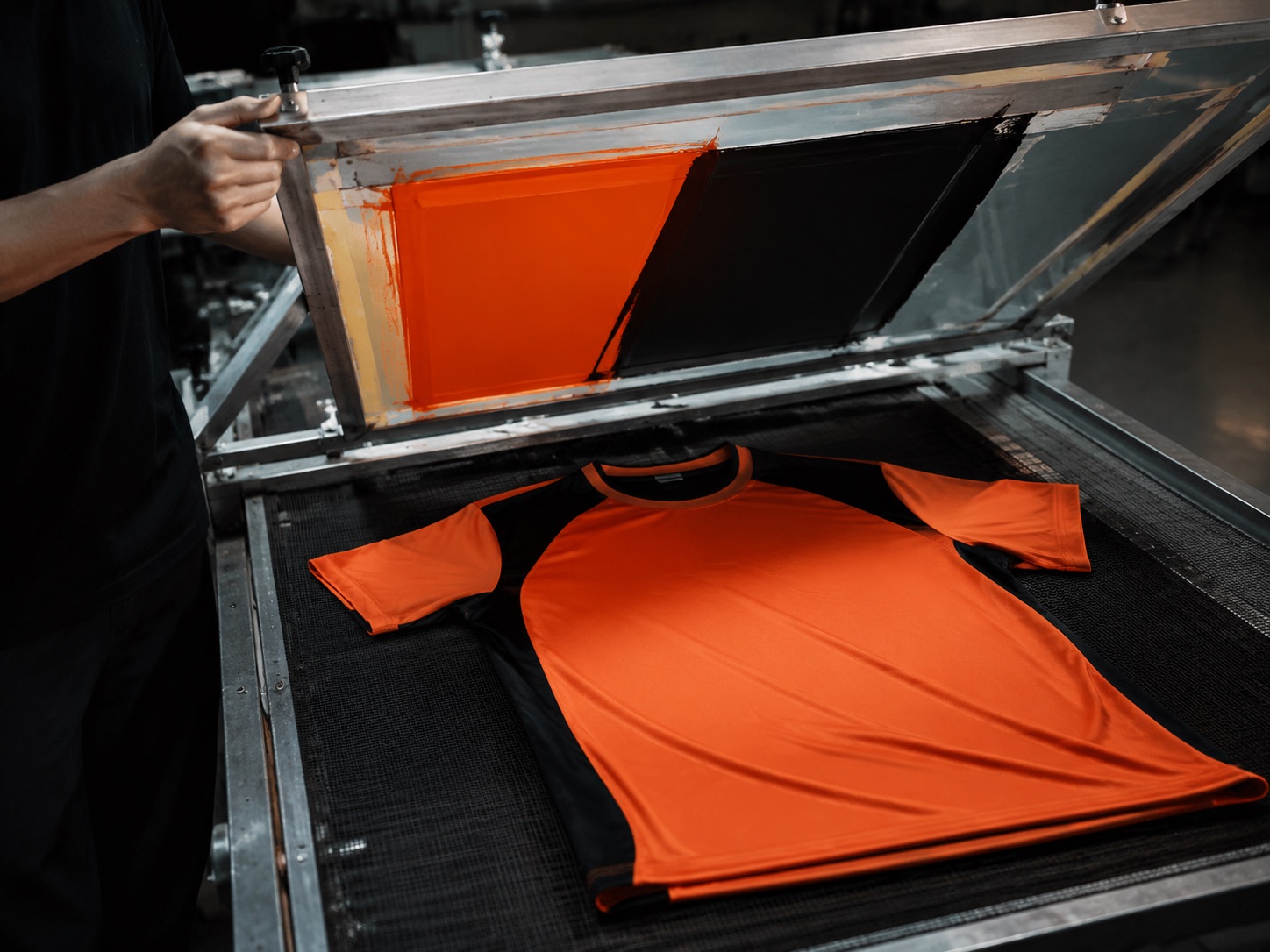
1Colour separation
Your artwork is separated into one layer per colour. This is where the design is translated into what the process can physically print.
 2
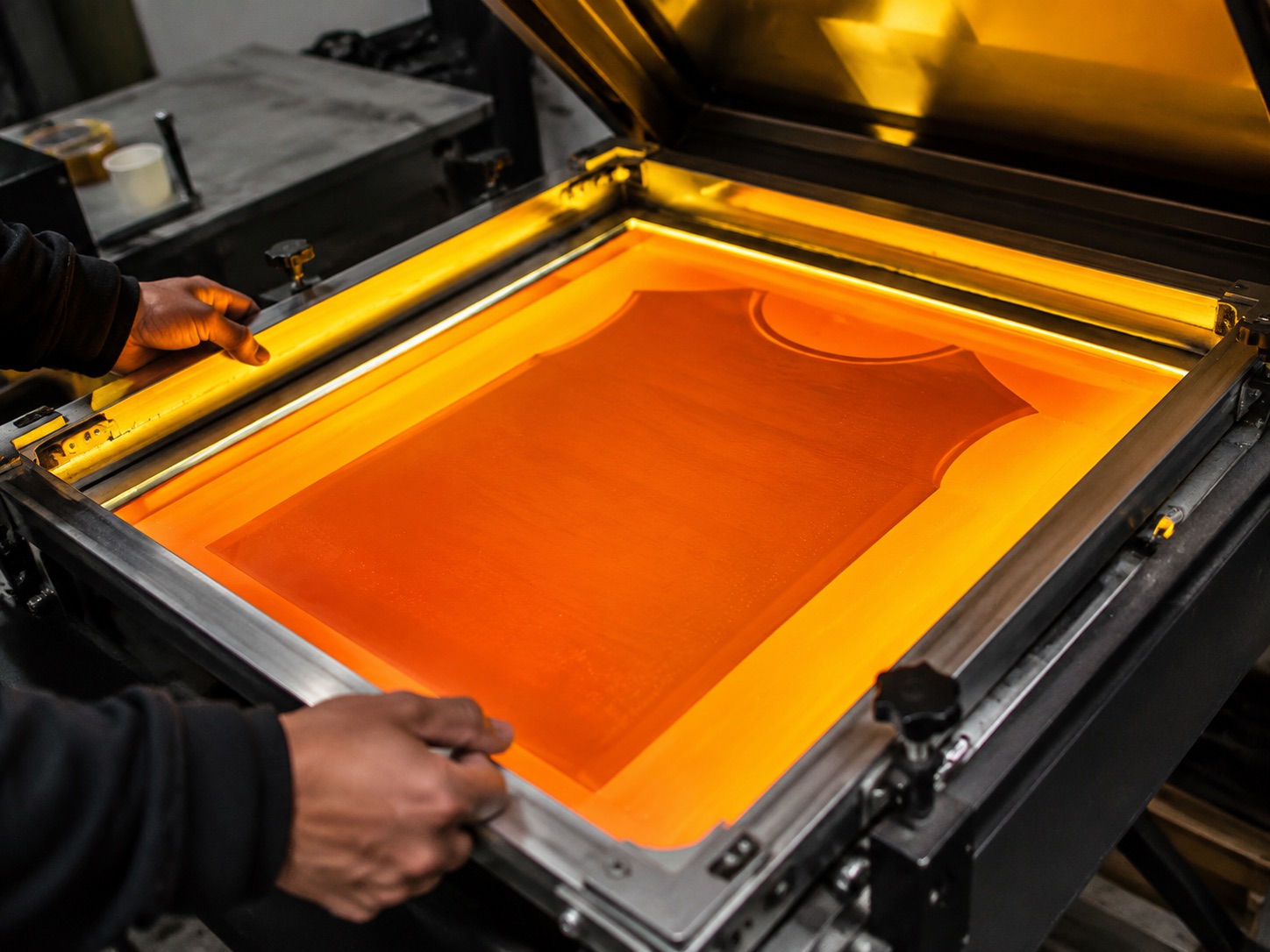
2Screen exposure
Each colour layer is exposed onto a mesh screen coated in emulsion, creating a stencil that only lets ink through where the design is.
 3
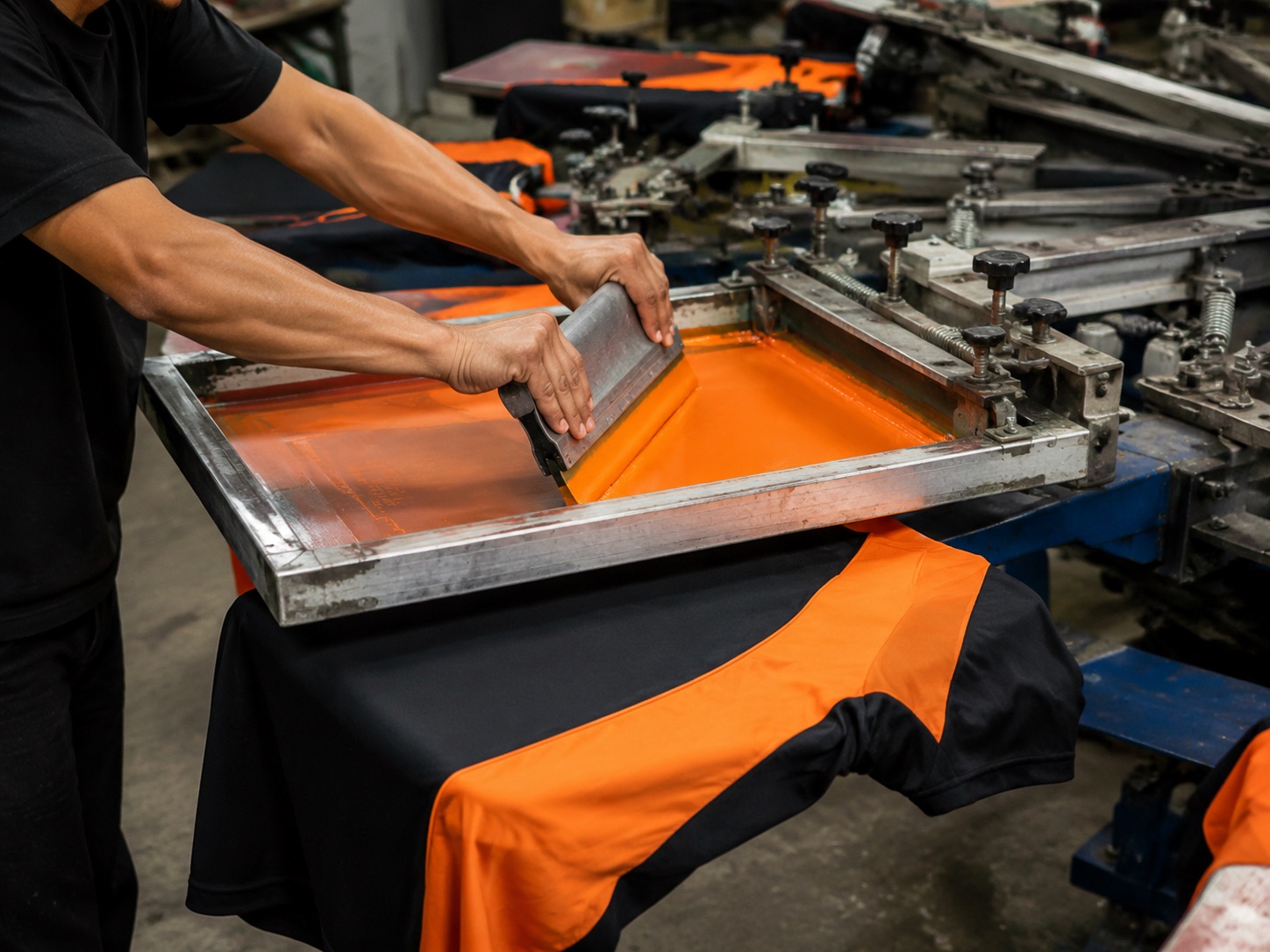
3Register & print
Screens are aligned on the carousel so colours land exactly on top of each other, then ink is pulled through with a squeegee, one colour per station.
 4
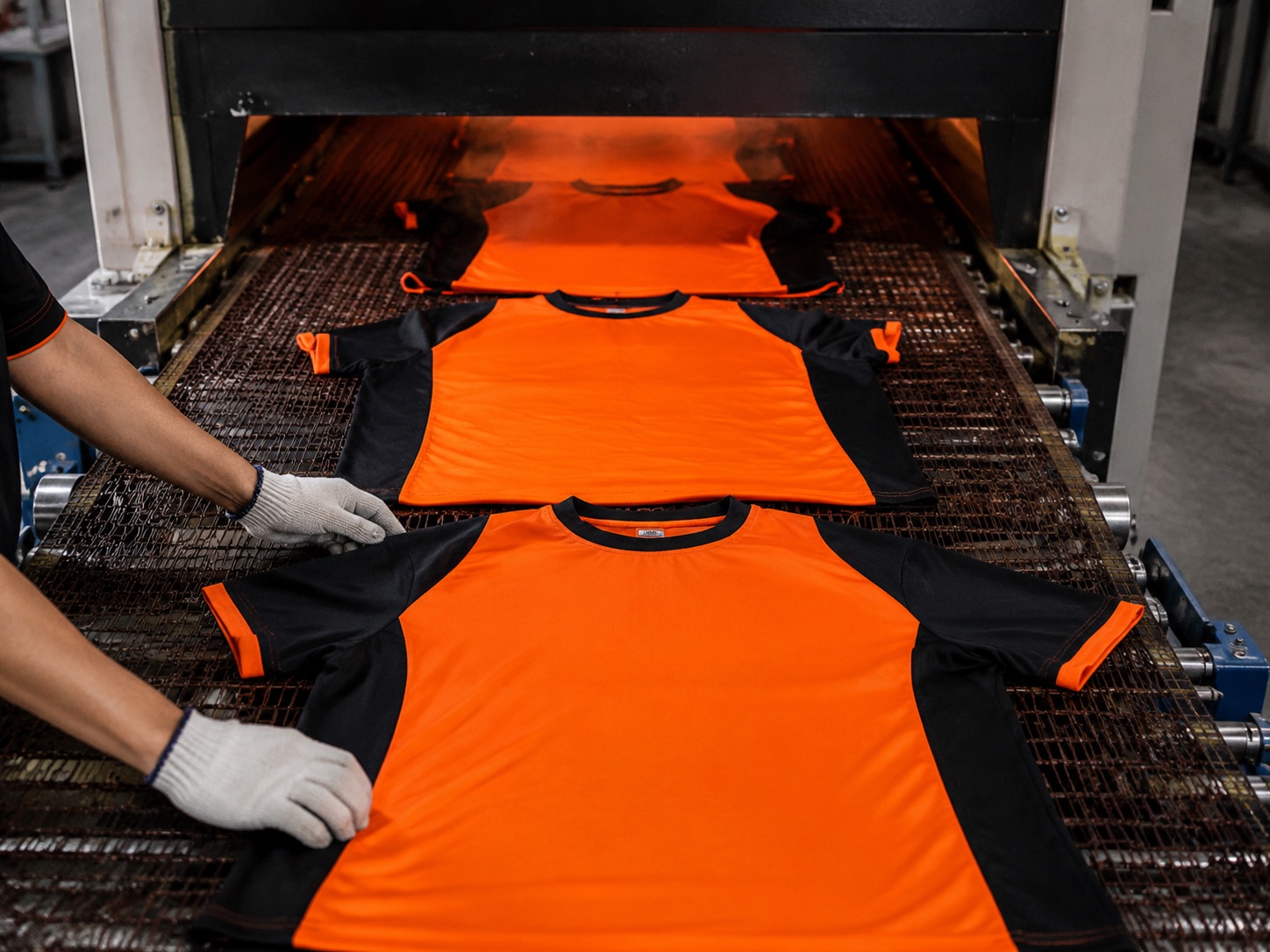
4Cure
The garment passes through a dryer to cure the ink. Under-curing is the main cause of prints that wash off, so temperature is monitored throughout.
Where It Works, and Where It Doesn't
Every method has real limits. Knowing them before you commit is worth more than a supplier telling you everything is possible.
Best for
- One to three colour designs at volume
- Supporter, event and fundraiser tees
- Exact Pantone brand colour matching
- Large solid areas of flat colour
- Runs of 100 pieces and upward
- Bold, high-opacity prints on dark cotton
Not suited to
- Small runs — screen setup dominates the cost below about 100 pieces
- Photographic or many-colour artwork, where each colour adds a screen
- Smooth gradients, which have to be faked with halftone dots
- Very fine detail, limited by the mesh count
- Late additions — a new screen for one garment makes no sense
- Technical stretch jerseys, where a thick ink layer restricts the fabric
Full Specification
| Property | Specification |
|---|---|
| Substrate | Cotton, polyester and blends |
| Pricing basis | Number of colours × quantity |
| Setup | One screen per colour, per design |
| Colour matching | Inks mixed to Pantone — most accurate method we run |
| Plastisol ink | Opaque and durable, sits on the surface |
| Water-based ink | Absorbs into cotton, much softer feel, less opaque |
| Discharge ink | Removes the dye from cotton — softest finish on dark garments |
| Gradients | Possible via halftone, but not as smooth as digital |
| Economical from | Around 100 pieces, depending on colour count |
What to Send Us
Screen printing needs artwork that can be separated into flat colour layers. Anything with soft edges, transparency or a photographic blend has to be reinterpreted, and we would rather do that with you than guess.
| Requirement | Detail |
|---|---|
| Preferred format | Vector with separated flat colours |
| Colours | Specified as Pantone references |
| Minimum line width | About 0.5 mm at final size |
| Avoid | Drop shadows, soft glows and transparency effects |
| Gradients | Tell us if essential — we will halftone them or advise DTF |
| What we will flag | Colour counts that make the job uneconomic versus DTF |
Not sure whether your files will work? Send them over and we will tell you before you commit — see the full artwork guidelines.
Choosing a method
Screen Compared
Screen printing competes directly with the digital methods, and the deciding factor is almost always quantity rather than quality.
- vs DTF transfer
- DTF wins under about 100 pieces and on anything with photographic detail — no screens to pay for. Screen printing wins clearly above that on simple designs, with a flatter finish and better colour accuracy.
- vs DTG printing
- DTG has no setup and handles unlimited colours, but is slow per piece and does not scale. Screen printing is the volume answer; DTG is the low-volume, high-complexity answer.
- vs Sublimation
- They rarely compete. Sublimation is for all-over polyester teamwear; screen printing is for a chest print on a cotton tee. If your garment is a light polyester jersey with an all-over design, sublimation is not just cheaper, it is the only method that works.
- Ink types
- Plastisol is the durable default. Water-based feels far softer because it soaks into cotton, at some cost to opacity. Discharge removes the garment’s own dye and gives the softest possible result on dark cotton — worth asking about for premium supporter wear.
Up Close
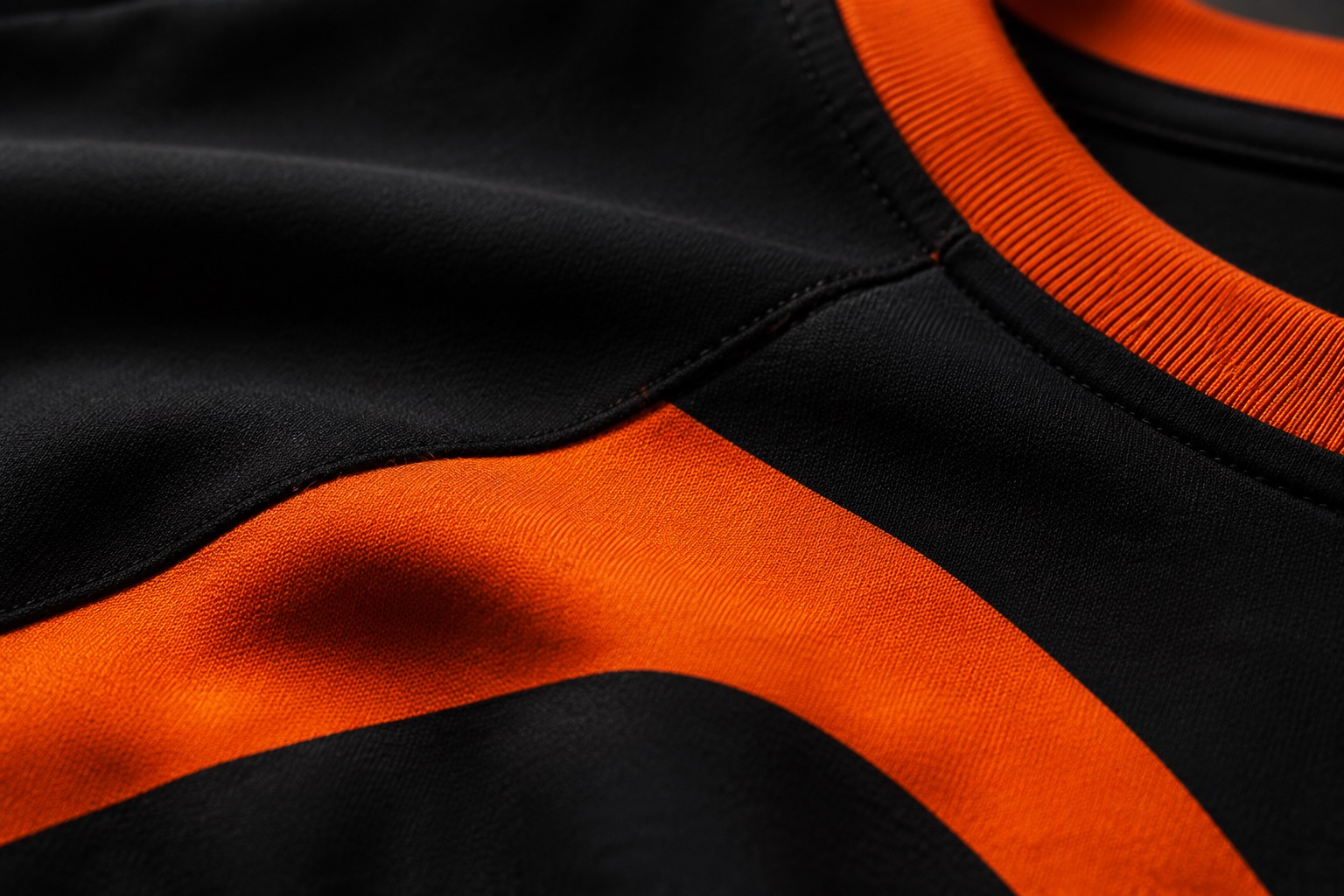
Flat, dense, exact colour
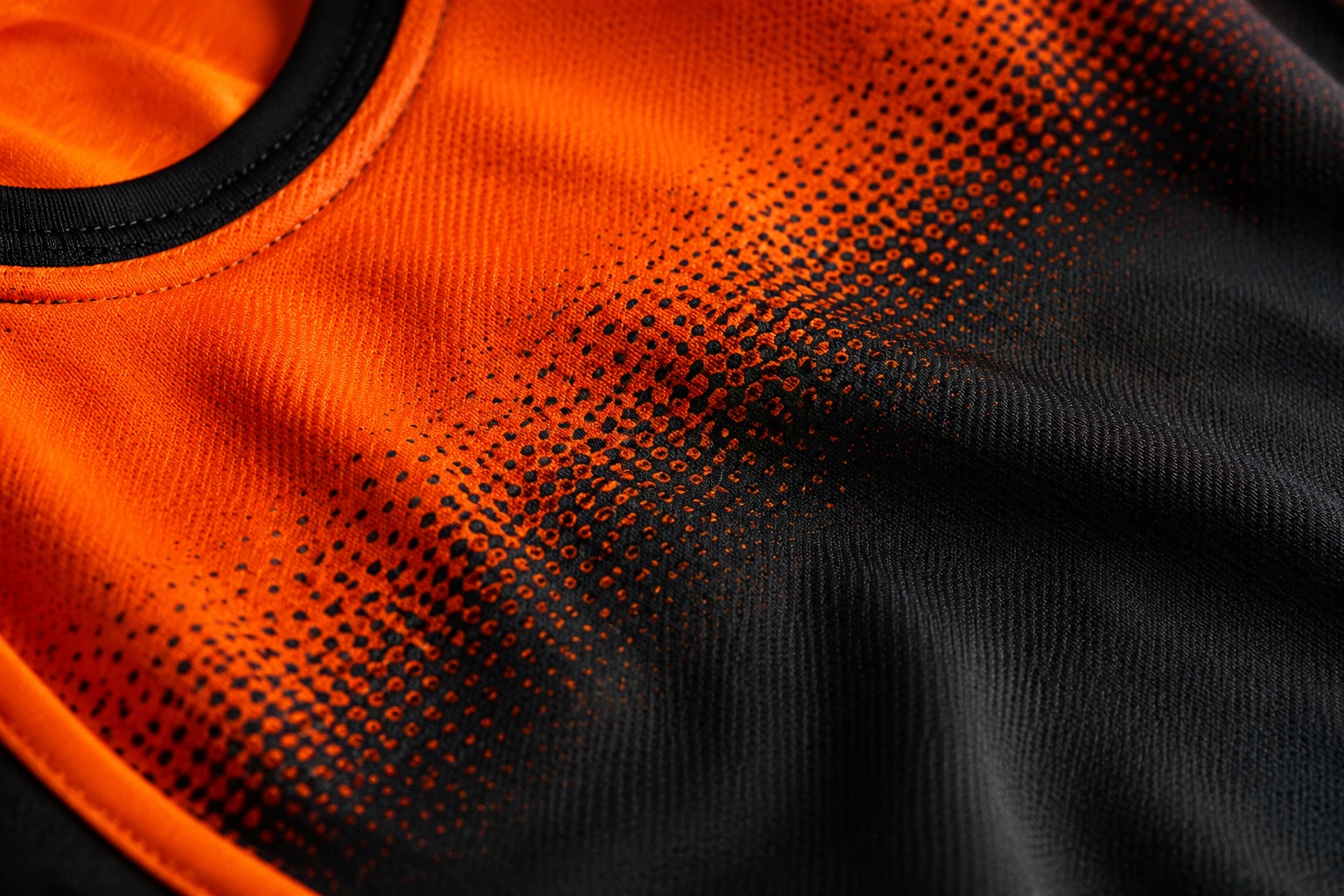
Halftones stand in for gradients
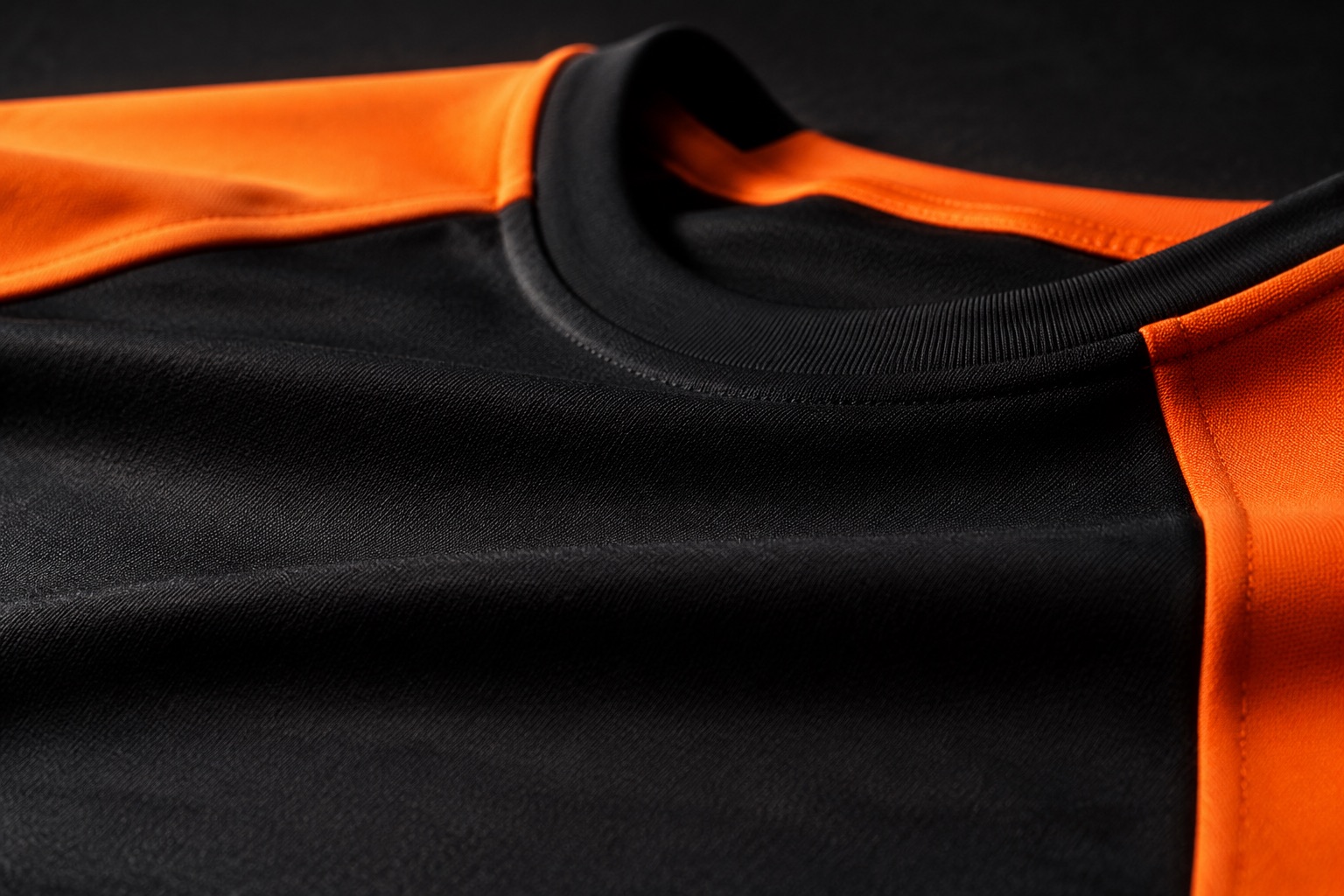
Water-based sinks into the cloth
Where We Use It
This method is part of the range we build for every sport below.
Screen FAQs
At what quantity does screen printing become worth it?
Roughly 100 pieces for a simple one or two colour design, and it gets better from there. Below that the screen setup dominates the price and DTF is cheaper. The more colours in your design, the higher the crossover point moves.
Why does each colour cost extra?
Each colour needs its own screen — exposed, aligned, printed and cleaned. That is a real fixed cost per colour, which is why a six-colour design at 50 pieces is poor value and the same design at 1,000 is fine.
Can you match our exact brand colour?
Yes, and better than any other method we run. Screen inks are mixed to a Pantone reference rather than built from CMYK dots, so you get that colour rather than an approximation. If exact colour is the priority, this is the process.
Can you print photographs or gradients?
Technically yes, using halftone dots, but it is not what the process is good at. If your artwork is photographic or has smooth blends, DTF or DTG will give a better result at any quantity we would realistically be printing.
What is the difference between plastisol and water-based ink?
Plastisol sits on the fabric surface — durable, opaque, slight hand feel. Water-based soaks into cotton for a much softer finish with less opacity. Discharge goes further still, removing the garment’s own dye for the softest result on dark cotton.
Will a screen print crack or wash off?
Not if it is cured properly, which is the critical variable. Under-cured ink is the main cause of prints failing in the wash, so our dryer temperature is monitored throughout the run rather than set and forgotten.
Can you screen print onto technical sports jerseys?
We can, but usually advise against it. A thick ink layer restricts stretch and reduces breathability on a performance fabric. For playing kit, sublimation is the better answer; screen printing belongs on cotton supporter and event wear.
Do I pay for screens again on a repeat order?
Screens are reclaimed and re-coated after a run, so a repeat does involve making them again. However, the separations and settings are on file, so a reorder is faster and we price it accordingly.
Need screen on your next order?
Send us your artwork and quantities. We will confirm whether this is the right method for your garment — and tell you if it isn't.