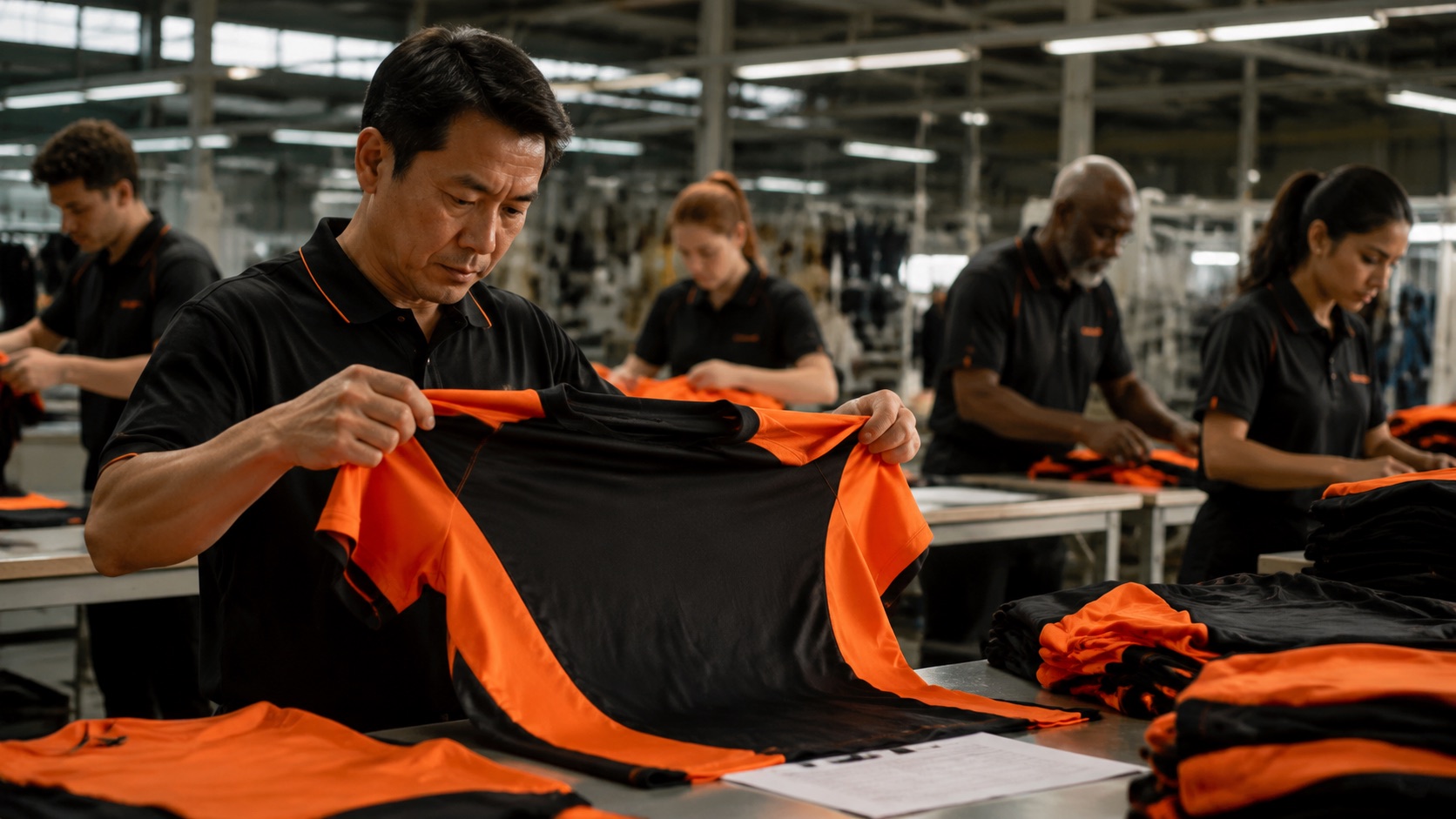
Checked Against Your Sample, Not an Opinion
Every order is measured against the sample you approved. In-line checks catch problems while they are still fixable; a final inspection catches anything that got past them.
- 20
- pieces per design
- Minimum order
- 15–20
- working days
- Bulk lead time
- 7–10
- working days
- Sampling
- 4
- export markets
- Shipping to
What quality control actually is
Quality control on an apparel order means two distinct activities: checking work while it is still on the line, and checking finished goods before they are packed. Doing only the second is how factories end up reworking or scrapping an entire run.
Our QC works from the sample you approved. That garment is retained as the physical standard, so "matches the sample" is a measurable statement rather than a judgement call — every checked piece is compared against recorded measurements with a defined tolerance, typically around one centimetre on key points.
The checks that matter most are unglamorous: is the colour consistent between dye lots, do the sizes actually grade as specified, is the decoration in the same place on every piece, has every needle that broke been accounted for. These are the things that turn up as complaints weeks later if nobody looked.
Equipment we run
- In-line inspection stations on the sewing floor
- Measurement tables with your approved sample retained as standard
- Final pre-pack inspection
How It Works
Every stage below happens under our own roof, which is what keeps a reorder matching the original.
 1
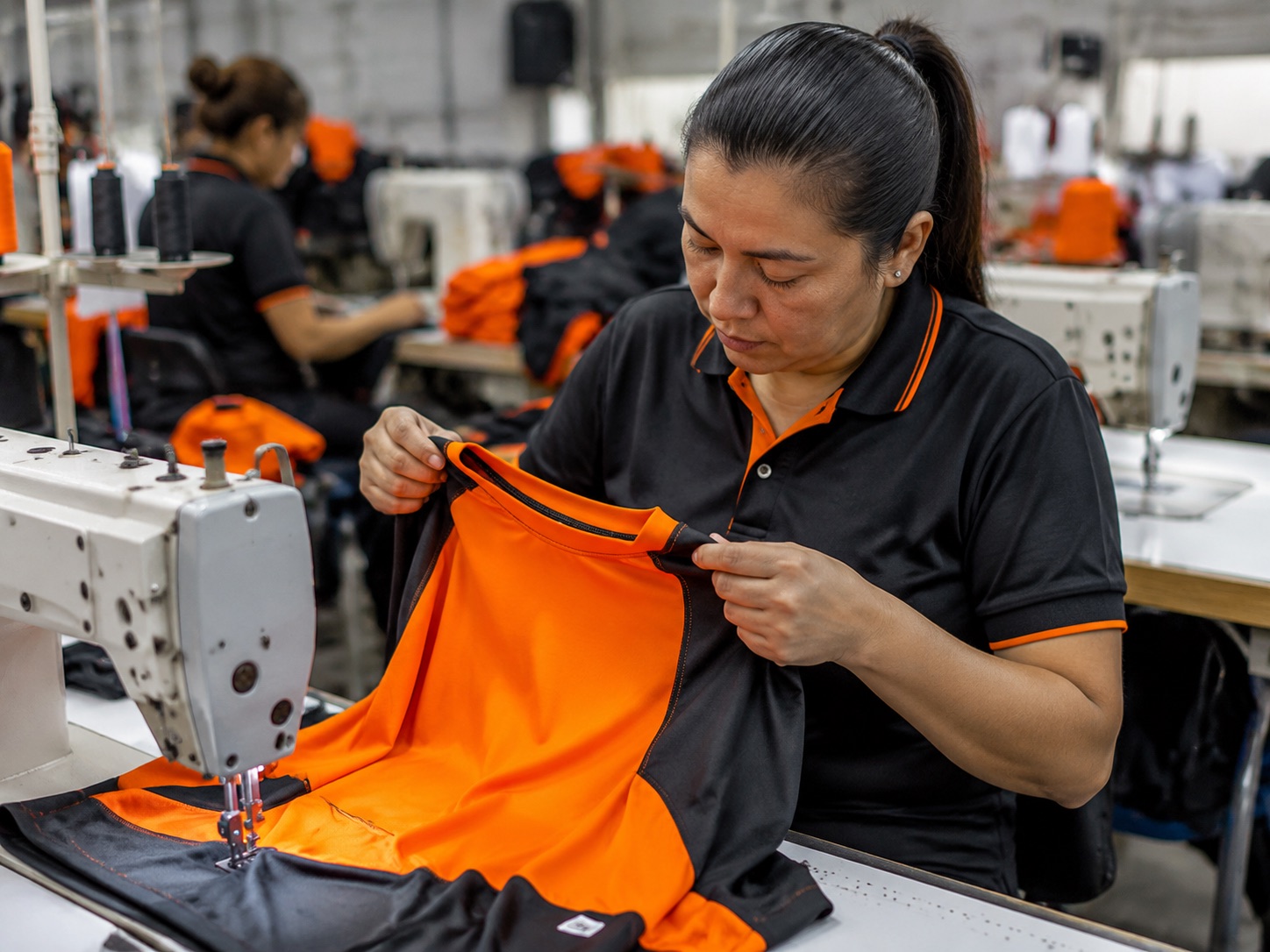
1In-line inspection
Operators and line supervisors check work at each station. Catching a seam or placement error at piece twenty is a correction; catching it at piece four hundred is a rework.
 2
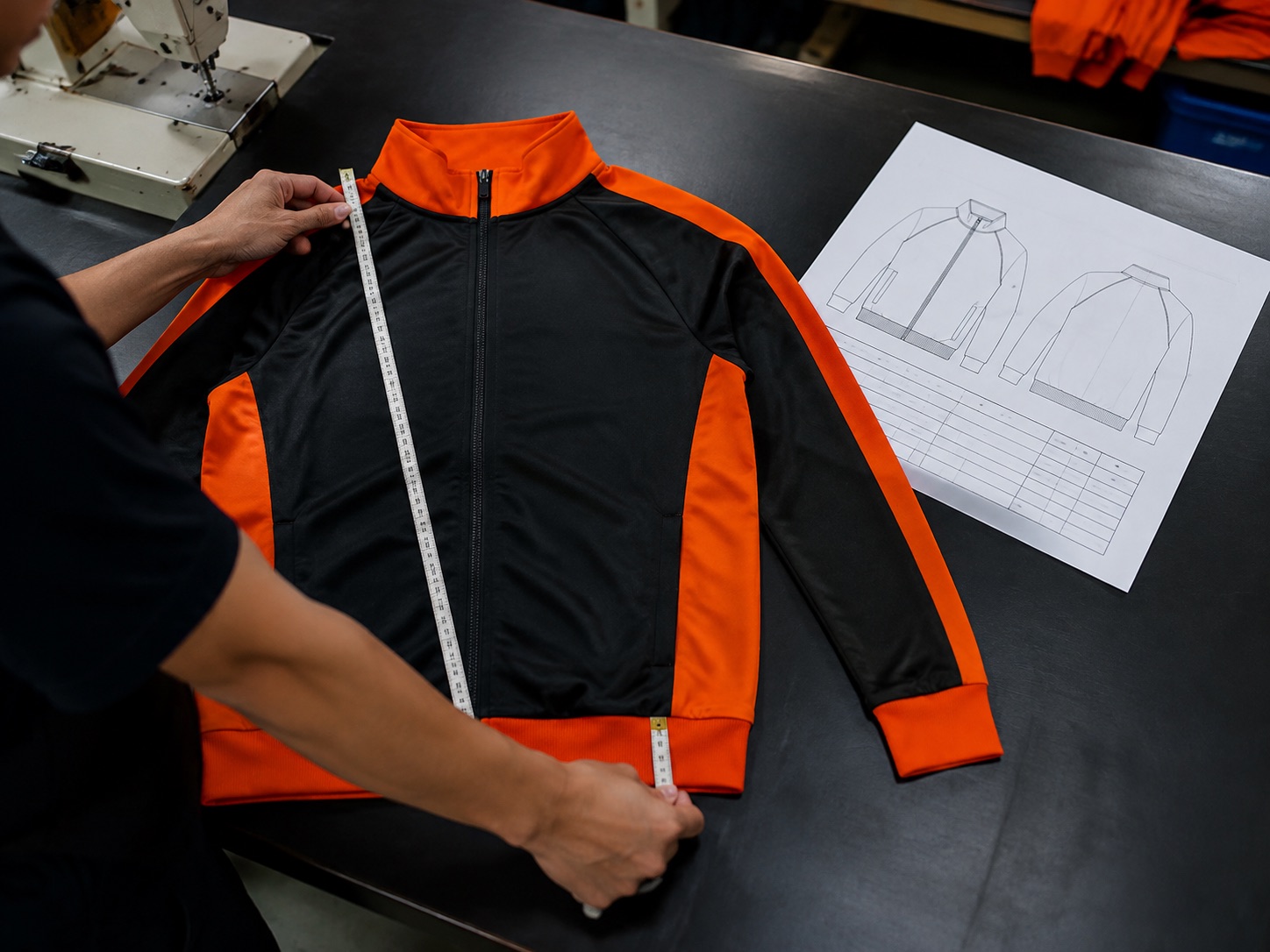
2Measurement check
Garments are measured flat against the spec derived from your approved sample — chest, length, sleeve, waist — and compared within tolerance.
 3
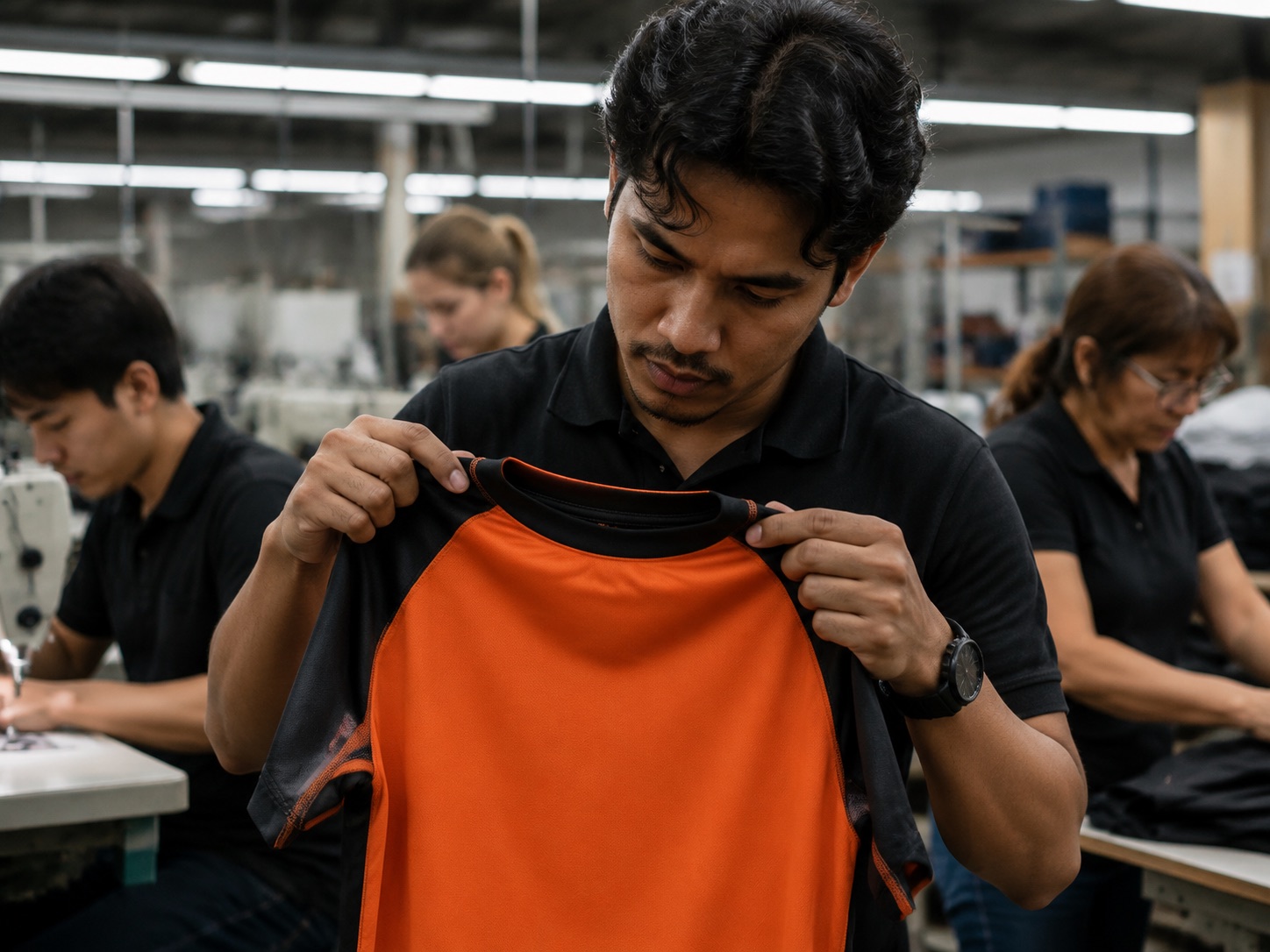
3Finishing & decoration check
Stitching, trims, decoration placement and colour consistency are checked piece by piece, including against previous production where this is a reorder.
 4
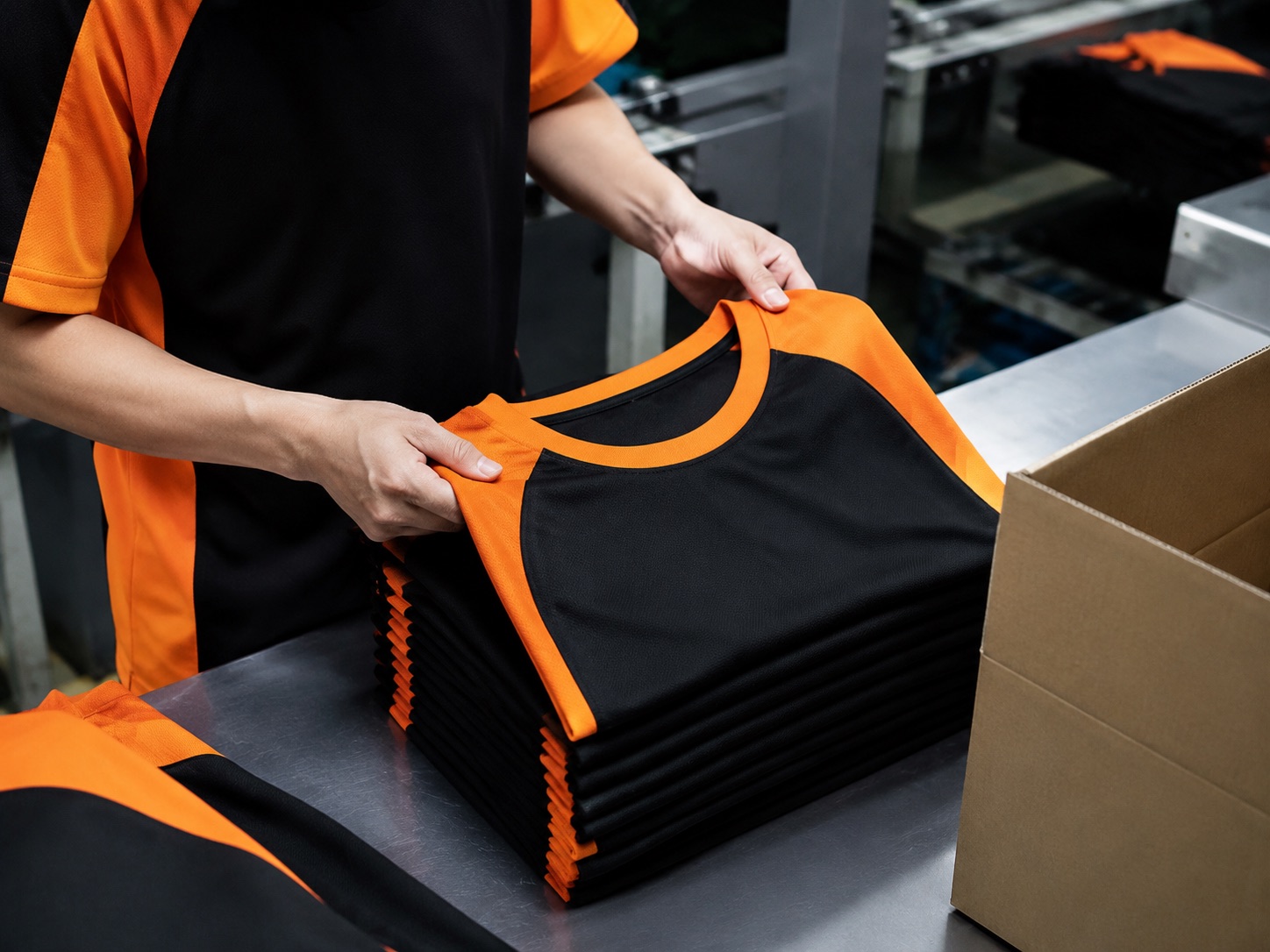
4Final inspection & pack
A final check before packing covers loose threads, needle safety, labelling, and that the size on the label matches the garment in the bag.
Where It Works, and Where It Doesn't
Every method has real limits. Knowing them before you commit is worth more than a supplier telling you everything is possible.
Best for
- Every order — this is not an optional extra
- Wide size runs, where grading errors hide at the extremes
- Reorders that must match previous production
- Orders combining several decoration methods
- Wholesale and distributor orders shipped without being seen first
Not suited to
- Nothing — but note that QC verifies against your approved spec, not against expectations never written down
- Catching design decisions you regret; that is what sampling is for
Full Specification
| Property | Specification |
|---|---|
| Reference standard | Your approved pre-production sample, retained |
| In-line inspection | At each station during assembly |
| Measurement points | Chest, body length, sleeve, waist and garment-specific points |
| Tolerance | Typically ±1 cm, tightened where a spec requires it |
| Colour consistency | Checked across dye lots and against previous production |
| Decoration | Placement, scale and registration checked piece by piece |
| Needle policy | Broken needles logged and accounted for before goods pass |
| Final check | Threads, trims, labelling, size-to-bag match |
What to Send Us
QC verifies against a specification, so the more precisely a requirement is written down, the more reliably it can be checked. Anything important that is only implied cannot be inspected against.
| Requirement | Detail |
|---|---|
| Approved sample | The physical standard everything is measured against |
| Measurement chart | Yours, or the one we produce and you approve |
| Tolerance | Tell us if you need tighter than the standard ±1 cm |
| Colour reference | Pantone or a physical swatch retained on file |
| Labelling spec | Care, size and brand labelling requirements |
| Packing spec | Per player, per size, or bulk — specified before production |
Not sure whether your files will work? Send them over and we will tell you before you commit — see the full artwork guidelines.
Choosing a method
Quality Control Compared
The useful distinction is not between suppliers who do QC and those who do not — almost everyone claims it — but between checking during production and only checking at the end.
- In-line vs final inspection only
- Final-only inspection finds the same error four hundred times, when the only remedies are rework or scrap. In-line inspection finds it at piece twenty, when it is a correction. Both matter; doing only the second is what causes delayed orders.
- Measuring vs looking
- A visual check catches obvious faults. It does not catch a sleeve that is consistently 1.5 cm short across an entire size, which is exactly the error a club notices when the kit arrives. Measured checks against a retained sample catch it.
- QC vs sampling
- They answer different questions. Sampling asks "is this the right garment?" QC asks "is every piece the same as the one you approved?" QC cannot rescue a design decision made without a sample.
Up Close
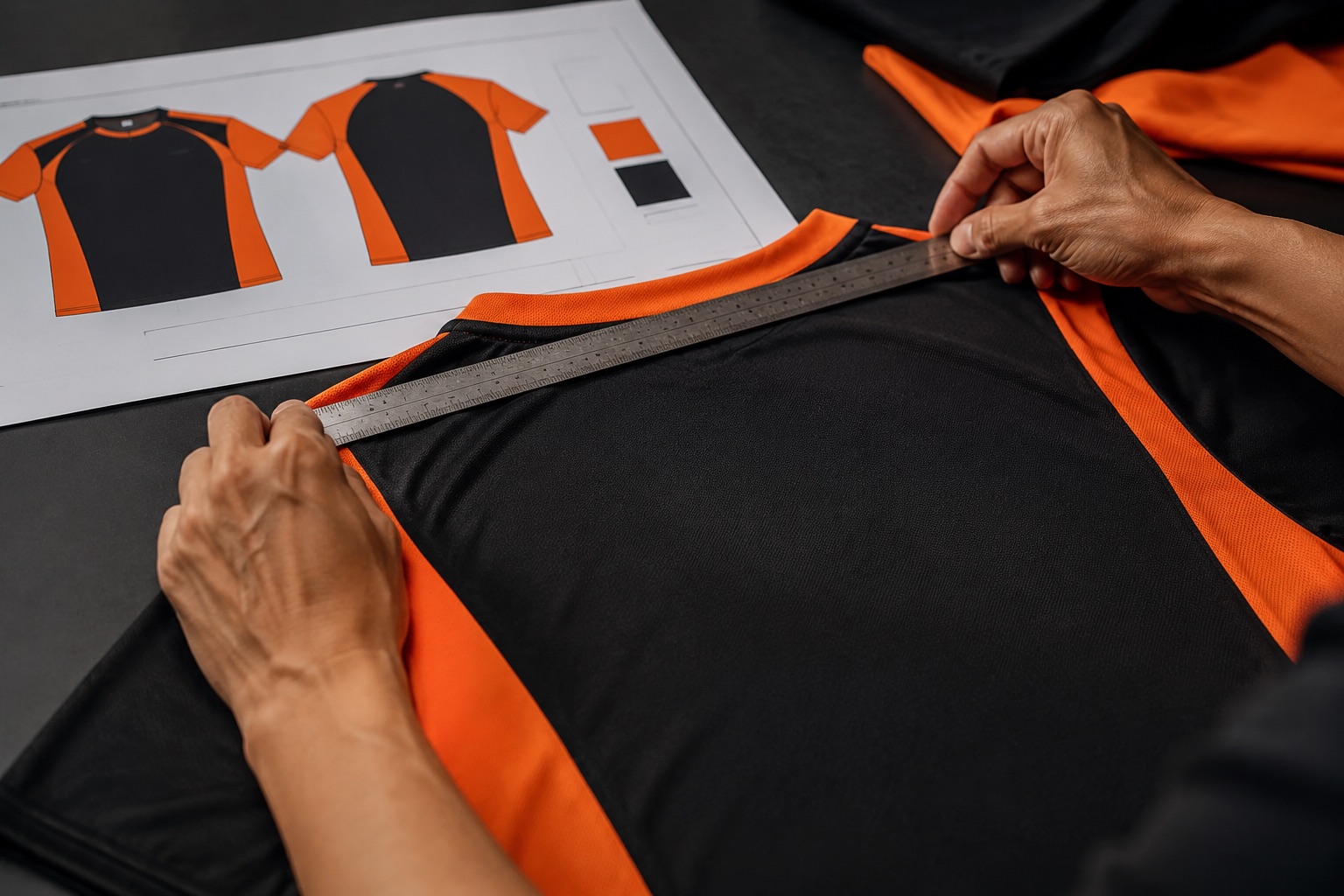
Measured against the spec
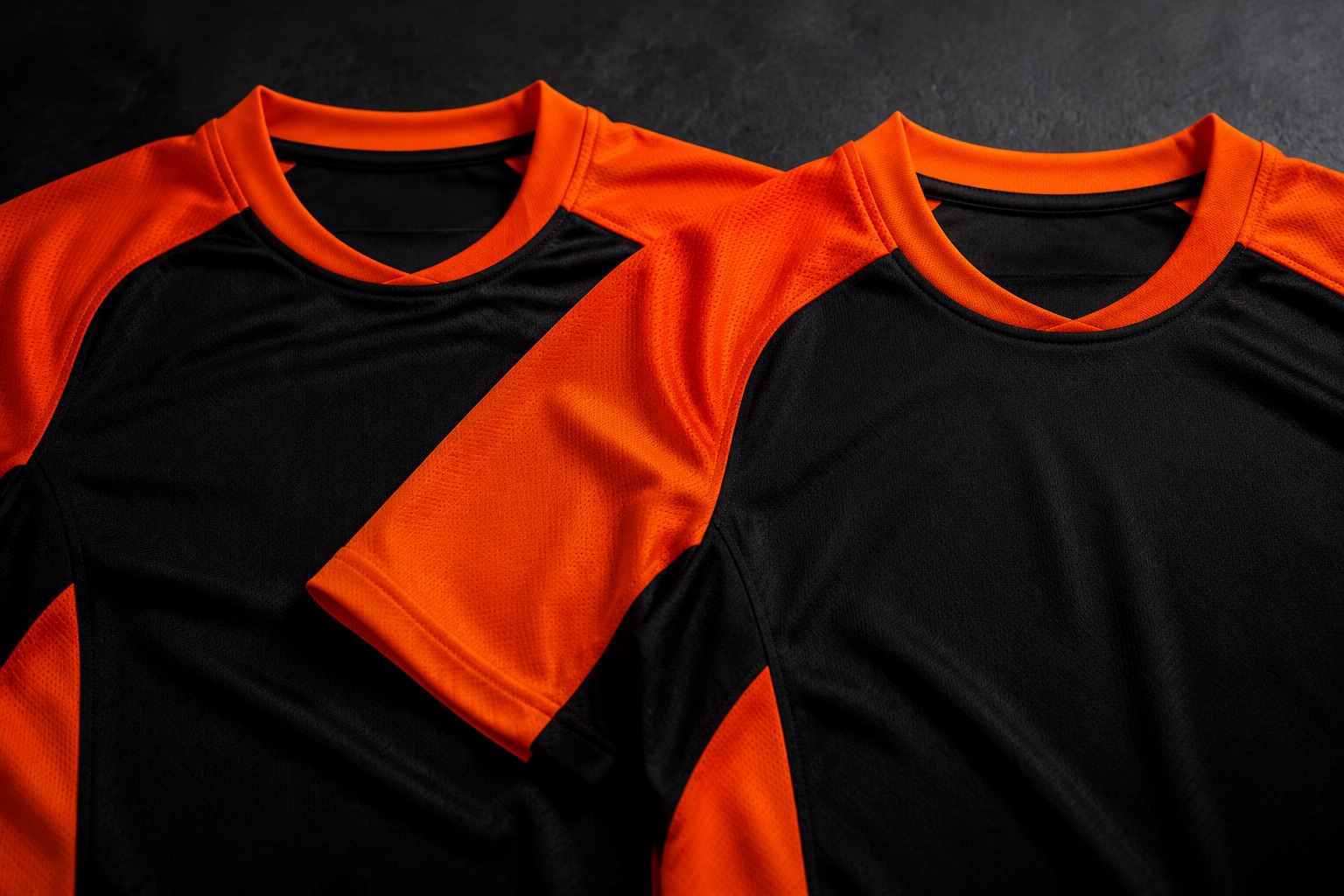
Checked against previous runs
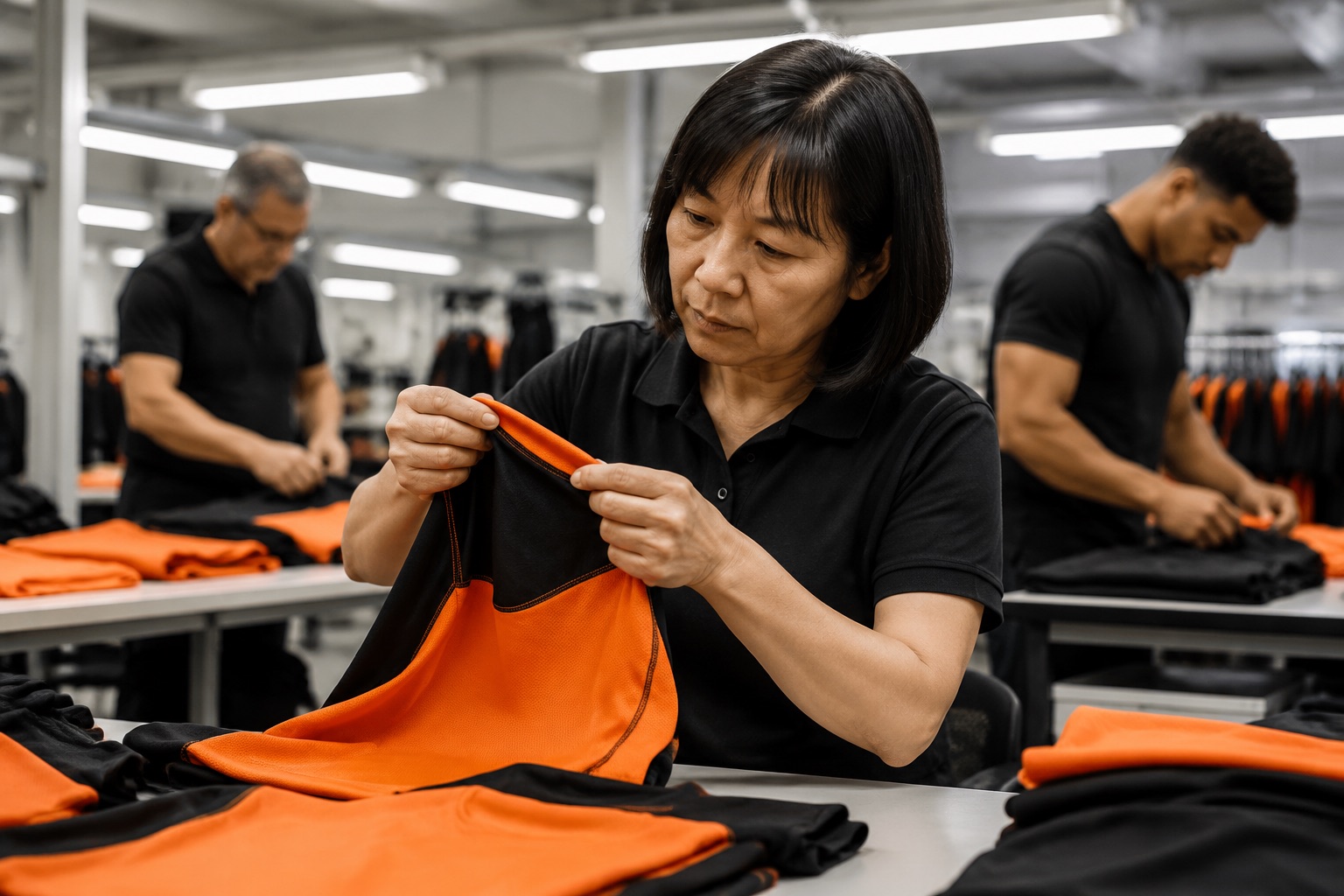
Seams, trims, threads
Where We Use It
This method is part of the range we build for every sport below.
Quality Control FAQs
What exactly is checked?
Measurements against the approved sample within tolerance, seam and stitch quality, decoration placement and registration, colour consistency across the run, trims and labelling, and a final check for loose threads and needle safety before packing.
What is your measurement tolerance?
Typically around ±1 cm on key points such as chest, body length and sleeve. If your specification demands tighter, tell us before production and we will work to it — but say so up front, because it affects how the order is run.
How do you make sure a reorder matches last season?
Your approved sample, colour recipe and measurement records are retained against your account. A reorder is checked against those records as well as against itself, which is what stops a squad ending up in two slightly different shades.
What happens if something fails inspection?
It is corrected before shipping. Depending on the fault that means rework, or remaking the affected pieces. What does not happen is the order shipping with a note hoping nobody notices.
Do you check every piece or a sample of the order?
Measurement checks are done on a sampling basis across sizes and through the run; decoration placement and finishing checks are done on every piece at the final stage. Tell us if your buyer requires a specific AQL level and we will inspect to it.
Why does QC need my approved sample?
Because without it, "correct" is an opinion. With it, every measurement has a reference and any dispute has an answer that both sides can check. It is the reason we retain the sample rather than sending it and forgetting it.
Can QC catch a problem with the design itself?
No, and it is important to be clear about that. QC verifies that production matches what you approved. If the approved sample had a collar you did not like, QC will faithfully reproduce that collar four hundred times. Design questions belong at the sampling stage.
Need quality control on your next order?
Send us your artwork and quantities. We will confirm whether this is the right method for your garment — and tell you if it isn't.